
Last updated November 16, 2026
 Wrought iron
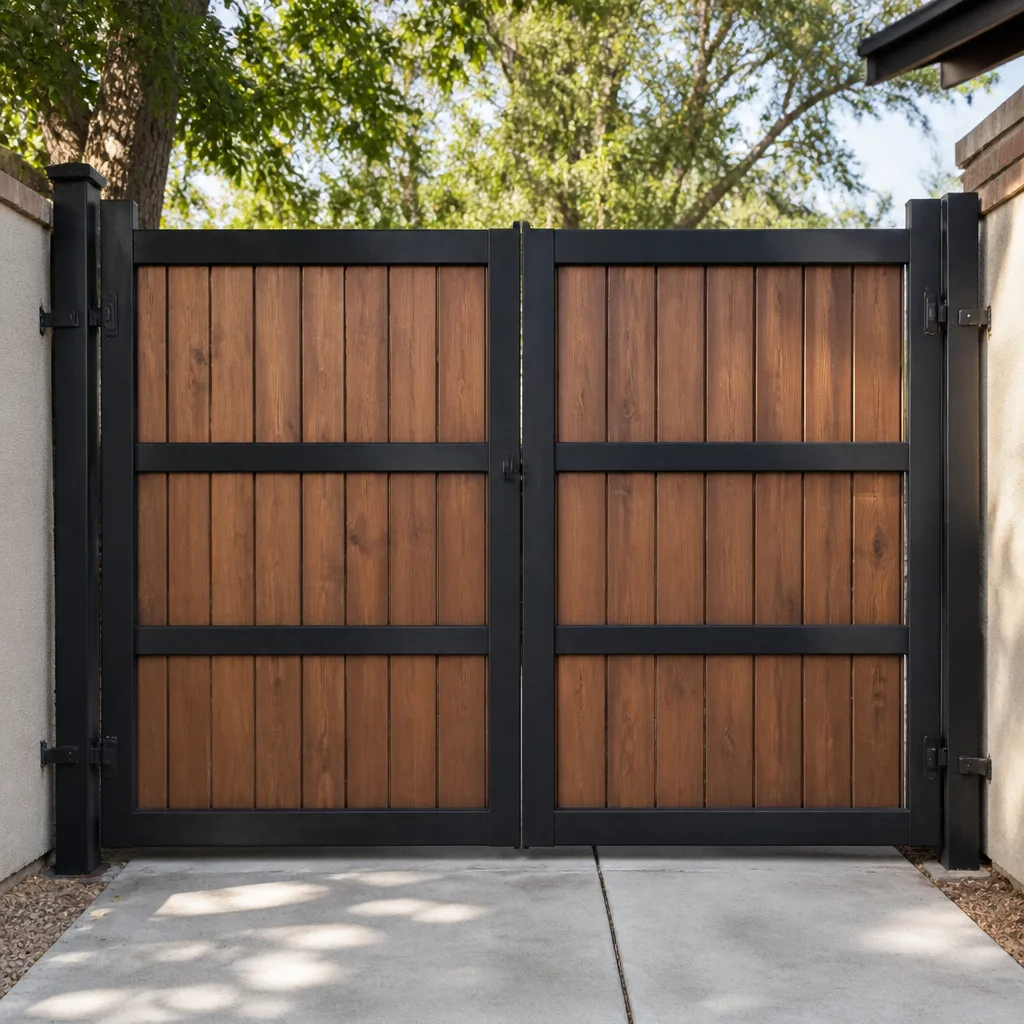 Wood & steel frame
 Farm & ranch
 Sliding driveway gates
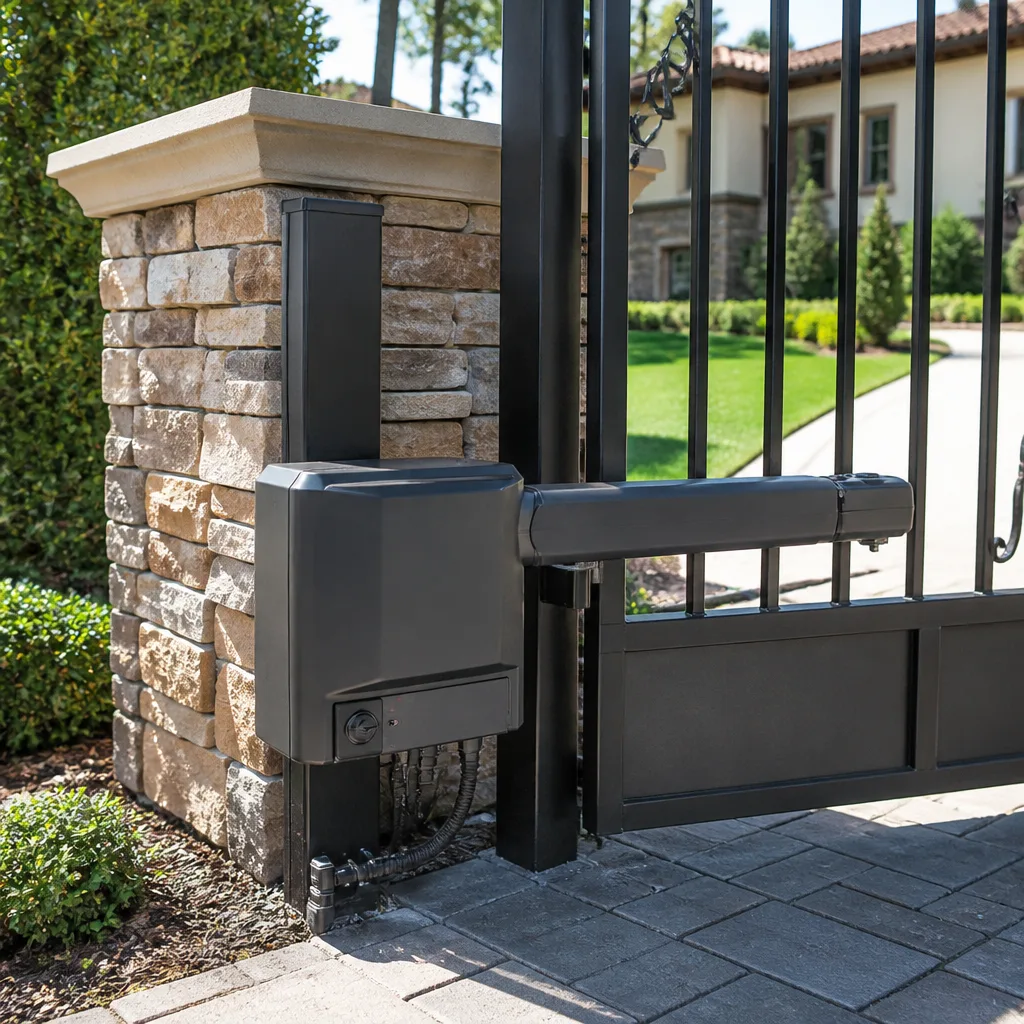 LiftMaster operators
Free on-site gate assessment - hinges, posts, and your LiftMaster or Nice gate operator checked before anything is quoted
The assessment is free and the quote is the invoice.
Get your free estimateThe Complete Guide to Gate Repair in Chico
A gate that “just stopped working” almost never just stopped working. In Chico, a gate that quit on a Tuesday morning usually started failing months earlier: soil shifted under one post after a wet winter, the control board baked through a run of hundred-degree July afternoons, or a hinge that needed a little grease two seasons ago finally seized. The symptom shows up all at once. The cause rarely does. That gap between symptom and cause is exactly why two gates with the same complaint can be a forty-dollar fix or a four-hundred-dollar one. This guide maps each common gate failure to the root cause behind it, how to spot which one you’re facing, and when a repair is the right call over a replacement.
Quick Answer
Most gate failures in Chico trace back to one of three root causes: clay-heavy soil moving posts out of alignment, sustained summer heat damaging electronics and operators, or skipped lubrication wearing out mechanical parts. A trained technician diagnoses the cause before quoting a fix, because the same symptom (a gate that won’t open) can come from any of the three. The right repair range depends entirely on which cause you’re dealing with, and a written on-site estimate is the only reliable way to know.
Styles & brands we work with
- Wrought iron
- Wood & steel frame
- Farm & ranch
- Sliding driveway gates
- LiftMaster operators
Table of Contents
- The Three Root Causes Behind Most Gate Failures in Chico
- Clay Soil, Post Lean, and Misalignment That Looks Electrical
- How Chico Heat Stresses Gate Electronics and Operators
- Brand-Specific Failure Patterns We Look For
- Deferred Lubrication: The Slow Wear Nobody Notices
- Repair vs. Replacement: Specific Thresholds by Gate Type
- How to Document Your Gate Problem Before You Call
- What a Legitimate Repair Estimate Includes
The Three Root Causes Behind Most Gate Failures in Chico
When we diagnose a gate in Chico, we’re almost always sorting the problem into one of three buckets. Knowing which bucket you’re in tells you what kind of repair you’re facing before anyone touches the gate.
Soil movement. Much of Chico sits on clay-heavy ground. Clay swells when it’s wet and shrinks when it dries, and a gate post set in clay moves with it over the seasons. A post that leans even a fraction of an inch pulls the whole gate out of square, and the operator starts straining against a gate that no longer swings or slides freely.
Heat stress on electronics. Chico summers push well past 100 degrees for stretches, and gate operators sit in full sun on a fence line with no shade. Control boards, capacitors, and limit switches take the brunt. A board that fails in August often ran fine all spring and will run fine again in October; the heat is what finished it.
Deferred lubrication and mechanical wear. Hinges, rollers, tracks, and pivot points need ongoing attention. When grease and adjustment get skipped season after season, the operator works harder, motors run hotter, and small mechanical problems turn into component failures.
These three causes overlap. A gate on leaning posts also drags, which also overheats the motor. That’s why the electric gate repair diagnosis always starts with the mechanical gate, not the opener. If the gate won’t move freely by hand, no amount of electrical repair will fix it.
Clay Soil, Post Lean, and Misalignment That Looks Electrical
Here’s a pattern that fools a lot of people: the gate stops closing all the way, the operator clicks and reverses, and it looks like an electrical fault. In our experience across Chico, a big share of those calls are actually a post that moved. Clay soil under a gate post can shift enough over a wet winter and a dry summer to throw the gate out of alignment, and the operator is simply obeying its safety sensors.
How to tell the difference:
- Test by hand. Disengage the operator (most have a manual release) and swing or slide the gate yourself. If it binds, drags, or scrapes anywhere along its travel, the problem is mechanical and alignment-related, not electrical.
- Look for the lean. Stand back and sight down the fence line. A post that’s out of plumb shows up against the others. Check the gate’s gap at the latch side too; a gap that’s wider at the top than the bottom means the post has tilted.
- Watch for scrape marks. Fresh metal-on-metal or metal-on-ground marks along the bottom or the track point to a gate that’s dropped or shifted.
Clay-related misalignment is one of the more fixable gate problems in Chico, but it’s also one people wait too long on. A gate that’s out of alignment grinds against the operator, and that strain eventually damages the components that actually cost money. Catching post lean early keeps a mechanical adjustment from turning into an operator replacement.
How Chico Heat Stresses Gate Electronics and Operators
Electronics age faster in heat. A gate operator housing in direct Chico sun can get hot enough that the components inside run well above the ambient air temperature. Over many summers, that heat does measurable damage to the parts that are most sensitive to it. The result is that in Chico, we see certain electrical failures far more often than mechanical ones, and they cluster around specific components.
What heat typically takes out first:
- Control boards. The board is the brain of an automated gate, and it’s the single most common heat casualty. A board that fails shows up as erratic behavior, an operator that runs but ignores commands, or one that won’t respond at all.
- Capacitors. These are heat-sensitive and cheap to replace, but a failing capacitor makes a motor look like it’s dying when it’s fine. A motor that hums and won’t start is a classic capacitor symptom, not necessarily a motor problem.
- Limit switches. These tell the operator when the gate has reached fully open or fully closed. Heat and repeated cycling wear them, and a bad limit switch shows up as a gate that overshoots, stops short, or reverses partway.
The motor itself is usually more durable than the electronics around it. That’s why we push back when someone assumes a “dead” gate needs a whole new operator. In a lot of Chico cases, the motor is fine and one heat-stressed component on the control side is what failed. Brand-agnostic diagnosis matters here: a technician tied to one manufacturer’s ecosystem has an incentive to sell you a new unit instead of the forty-dollar part that failed.
Brand-Specific Failure Patterns We Look For
Not every operator fails the same way. Knowing the brand tells a technician where to look first, which saves diagnostic time and keeps a repair from turning into guesswork. We work on nine named gate manufacturers, and each has its own habits. Here are a few we see regularly in Chico.
Mighty Mule. These are common on residential driveways, often installed by the homeowner. We see a lot of do-it-yourself installs where the operator was mounted slightly out of line with the gate, so the unit fights the gate from day one. We also see limit-switch and battery issues on the solar-friendly models. Often the fix is a proper adjustment plus a component swap, not a new system.
LiftMaster. Very common on both residential and light-commercial gates. On LiftMaster units, we watch the control board and the safety sensors closely, since those are frequent points of failure. A LiftMaster that runs but reverses mid-cycle usually points at a sensor or a limit setting, not the motor.
FAAC. FAAC operators show up on higher-end residential and small commercial gates. They’re solid units, but their control boards are electronics like any other and take heat stress. We’ve also seen FAAC slide operators where the mechanical track and the operator get out of sync after soil movement, and the “electrical” fault is really a track alignment issue.
Elite. Elite units appear on a range of residential and commercial swing and slide gates. Common issues include limit-switch drift and capacitor wear in the heat. These are usually repairable at the component level rather than the whole-unit level.
The takeaway: the brand on your operator isn’t a marketing detail, it’s diagnostic information. If you know it, say it when you call. If you don’t, a photo of the label solves it. If your gate is at a home or small commercial lot, that’s the first thing Gate Repair Chico asks about.
Deferred Lubrication: The Slow Wear Nobody Notices
Nobody notices a hinge until it stops hinging. Lubrication and adjustment are the two maintenance tasks that quietly prevent the most expensive gate failures, and they’re also the first to get skipped. A gate is a moving machine that lives outdoors. It needs the same kind of ongoing attention a car does, and for the same reason: parts that move against each other wear, and once they wear past a point, they don’t heal with grease.
What deferred lubrication looks like over time:
- Hinges, rollers, and pivot points dry out. The gate gets harder to move by hand.
- The operator pushes harder to move it, since it’s now fighting friction. The motor works hotter and longer on each cycle.
- Bushings and bearings wear faster because they’re running dry. Worn parts create play, and play creates misalignment.
- Misalignment develops into binding, which overloads the operator, which finally fails a component. The “sudden” breakdown was building for months.
The fix for the early stages is straightforward: clean and lubricate the moving parts, check the hardware for tightness, and confirm the gate still swings or slides freely. The fix for the late stages is more involved, because by then parts have worn past the point where lubrication helps. If you can’t remember the last time your gate’s moving parts got attention, that’s a good reason to have it looked at before something fails in the middle of a busy week.
Repair vs. Replacement: Specific Thresholds by Gate Type
The decision that matters most isn’t which brand you own, it’s whether your gate is a repair candidate or a replacement one. We make that call on evidence, not on how old the gate looks. Here are the thresholds we weigh, broken out by gate type.
Swing gates. A swing gate is usually repairable when the problem sits in the operator, the hinges, the control board, or the posts. It’s a replacement candidate when the gate frame or skin is structurally compromised (cracked welds throughout the frame, rust eaten through in multiple places), or when the posts are shifting so much that anchoring becomes unreliable. If the posts are solid and the gate frame is intact, a swing gate almost always stays a repair.
Slide gates. Slide gates ride on a track, and the track is the tell. If the track is bent or badly worn, or the gate’s rollers are failing, that’s still usually repairable with new hardware and re-alignment. A slide gate becomes a replacement candidate when the gate itself has warped enough that it can’t stay on track even with new hardware, or when the framing has rusted to the point of weakness. Heavy commercial slide gates get judged the same way, by the gate structure and the track, not by the operator alone.
The operator (any gate type). The operator is the most replaceable part of the system. If the gate structure is sound and the operator is failing, replacing just the operator is often the right call, and it’s a far cheaper path than a new gate. A motor that hums and won’t start might need a capacitor. A board that’s dead might just be a board. If a technician jumps straight to a whole new system without ruling out the individual components, get a second opinion.
For a full walk-through of what repair looks like when a gate is still a repair candidate, see our page on gate repair.
How to Document Your Gate Problem Before You Call
A good technician can walk onto a property and read a gate. A great outcome comes when the person calling has already gathered the details. Documenting the problem before you call speeds up the diagnosis and gives the technician a head start on the root cause, which often shortens the whole repair.
Use this checklist:
- Note the exact symptom. Does the gate not open, open partway and reverse, open fine but not close, or make noise but not move? Each pattern points somewhere different.
- Capture any error codes. Many operators flash a code or a pattern of lights when something fails. Photograph the control panel while the fault is showing.
- Photograph the operator label. This tells us the brand and model, and it’s the single most useful piece of information. A clear photo of the sticker on the operator housing is worth more than a description.
- Take photos of the gate along its full travel on both the open and closed positions, plus the hinges or track and the posts. Wide shots that show the fence line help reveal lean.
- Note the cycle count if your operator displays one. Some units track how many times they’ve opened and closed. A high count with worn components points toward replacement of parts that are past their service life.
- Note when it started. “Started yesterday” and “been getting worse for two months” are different problems.
If you disengage the operator to test the gate by hand, be careful. Heavy gate panels can crush hands and fingers, and slide gates can come off the track. If a gate feels unstable or your operator is automated, leave the hands-on testing to a trained professional. Document with photos and your phone instead.
What a Legitimate Repair Estimate Includes
A legitimate estimate tells you what failed, why it failed, and what the fix costs. An estimate that skips the diagnosis and lands straight on a price, or straight on a replacement, is a guess dressed up as a quote. Here’s what a real one should contain, and what signals a technician is guessing.
A proper written estimate includes:
- A stated cause, not just a symptom. “Your gate isn’t opening” is a symptom. “The control board failed from heat exposure” is a cause. You should hear the cause.
- The specific parts to be replaced and their role, so you can see the logic.
- A written price that you agree to before any work starts. The estimate sets the final price; if the scope changes once the technician is into the work, that change gets discussed with you first.
- A clear repair-versus-replace recommendation with the reasoning behind it, based on the gate’s condition, not the company’s convenience.
Warning signs that a technician is guessing:
- They recommend a whole new system before ruling out a single component.
- They can’t tell you what the root cause is, only what the symptom is.
- They won’t write the price down.
- They propose replacing electronics without first confirming the mechanical gate moves freely.
Because we’re brand-agnostic and gate-only, the estimate is based on what the gate actually needs. A free estimate in Chico means exactly that: the price is quoted and agreed before the work starts, and you see the written number first.
Common Mistakes to Avoid
- Assuming a dead gate is a dead motor. In Chico heat, a failed control board or capacitor is far more common than a burned-out motor. Replace the whole operator before checking the components and you may spend far more than you needed to.
- Calling an electrician for a mechanical problem. A gate that’s out of alignment from soil movement looks electrical but isn’t. If the gate drags by hand, the fix is mechanical, and an electrician won’t solve it.
- Skipping the hand test. Before you call, disengage the operator and check whether the gate moves freely. It tells you and your technician immediately whether you’re hunting an electrical cause or a mechanical one.
- Letting clay-soil lean go unaddressed. A slight post tilt after a wet winter won’t fix itself, and the operator straining against a misaligned gate will eventually fail. Catch it while it’s still an adjustment.
- Ignoring lubrication until something breaks. Grease and adjustment are cheap; worn bushings, seized hinges, and overheated motors are not. A gate that’s never been maintained wears faster and fails sooner.
- Accepting a replacement quote with no diagnosis. If a technician jumps to a new system without naming the failed part and the cause, get a second opinion from a gate-only specialist.
- Testing an automated gate by hand without care. Heavy panels and slide gates can crush fingers or come off the track. If the gate feels unstable, document it with photos and leave the testing to a professional.
See the difference
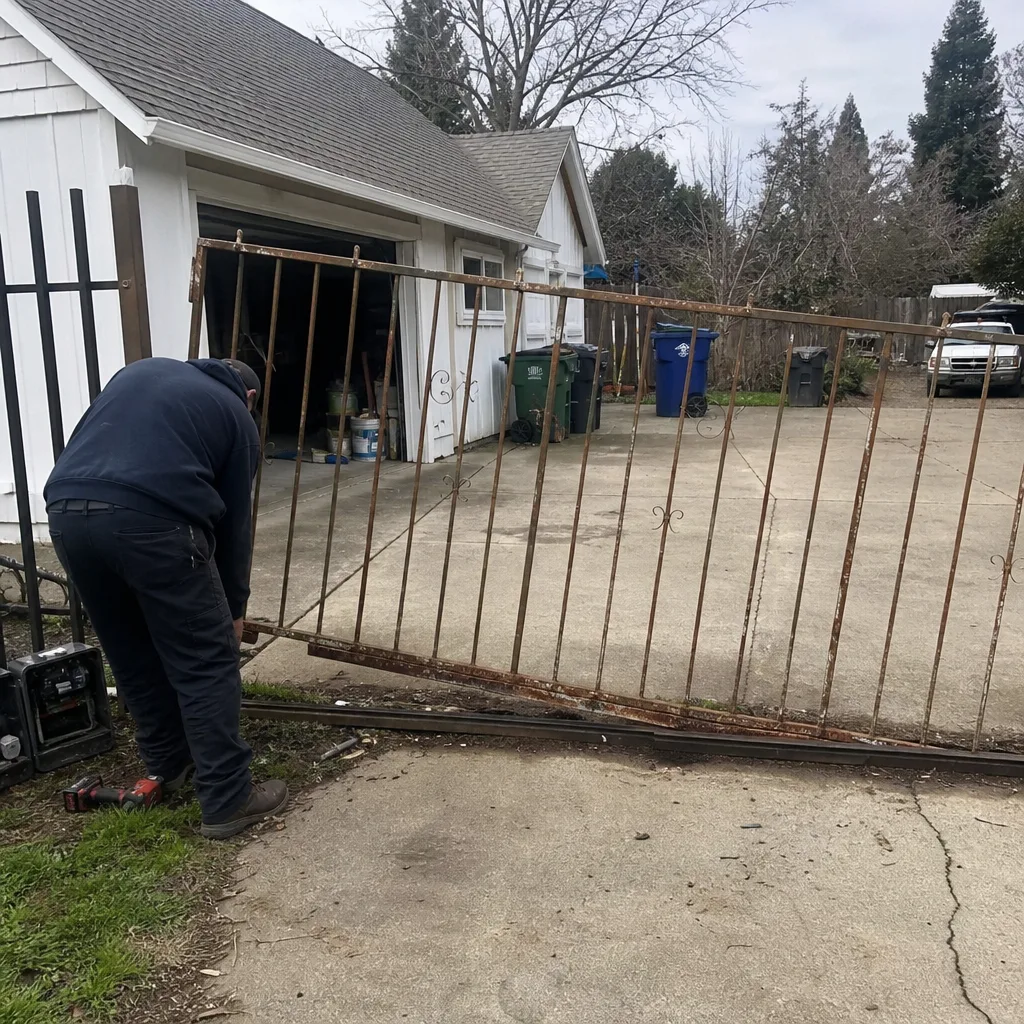 Before
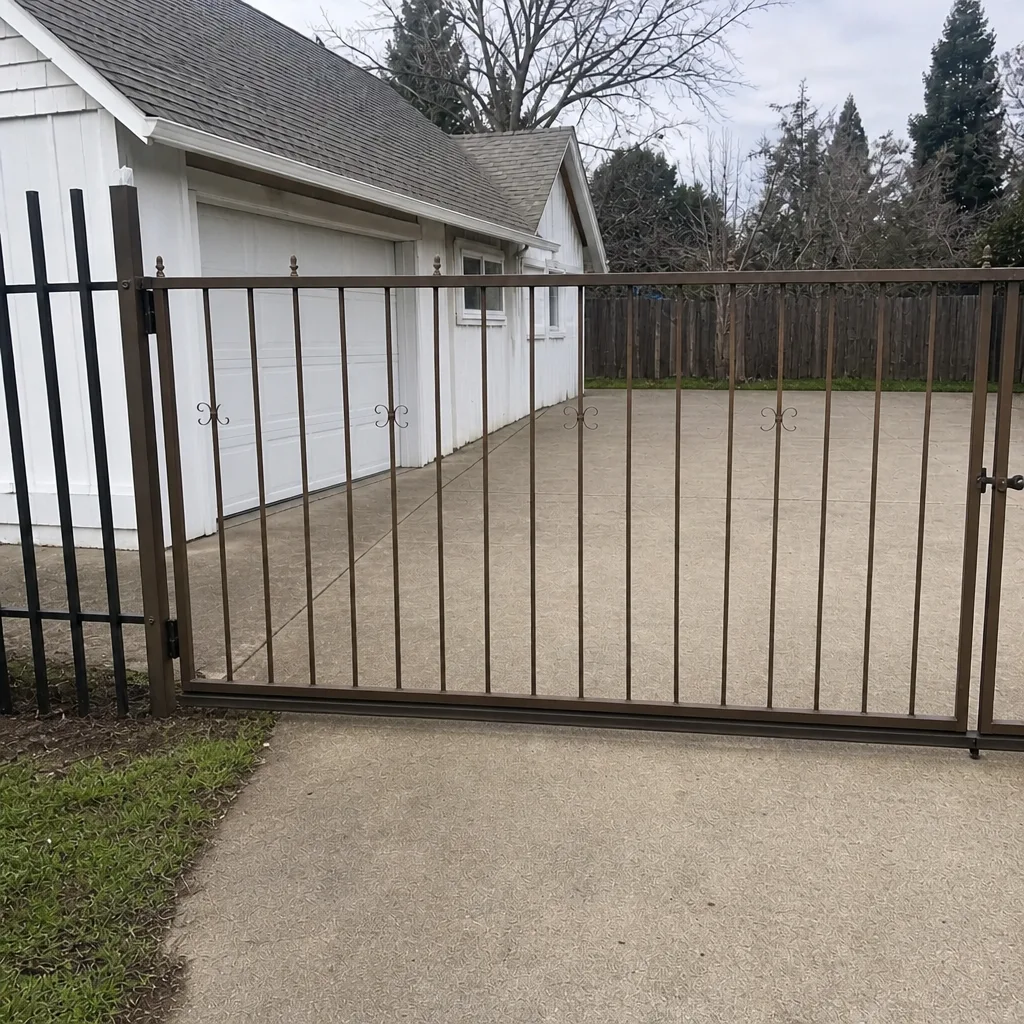 After
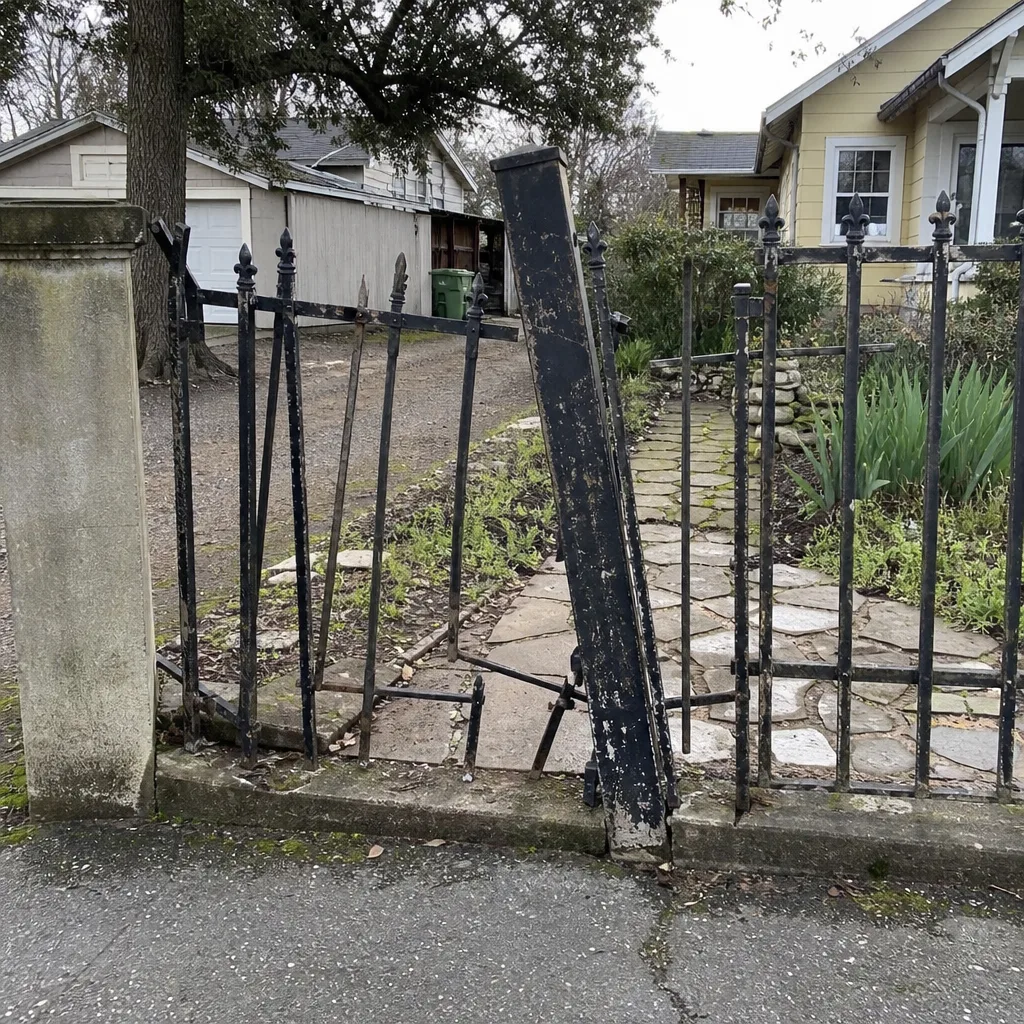 Before
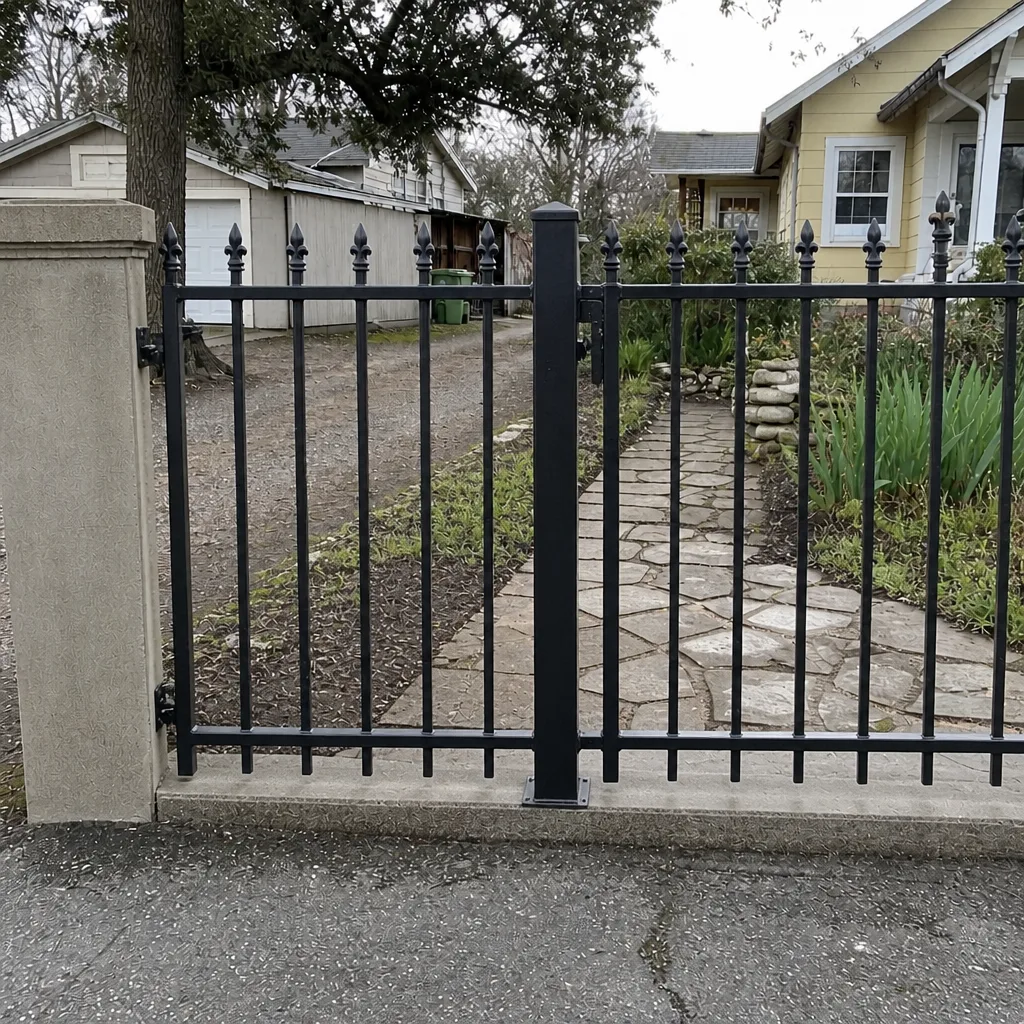 After
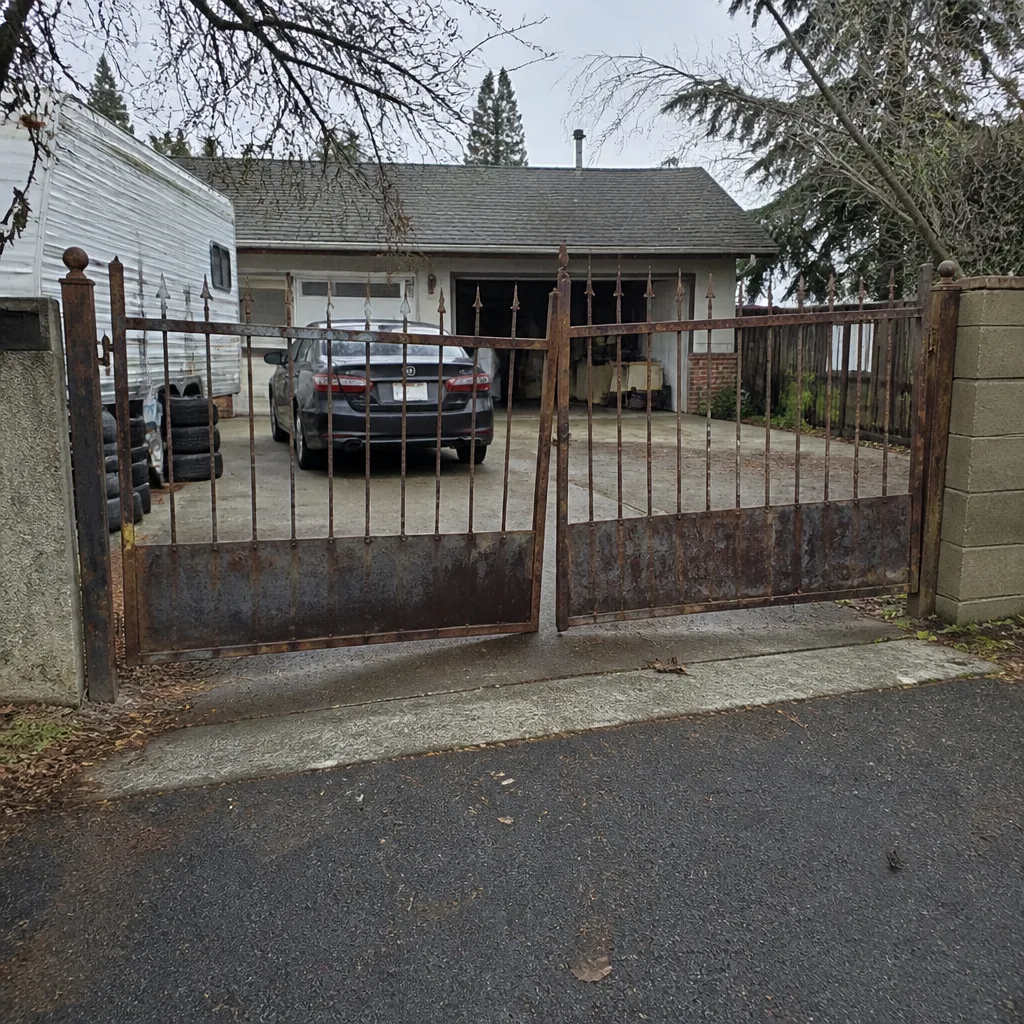 Before
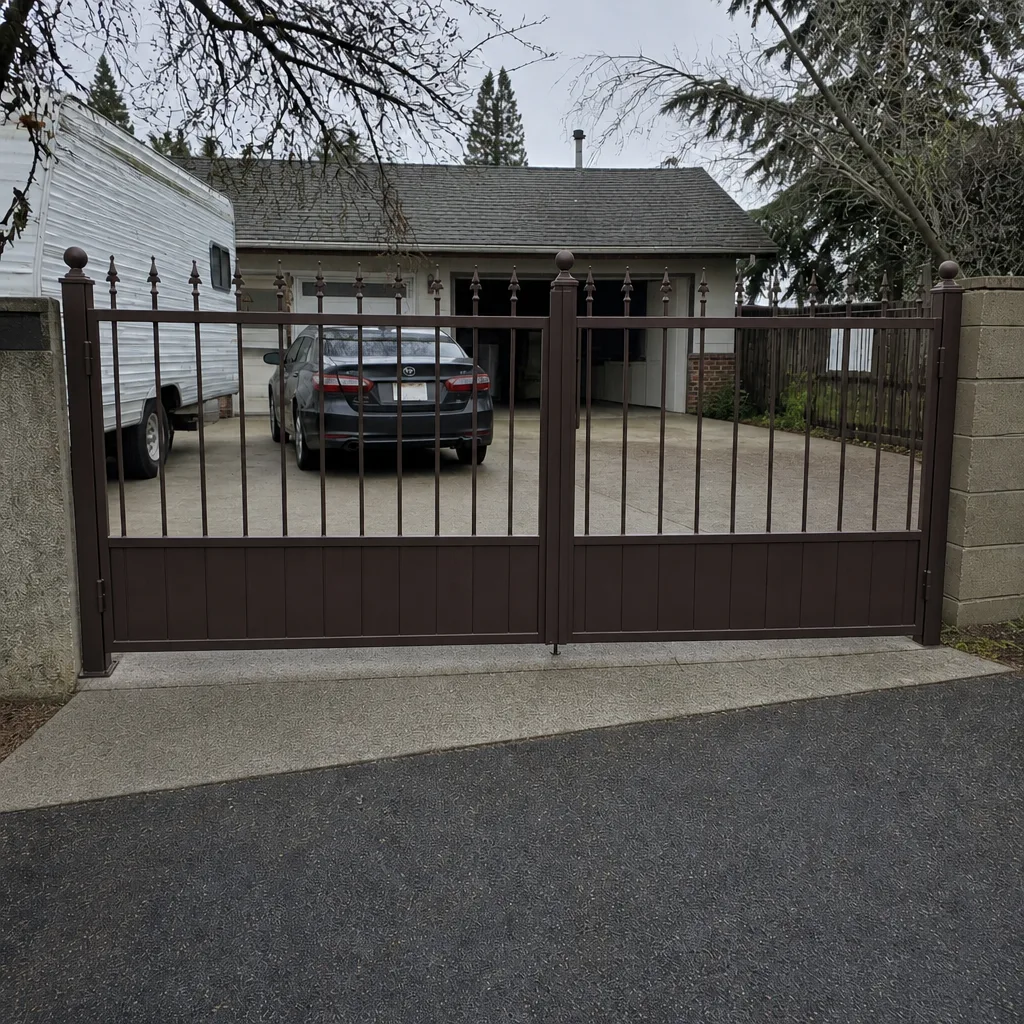 After
When to Call a Professional
Call a gate professional when the gate won’t move freely by hand, when the operator shows an error code or runs but ignores commands, when posts look out of plumb, when a slide gate come off its track, or when your automated gate reverses or stops short mid-travel. Also call if you smell burning near the control housing, if the gate is automated and you have young children or pets, or if a heavy gate feels unstable. Automated gates have real safety risks: the operator’s wiring carries power, the panels carry weight, and access-control components are easy to get wrong. A gate-only specialist can diagnose the cause and quote a fix. Gate Repair Chico offers free estimates in Chico – call (866) 369-2364.
Frequently Asked Questions
Most gate failures in Chico come from one of three root causes: clay-soil movement that pushes posts out of alignment, sustained summer heat that damages control boards and electronics, or skipped lubrication that wears out mechanical parts. The symptom can look electrical even when the cause is mechanical, which is why diagnosis comes before any quote. Call (866) 369-2364 for an exact quote – estimates are free.
It could be either, so the fastest way to tell is to disengage the operator and test the gate by hand. If the gate drags or binds, the cause is mechanical alignment or wear; if it moves freely, look to the electronics. Don’t force a heavy automated gate by hand if it feels unstable. Call (866) 369-2364 to book a diagnosis – the estimate is free.
An out-of-alignment gate is almost always a repair candidate. Post lean from clay soil, a dropped gate, or a bent track can usually be corrected with adjustment and hardware, and the gate stays. Replacement only comes up when the frame or posts are structurally compromised. Call (866) 369-2364 for a free on-site estimate and a straight answer on which one you’re facing.
We service nine named gate brands, including LiftMaster, FAAC, Elite, and Mighty Mule, spanning residential through light-commercial systems. If you know your brand and model, tell us when you call; if not, a photo of the operator label is enough. Call (866) 369-2364 for a free estimate.
You need an installation when the gate structure itself is failing, such as cracked frame welds, rust eaten through in multiple places, or posts too unstable to anchor. If the gate frame and posts are solid, it’s usually a repair, even when the operator has failed. We handle both repair and full installation, so you get an honest recommendation. Call (866) 369-2364 to talk it through.
Have the brand and model from the operator label, a photo of any error lights, the exact symptom, and when it started. Photos of the gate along its full travel and of the posts help too. That detail lets us diagnose the root cause faster. Call (866) 369-2364. We answer 24/7. Fast dispatch from 7am to 7pm, Sunday through Friday.
The Bottom Line
A gate failure is a symptom, and the useful question is always what caused it. In Chico, that cause is usually soil movement, heat on the electronics, or deferred lubrication, and each one leads to a different repair and a different cost. Document the problem with photos and your operator’s label, test the gate by hand if it’s safe to do so, and demand a diagnosis before anyone quotes a replacement. A gate-only specialist who knows your brand can tell the difference between a forty-dollar fix and a four-hundred-dollar one, and that’s the difference that matters. Call (866) 369-2364. We answer 24/7. Fast dispatch from 7am to 7pm, Sunday through Friday.
Written by the team at Gate Repair Chico.