
Last updated November 16, 2026
 Wrought iron
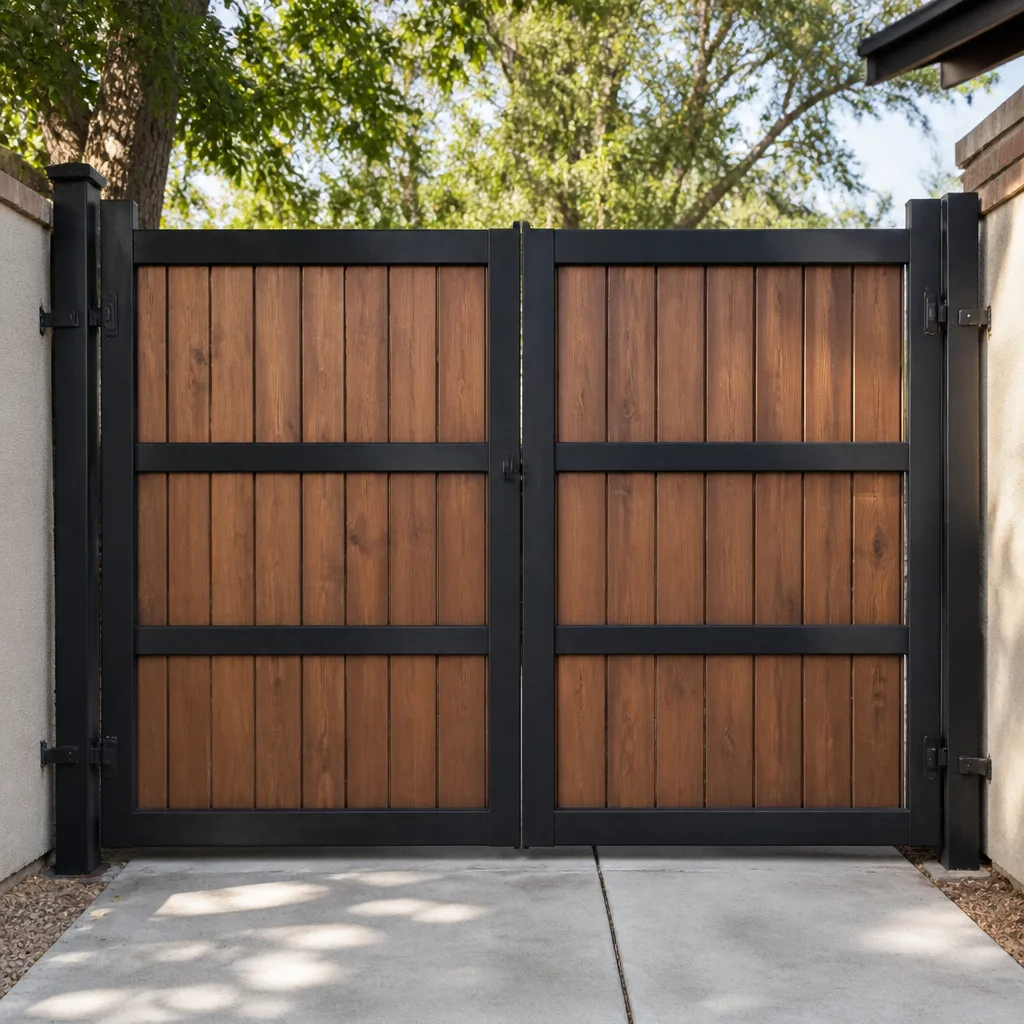 Wood & steel frame
 Farm & ranch
 Sliding driveway gates
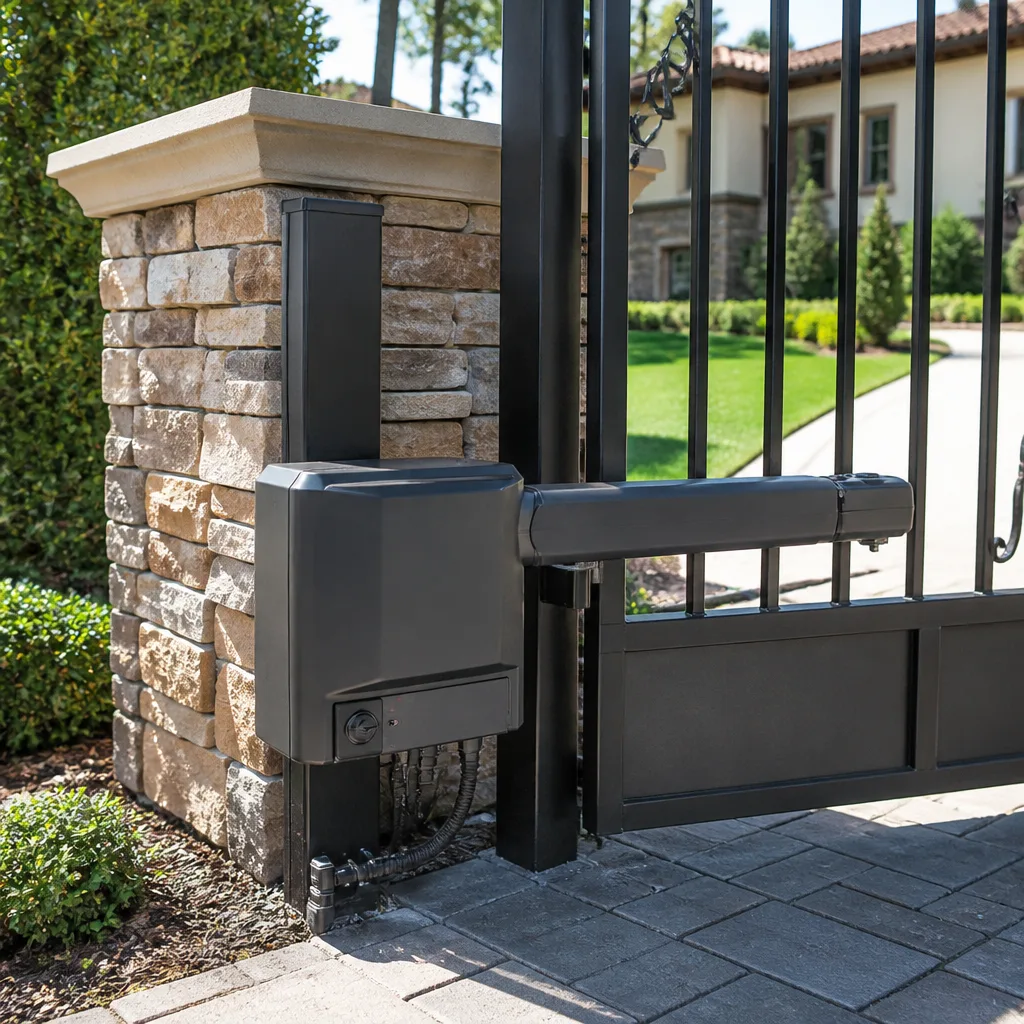 LiftMaster operators
Free on-site gate assessment - hinges, posts, and your LiftMaster or Nice gate operator checked before anything is quoted
The assessment is free and the quote is the invoice.
Get your free estimateDIY vs Professional Gate Repair: The Chico Homeowner’s Decision Guide
Most gate repair advice splits the world into “easy fixes” and “call a pro,” which isn’t much help when you’re standing in your driveway with a gate that won’t close. Here’s the part most guides skip: the real dividing line isn’t skill. It’s the component. Adjusting a swing arm, clearing a track, or lubricating a roller are genuinely homeowner-appropriate jobs. Touching a control board, splicing wiring, or resetting the entrapment sensors on an automated system is a different category entirely, one where an amateur repair can create liability that follows you long after the gate moves again. This guide draws that line clearly, using Chico’s housing stock, climate, and parts market as the backdrop, so you can decide with confidence which side of it your repair falls on.
Quick Answer
Mechanical adjustments and lubrication on a manual or automated gate are safe for a capable Chico homeowner to handle. Anything involving the control board, incoming power, wiring, or the UL 325 entrapment system should go to a trained gate technician, not because it’s too hard to attempt but because a bad repair there creates injury exposure and can void your manufacturer warranty. When in doubt, a free on-site estimate from a gate-only specialist tells you which category your repair is in before you spend a dime.
Styles & brands we work with
- Wrought iron
- Wood & steel frame
- Farm & ranch
- Sliding driveway gates
- LiftMaster operators
Table of Contents
- Where the DIY Line Actually Falls
- The DIY-Safe List: What You Can Handle
- The Hard-Stop List: Where Amateur Work Turns Risky
- Parts and Tools in Chico: What’s Local vs. What Needs OEM Sourcing
- How DIY Touches Affect Your Brand Warranty
- The Break-Even Math: When DIY Costs More
- Safety Gear and Shutdown: Before You Touch Anything
- Chico Climate, Housing, and the Repairs That Come With Them
Where the DIY Line Actually Falls
The gate repair question in Chico isn’t really “am I handy enough?” It’s “what breaks if I get this wrong?” On a mechanical gate, a bad adjustment means the gate drags or won’t latch, an annoyance you can correct. On an automated gate, a bad wiring change or a defeated sensor means a gate that can injure a person or a vehicle, and the law treats that differently.
California follows the UL 325 standard for automated gate operators. That standard governs entrapment protection: the photo eyes, safety edges, and sensing devices that prevent a moving gate from closing on someone. If you bypass a sensor to “make it work,” or you rewire a control board and accidentally disable a safety input, you’ve created the same exposure as removing the safety device altogether. That exposure lives with the property, not the installer. In our experience, this is the single thing Chico homeowners underestimate most: the mechanical part of the trade is forgiving, and the control layer is not.
So build your decision around three buckets:
- Mechanical: hinges, rollers, tracks, latches, chains, swing arms, lubrication, alignment. Mostly homeowner-appropriate.
- Electrical: incoming power, low-voltage wiring runs, control board replacement, transformer work. Professional territory.
- Safety and compliance: photo eyes, safety edges, limit switches on automated gates, UL 325 devices. Professional territory, always.
One note on that last bucket: a limit switch sounds mechanical, and plenty of homeowners treat it that way. On an automated gate it sets how far the gate travels and where it reverses, which means it’s part of the entrapment system. That’s the counterintuitive point. The “small electrical part” you can see and reach is often the one that matters most. If you’re not sure which bucket your repair sits in, a quick diagnosis is worth more than a guess, which is part of why we keep gate repair separate from the electrical work on our own service list.
The DIY-Safe List: What You Can Handle
A capable homeowner can perform every task below on a manual or automated gate without voiding a warranty or creating liability, provided the gate is powered down where the task calls for it. These are the jobs we’d never tell a Chico homeowner they can’t do themselves. If your gate is a Mighty Mule driveway gate or a LiftMaster system and the problem is mechanical, start here.
- Lubrication: Apply a proper gate lubricant to hinges, rollers, and pivot points. This is the highest-value minute of gate maintenance you can spend. Dry, gritty hinges put strain on the operator over time.
- Track clearing: Sweep leaves, dirt, and small debris out of a slide gate’s track. A slide gate that binds is often just a dirty track, not a failing motor.
- Roller and hinge replacement: Worn rollers and hinges are bolt-on parts on most residential gates. Match the size and rating, and this is a straightforward swap.
- Latch adjustment: If the gate sags and the latch no longer catches, small alignment adjustments at the hinge side often solve it.
- Battery check on solar-charged operators: Many residential openers run on a battery charged by a small solar panel. Swapping a failing battery is homeowner work; testing the charging circuit is not.
- Visual inspection: Walk the gate looking for loose bolts, cracked welds, and worn bushings. Catching these early is the whole point of a monthly check.
These tasks don’t touch the control layer, so they don’t touch the liability layer either. A word of caution on one common DIY job: adjusting a gate’s physical open and close stops is fine on a manual gate. On an automated gate, the equivalent adjustment runs through limit switches inside or on the operator, which brings us to the next section.
The Hard-Stop List: Where Amateur Work Turns Risky
The tasks below are where DIY stops being a reasonable choice. Not because they’re impossible to attempt, but because the failure mode is dangerous, and in California the liability can be severe. We work on gates only, and this list is the reason the trade is its own specialty rather than a handyman side job.
- Control board replacement or repair: A control board manages every safety input on your operator. Swap it wrong or bridge a terminal, and you can disable entrapment protection without any outward sign. This is the same territory as our electric gate repair service, and it’s the repair we see attempted most often.
- Any incoming power work: Line voltage to the operator, breakers, and permanent wiring are electrical work governed by code. Unless you’re a licensed electrician, leave it.
- Wiring runs and splices: Low-voltage safety wiring is deceptively simple and easy to get wrong. A loose splice on a photo eye can produce an intermittent fault that’s maddening to diagnose later.
- Photo eye and safety edge work: These are UL 325 entrapment protection devices. Adjusting, repositioning, or bypassing them is safety compliance work.
- Limit switch setting on automated gates: As covered above, the limit switch is part of the entrapment system on an automated gate, not just a travel adjustment.
- Structural post work: A gate post that’s heaved, rotted, or pulling out of its footing supports the whole gate and operator. Digging and resetting a post to the right footing depth is structural work, and a post that fails under load can drop a heavy gate panel.
- Operator installation: Mounting a new operator, setting the arm geometry, and wiring the safety devices is a measured, scheduled job.
If your repair lands anywhere on this list, the right move is a trained technician. A heavy slide gate panel coming off its track, or a swing gate closing with the operator still powered, is a serious hazard. Fast, careful diagnosis matters more than a quick guess, and that’s what an on-site visit delivers.
Parts and Tools in Chico: What’s Local vs. What Needs OEM Sourcing
Here’s the reality check that changes the DIY calculus for a lot of Chico homeowners: the parts that fail most on automated gates aren’t sitting on a shelf at the big-box store. Local hardware and farm-supply stores carry rollers, hinges, lubricant, and generic batteries, and for the DIY-safe list above, that’s all you need. Once you’re into control boards, safety edges, transformers, and operator-specific arms, you’re in OEM territory.
OEM means original equipment manufacturer, and for residential and light-commercial gate operators that usually means sourcing through a brand’s dealer or parts channel. The practical implication:
- Readily local: hinges, rollers, latches, lubricants, batteries, fasteners, basic track components.
- Usually dealer-sourced: control boards, safety edges, photo eye sets, transformers, brand-specific remotes and receivers, operator arms.
- Sometimes order-only: older or discontinued boards, proprietary connectors, and parts for imported brands like FAAC and BFT, where the supply chain runs through authorized channels.
That gap is where a lot of DIY attempts stall. A homeowner buys a generic board, discovers it doesn’t match the wiring or the safety inputs, and ends up worse off than they started. A gate-only shop holds or can source the right part because it works across the brand spectrum, which is why we’ve built our knowledge around the opener you actually own rather than a single manufacturer’s catalog. If your gate is a brand you’d find on a driveway or a commercial lot, chances are we’ve seen the interior of its operator.
How DIY Touches Affect Your Brand Warranty
Manufacturer warranties on automated gate operators generally cover defects in materials and workmanship, and nearly every one of them treats unauthorized modification as a reason to deny a claim. That’s the short answer. The longer answer is that the specific brand on your operator shapes how exposed you are.
- Mighty Mule: Popular on residential driveways, and the warranty terms are tightened by any evidence of an unauthorized modification or a part installed outside the manufacturer’s guidance. A board swap gone wrong is the classic denial.
- LiftMaster: Residential and light-commercial systems, with warranty coverage that assumes the operator and its accessories are installed and serviced to spec. Spliced wiring or bypassed safety devices count as modification.
- FAAC and BFT: Imported systems where parts and service run through authorized channels. A part sourced outside that channel can complicate a warranty claim even if the part is fine.
The pattern is consistent across brands. A mechanical part swap is usually safe; a control board replacement, wiring change, or sensor bypass is usually the trigger. The trap is that you don’t always know a prior DIY repair happened. If a board fails shortly after an earlier attempted fix, a claim can be denied on that history. Before you open your operator’s housing, find the owner’s manual for your model and read the warranty section. It’s five minutes that can save a covered repair.
The Break-Even Math: When DIY Costs More
A DIY repair only saves money when it works. The moment it fails and you have to call a professional anyway, you’re paying for the failed part, the professional part, and the corrected labor on top. Here’s the break-even logic, laid out plainly.
- Count the part cost twice. If a DIY part fails and a professional replaces it, you pay for both parts. Only the successful route pays for one.
- Add the diagnostic time. A failed attempt often obscures the real fault, so the professional’s on-site diagnosis takes longer, not shorter.
- Add the risk premium. If the failed attempt was in the control layer, you may be facing warranty complications on top of the repair.
- Compare against the free estimate. A written estimate is set before any work starts, so you’ll know your total for the professional route before you commit.
That fourth point is the one that tips the decision for most people. If the free estimate comes in low because the fault is simple, the DIY attempt rarely pays for itself once you count the parts, the tools, and the risk of a callback. And when the fault is actually a control-layer failure that a homeowner misdiagnosed as mechanical, the professional repair is cheaper than the DIY detour by a wide margin. The math favors a quick professional diagnosis on anything that isn’t on the DIY-safe list.
Safety Gear and Shutdown: Before You Touch Anything
Before any inspection or mechanical repair on an automated gate, power the operator down at the breaker or its disconnect, and confirm the gate is fully at rest with the operator disengaged. Treat a heavy gate panel as a load that can move without warning. A swing or slide gate is heavy enough to crush a hand or worse if it shifts while you’re working near the hinges or track. We never work on a powered automated gate, and neither should you.
Basic gear for the DIY-safe list: gloves, eye protection, the right size wrenches for your hinge hardware, a proper gate lubricant, and a flashlight for behind-the-gate inspection. Beyond that, when the work reaches the control board, wiring, or safety devices, the correct tool is a trained technician. That isn’t gatekeeping. It’s the same standard a trade applies to any part of the job where the failure mode is injury instead of inconvenience. Our technicians have up to 9 years of experience reading exactly these systems, and that reads on the operator whether it’s a Mighty Mule on a residential driveway or a heavier commercial unit on a property near the Chico State campus or downtown Chico.
Chico Climate, Housing, and the Repairs That Come With Them
Chico’s weather works on gates in a specific pattern, and it shapes which repairs come up locally. Winters are mild, so gate failures here tend to follow the hot, dry season rather than cold snaps. Summer heat and dust do the real damage: dust gets into tracks and pivot points, dry cycles warp and dry out wood components, and the long dry stretch puts expansion stress on posts and hardware. The repairs that follow look mechanical, and often they are until they aren’t.
Chico’s housing stock splits roughly in two ways for gate owners. Older neighborhoods closer to downtown and the numbered streets tend to have older gate hardware, some of it manual and worn, where hinge, roller, and latch work is the whole job. Newer developments and larger lots, including properties around the foothills and toward the outskirts, more often have automated systems on longer driveways, and that’s where the control layer, safety devices, and operator work come into play. Chico’s dust season is also a reminder to keep tracks clean and pivots lubricated; it’s free maintenance that prevents a fair share of service calls.
None of that changes the DIY line. It just tells you where your gate probably sits on it. Mechanical wear from heat and dust on an older gate? Handle what you can. Control-layer or safety-device trouble on an automated system? That’s local gate work, and it’s the kind we do every week across Chico.
Common Mistakes to Avoid
- Bypassing a photo eye to get the gate moving. It’s the fastest way to create an entrapment hazard and a liability exposure. Fix the sensor circuit instead, or call for diagnosis.
- Treating a limit switch as a travel adjustment. On an automated gate it’s part of UL 325 entrapment protection. A mis-set limit switch can cause a gate to reverse late or not at all.
- Buying a generic control board online to save time. Boards are operator-specific. A mismatched board can fail to marry to your safety inputs, and Chico homeowners rarely get that part back.
- Digging out a heaved gate post without proper footing depth. A gate post supports the gate and the operator. A shallow reset will heave or shift again, and a post that fails under load can drop the gate.
- Over-lubricating or using the wrong lubricant. Thick grease in a dust-prone climate traps grit. Use a proper gate lubricant, lightly.
- Splicing safety wiring with quick connectors. Intermittent faults from loose splices are hard to diagnose and easy to miss on inspection.
- Ignoring a growing gate sag. A gate that starts dragging has usually worn a hinge, roller, or post. Left alone, the wear transfers to the operator and turns a small job into a larger one.
See the difference
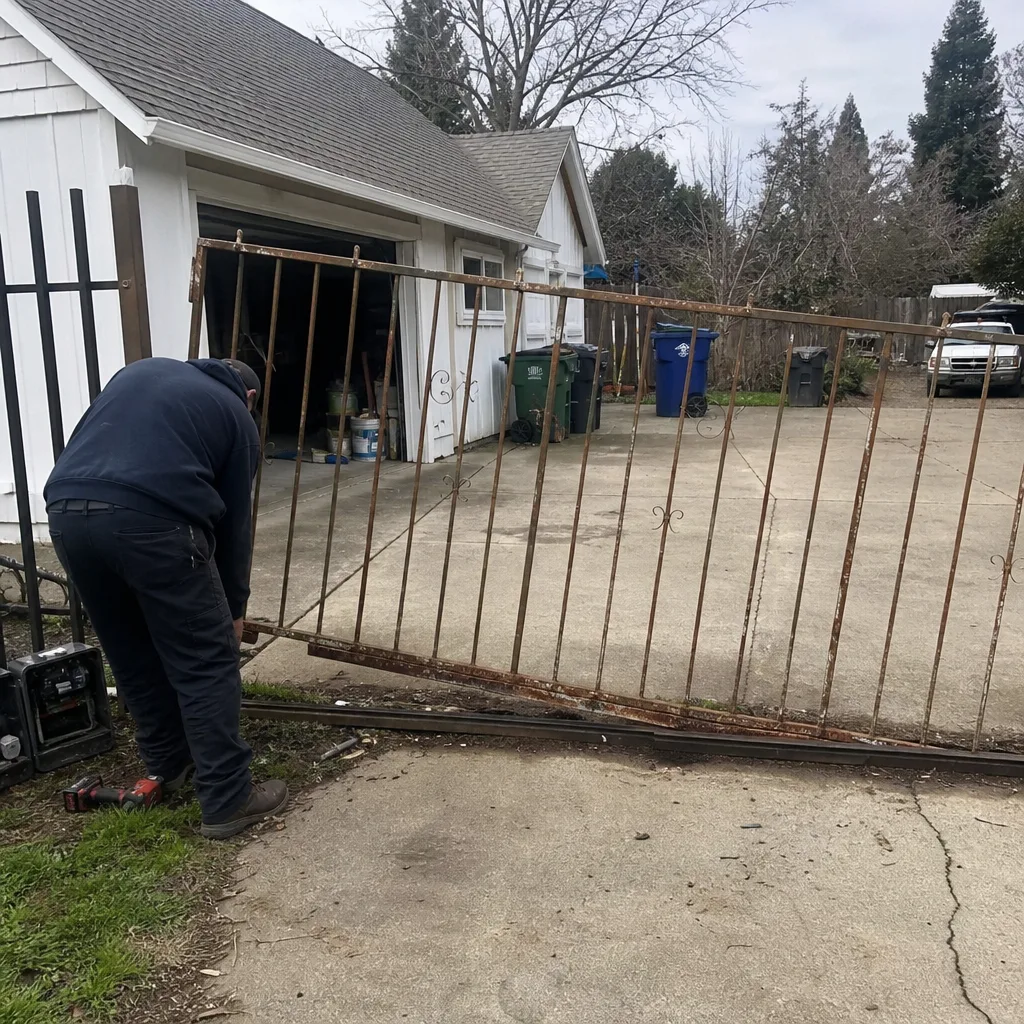 Before
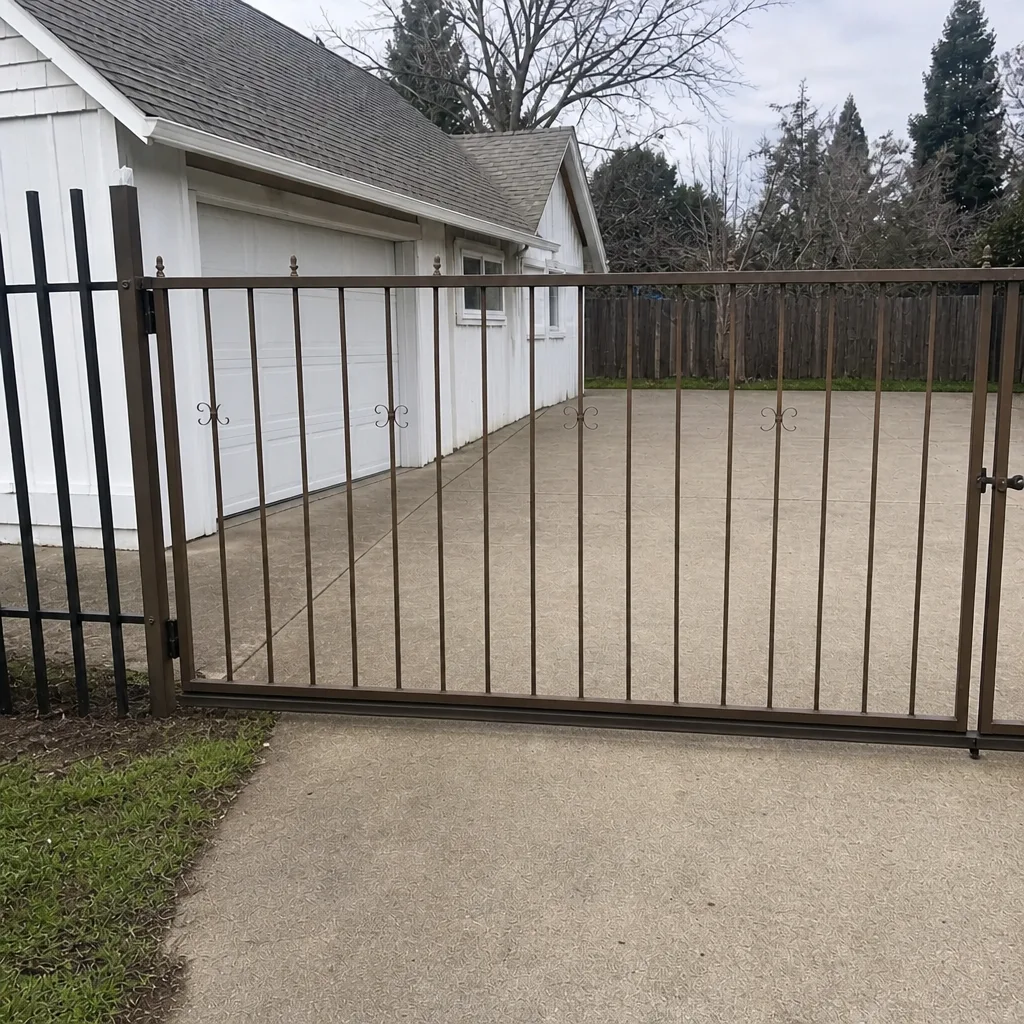 After
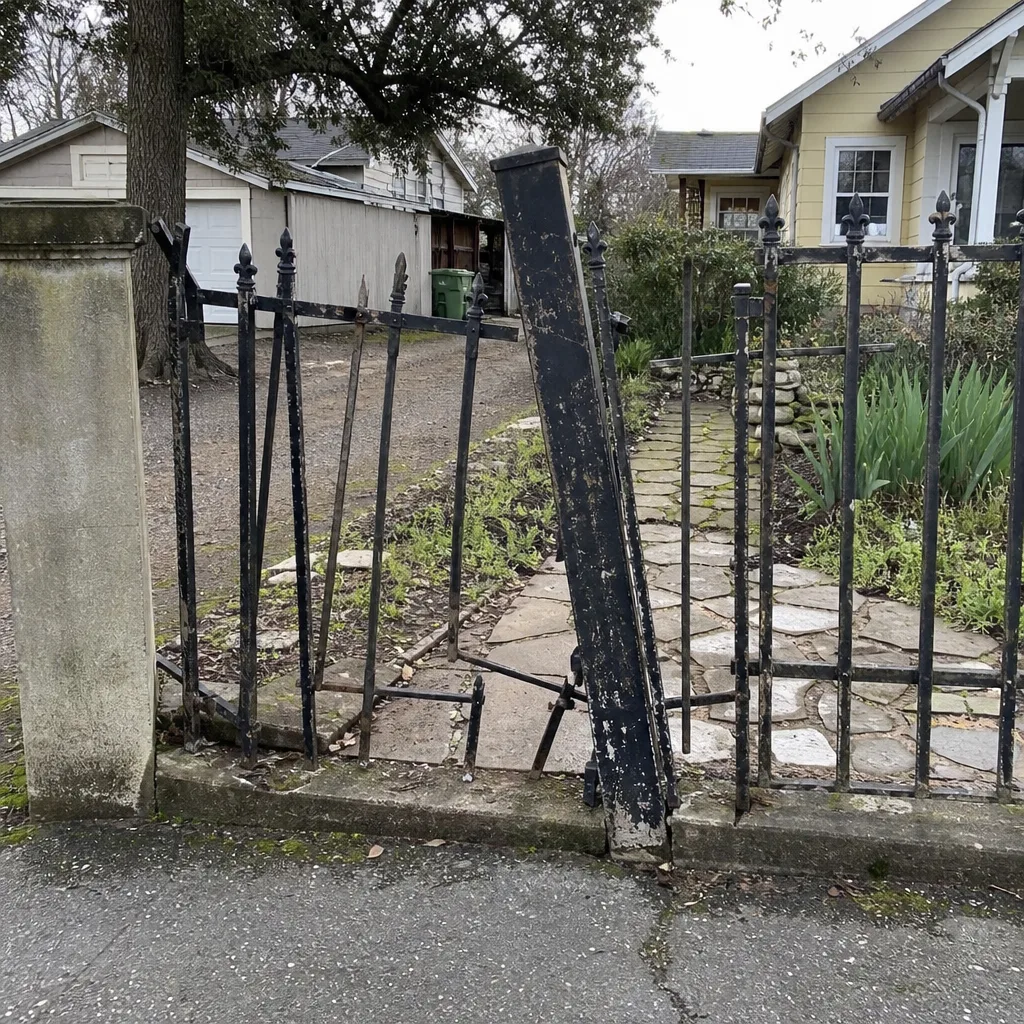 Before
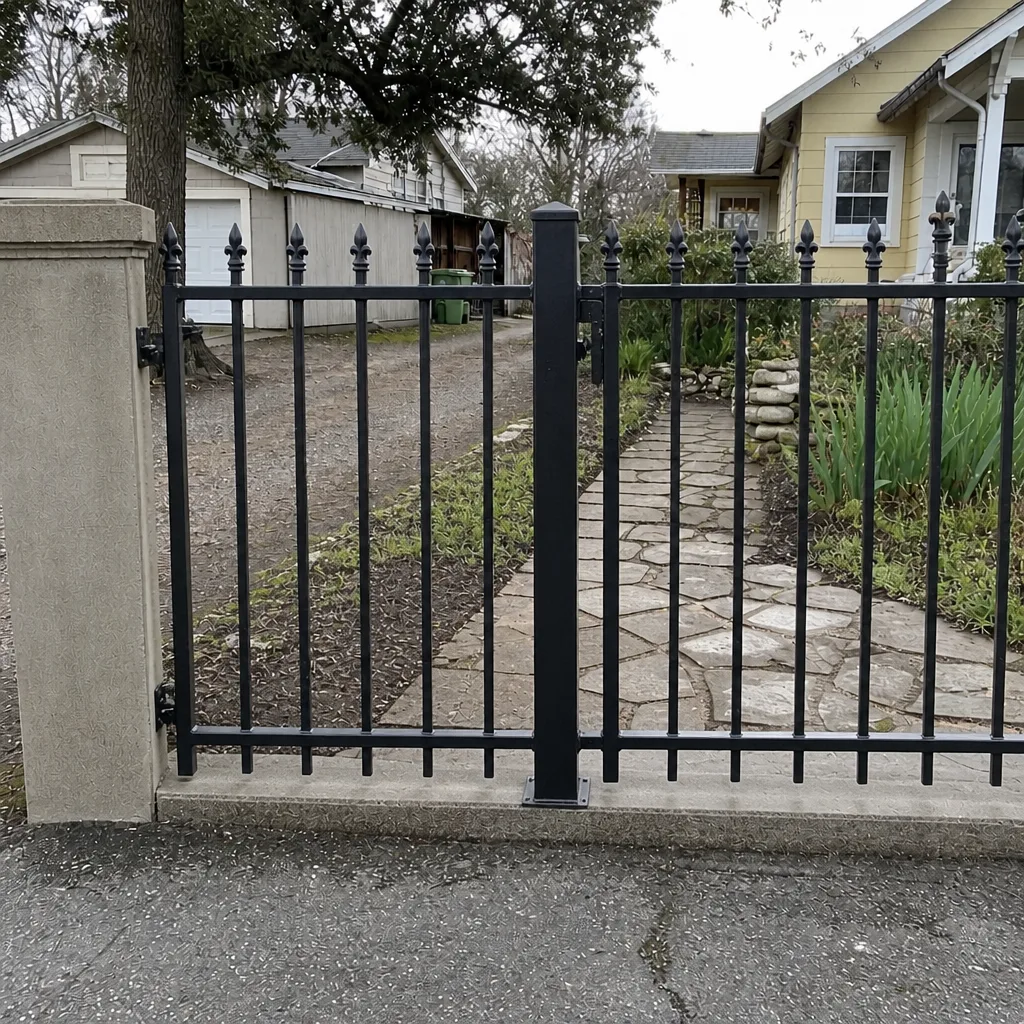 After
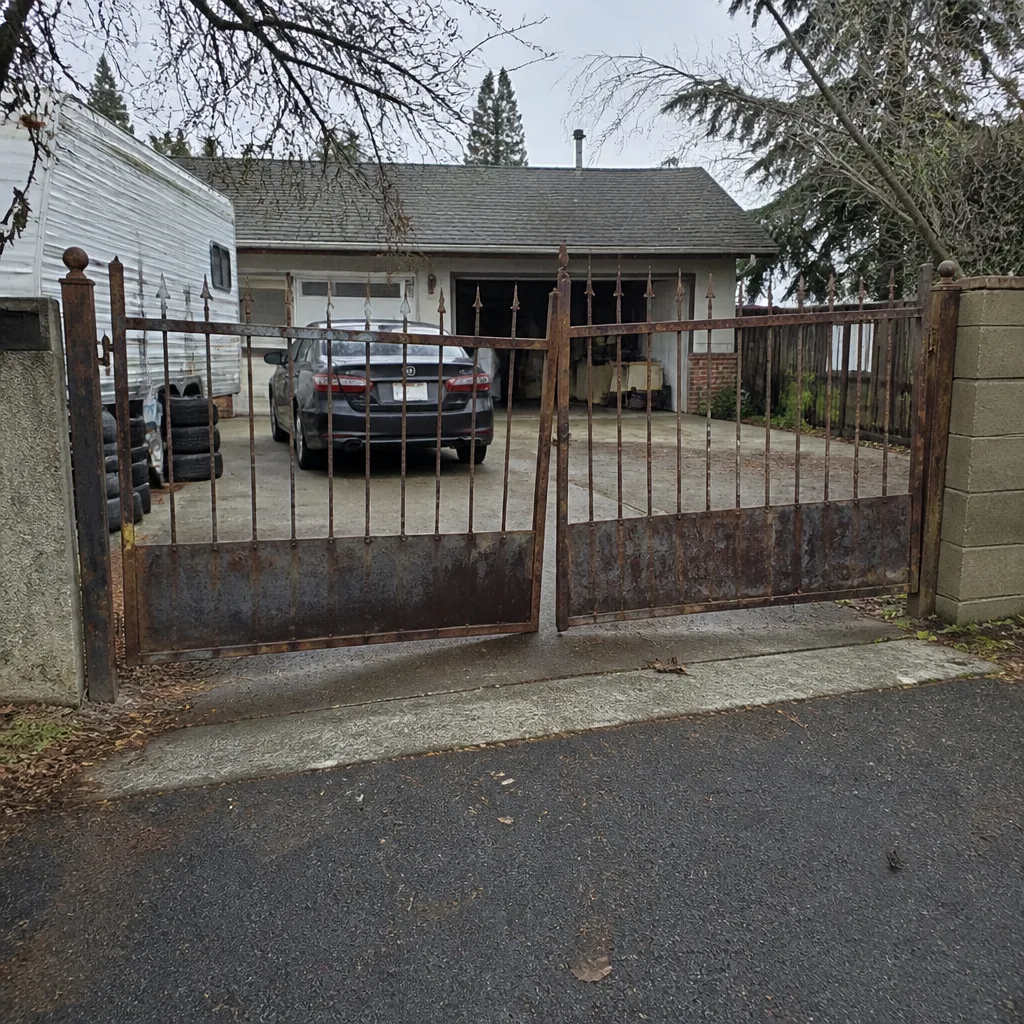 Before
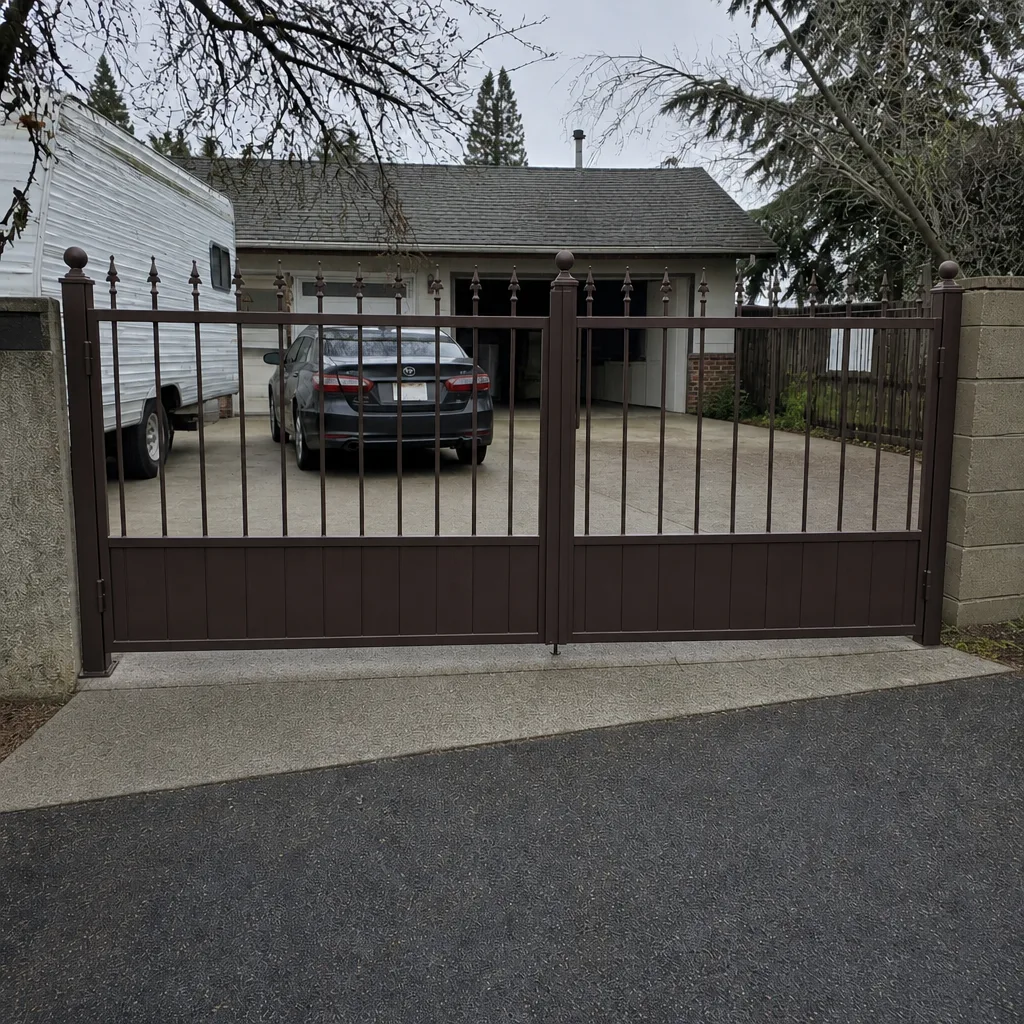 After
When to Call a Professional
Call a professional the moment your repair involves the control board, incoming power, safety edges, photo eyes, limit switches, or post work, and any time the gate is heavy enough that a shift during repair could injure you. Call if a DIY attempt leaves the gate behaving differently, or if you suspect a prior repair is masking a fault. Call if the operator is on a brand you can’t source parts for locally, and call before you dig out a post. For manual gates, call when a mechanical repair keeps recurring after you’ve fixed it once. Gate Repair Chico offers free estimates in Chico, so the diagnosis costs you nothing and the written estimate sets the price before any work starts. Call (866) 369-2364. We answer 24/7. Fast dispatch from 7am to 7pm, Sunday through Friday.
Frequently Asked Questions
You can safely handle lubrication, track clearing, roller and hinge replacement, latch adjustment, and battery swaps on most automated gates. Repairs involving the control board, wiring, safety devices, limit switches, or post work should go to a trained technician because of injury exposure and warranty terms. Fast diagnosis separates the two, and it’s free to ask.
Usually yes when the repair involves a control board, wiring change, or safety-device modification, not when it’s a mechanical part swap. Read the warranty section of your owner’s manual before opening the housing. A covered claim is worth more than a DIY attempt that triggers a denial, so call (866) 369-2364 for a free estimate if you’re unsure.
On an automated gate, the limit switch is part of the UL 325 entrapment system, not just a travel stop, so a mis-set switch can cause a gate to close on a person or vehicle. California treats an improperly set limit switch that causes an entrapment injury the same as a removed safety sensor. That’s control-layer work, always. Call for a diagnosis rather than adjusting it yourself.
Often, yes, when the fault is diagnosed quickly and the part is in stock. Many control-layer and mechanical failures can be handled on the first visit; an order-only part may need a follow-up. Call and we’ll talk through likely timing before we schedule, and the price is set by the written estimate before any work starts.
Hinges, rollers, latches, lubricant, batteries, and basic fasteners are available at local hardware and farm-supply stores. Control boards, safety edges, photo eyes, and brand-specific operator parts usually need OEM sourcing through a dealer. If the part isn’t local, the DIY path may not be practical, and a free estimate tells you what the repair actually needs.
Yes. We service equipment across the full gate operator spectrum, from residential to light commercial, including the brands on your existing gate. That brand range is why we diagnose your specific operator rather than pushing a replacement. Call (866) 369-2364 for a free estimate on any brand.
The Bottom Line
The DIY vs professional decision on a gate comes down to the component, not your skill. Mechanical repairs are yours to handle: lubrication, track clearing, hinges, rollers, latches, and batteries. Control-layer work is the hard stop: control boards, wiring, limit switches, safety edges, and post work, where a bad repair creates injury exposure and can void a warranty. Source what you can locally, accept that OEM parts need a dealer, and run the break-even math before a DIY attempt becomes a callback. In Chico, a free on-site estimate from a gate-only specialist tells you which side of the line your repair is on before any work starts. Whether your gate is an older manual swing or an automated operator on a long driveway, we’ve seen the inside of the system, and that’s the whole point.
Call (866) 369-2364 for a free estimate. We answer 24/7, with fast dispatch from 7am to 7pm, Sunday through Friday. The written quote sets the price before any work begins. Explore more about Gate Repair Chico and how we approach gate work.
Written by the team at Gate Repair Chico.