
Last updated November 16, 2026
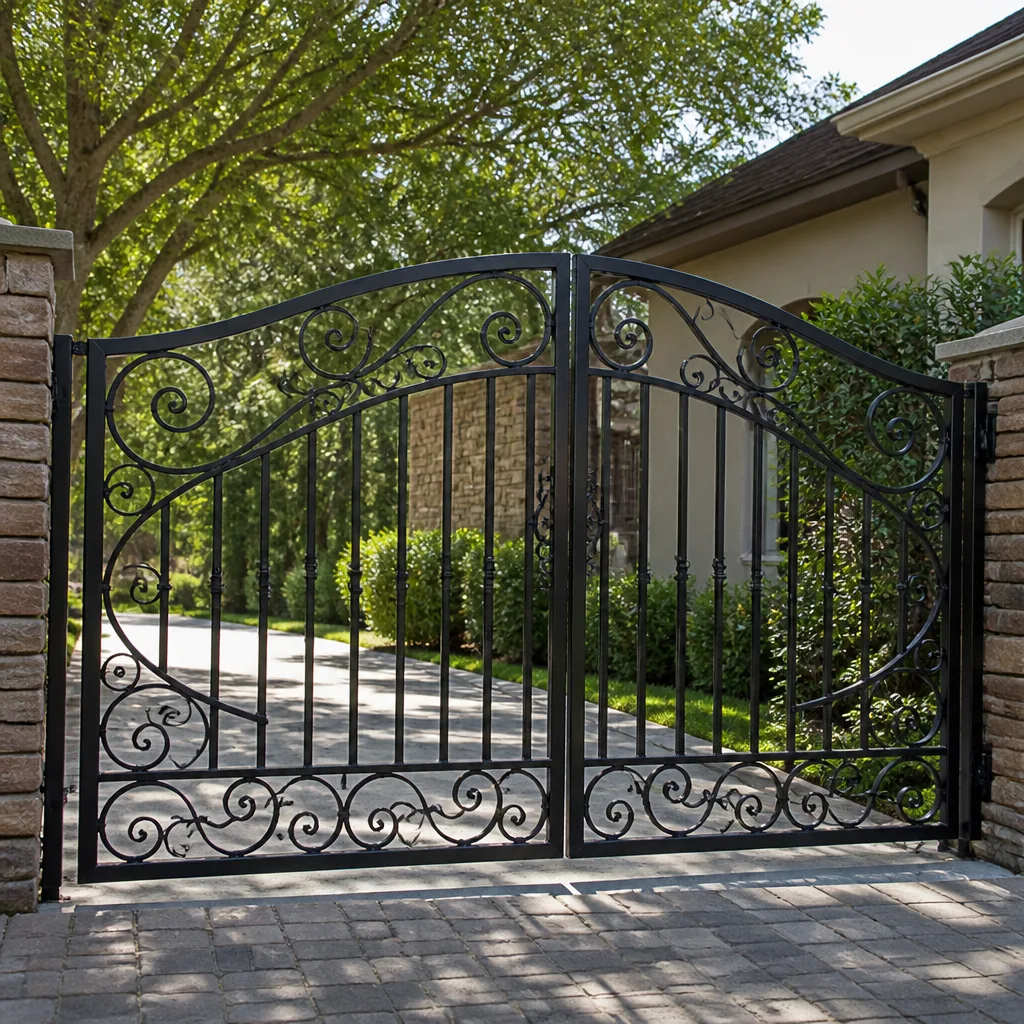 Wrought iron
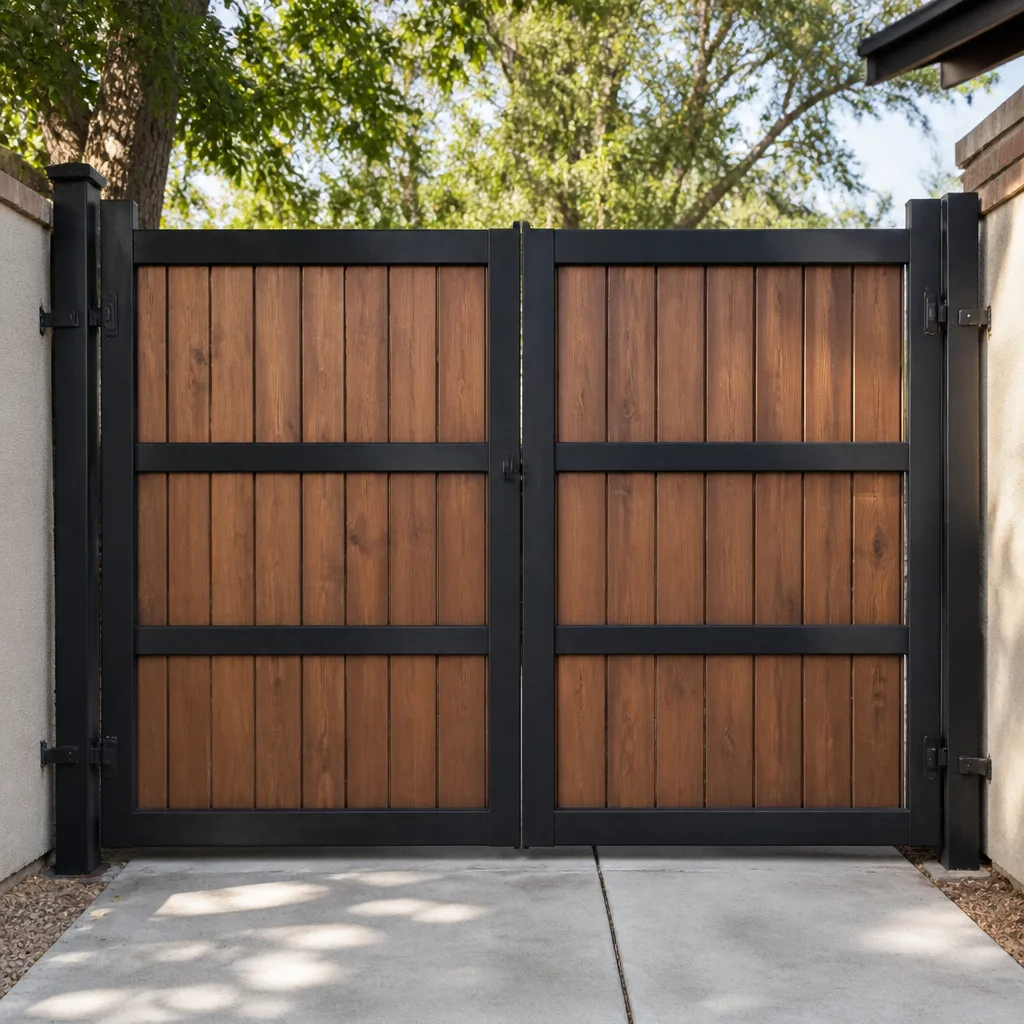 Wood & steel frame
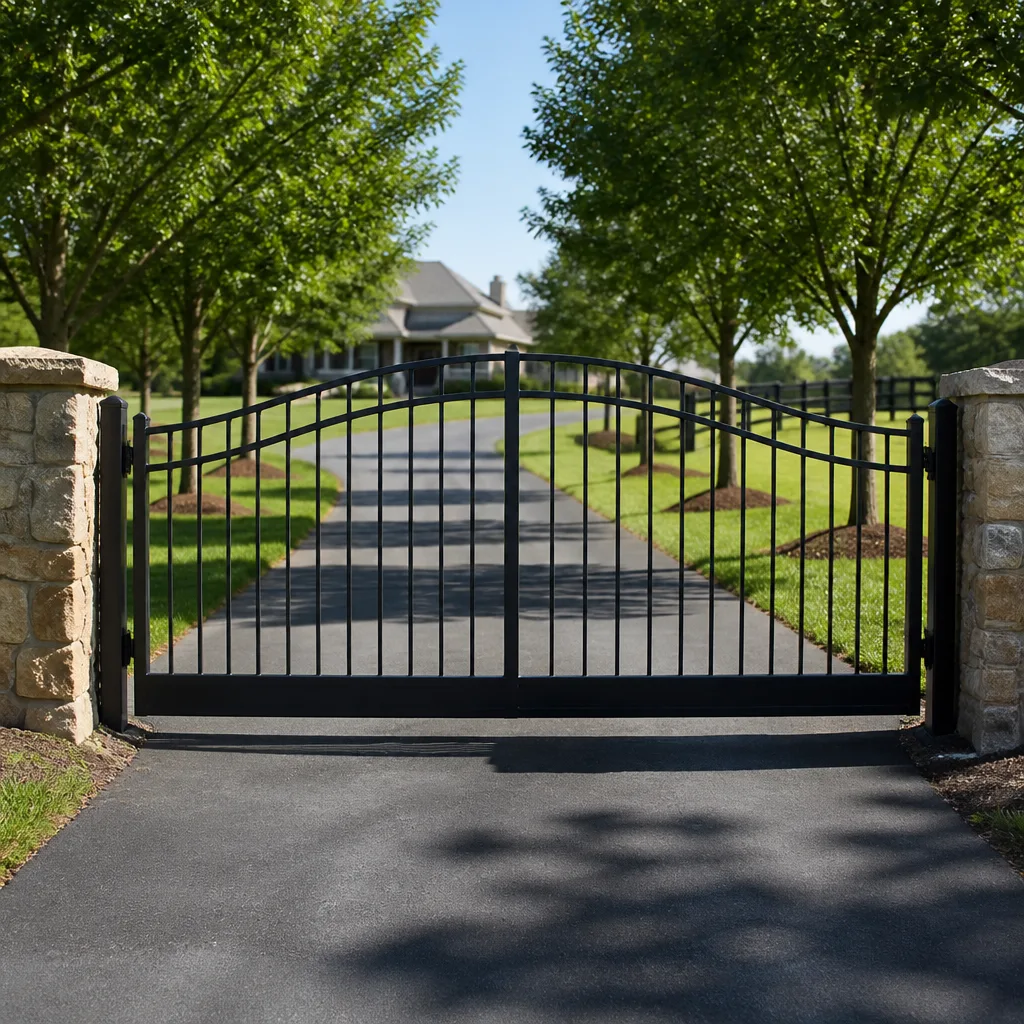 Farm & ranch
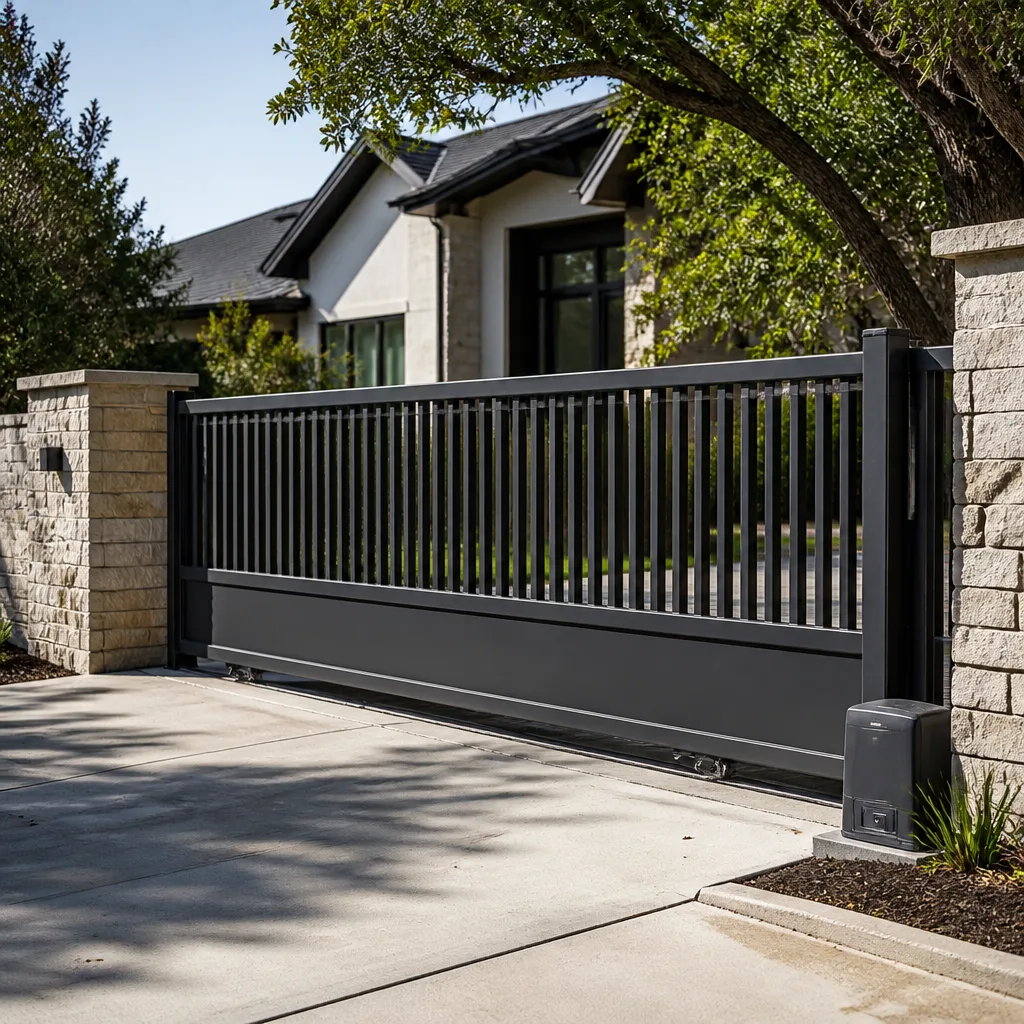 Sliding driveway gates
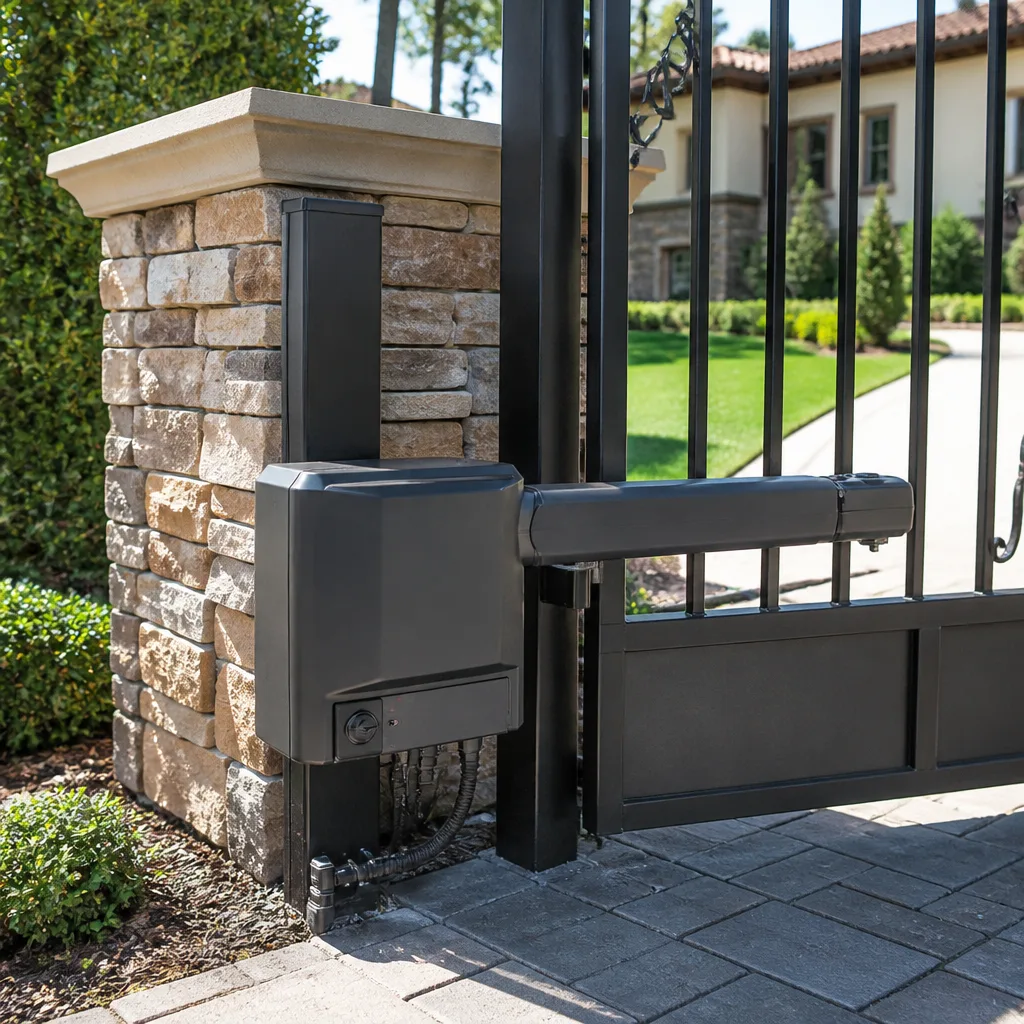 LiftMaster operators
Free on-site gate assessment - hinges, posts, and your LiftMaster or Nice gate operator checked before anything is quoted
The assessment is free and the quote is the invoice.
Get your free estimateChoosing the Right Gate Repair Brand: A Buyer’s Guide for Chico
Most buyers pick a gate operator the way they pick a phone plan: whatever name they’ve heard most. That’s backward. The highest-volume residential operator in the country was built for moderate use in mild weather, and in Chico’s summer heat, on a property that cycles a gate more than fifteen times a day, that same unit becomes one of the most common failure calls we get. The brand isn’t the headline. Duty cycle, heat tolerance, and whether a technician can get the part this week are. This guide walks you through how to evaluate brands for your specific property, what residential and commercial ratings actually mean, and how to compare total cost over a decade instead of comparing sticker prices at the parts counter. By the end you’ll know which questions to ask before anyone touches your gate in Chico.
Quick Answer
The right gate operator brand for a Chico property depends on three things: how many cycles per day the gate runs, whether the operator is rated for sustained high heat and UV exposure, and whether service parts can be found locally without a week-long wait. For a typical residential driveway, Linear and LiftMaster swing and slide operators cover most needs. For heavier multi-unit or light-commercial use, FAAC and BFT rise to the top. Price comes last, because the cheapest operator that fails in two summers isn’t cheap.
Styles & brands we work with
- Wrought iron
- Wood & steel frame
- Farm & ranch
- Sliding driveway gates
- LiftMaster operators
Table of Contents
- How Chico’s Climate Narrows the Brand Field
- Duty Cycle Matching: Residential, Semi-Commercial, and Commercial
- Parts Availability Reality in the Chico Area
- Brand Strengths by Gate Type in This Region
- Total Cost of Ownership Over 10 Years by Brand Tier
- Questions to Ask Before You Commit to a Brand
- When Repair Beats Replacement, Brand Regardless
How Chico’s Climate Narrows the Brand Field
Chico runs hot, dry, and bright for a long stretch of the year. That’s the entire game for gate operators. An operator housing parked in direct summer sun can run thirty to forty degrees above ambient air temperature internally, and the control board, the capacitors, and the motor windings pay for it. Brands that publish a sustained-operating temperature ceiling in their spec sheets are the ones worth trusting in this climate. Brands that only list a “max ambient” number with no duty cycle context are telling you the operator is designed for temperate, low-use installs.
Here’s how the climate factor plays out for Chico buyers:
- UV exposure: Gate operators mounted on exposed posts take direct sun. Photocell lenses yellow and crack, keypads fade, and plastic housings get brittle. Look for brands whose accessories (photocells, keypads, safety edges) are rated for outdoor UV exposure, not just the operator itself.
- Heat and duty cycle: The hotter the ambient, the fewer cycles an operator can safely handle before the thermal cutout trips. A brand rated for 25 cycles per hour at 90°F is a fundamentally different product than one rated for the same figure at 104°F.
- Dry air and dust: Chico’s dry months bring dust. Slide gate tracks, rollers, and chains take a beating. Brands with sealed gearboxes and enclosed limit switches hold up better than open-frame designs.
- Seasonal swings: Chico winters are mild, so we don’t worry about hard freeze cycles the way cold-climate markets do. That takes a whole category of heavy-duty winterized operators out of the conversation, which is good for your wallet.
What this means in practice: brands purpose-built for hot, sunny, high-cycle deployments (FAAC and BFT among them) tend to outlast the mass-market residential names in Chico when the duty is heavy. Brands built for temperate residential driveways (LiftMaster and Linear do this well) are perfectly fine for a low-cycle home gate. The mistake is putting a temperate-climate residential operator on a property that runs it forty times a day.
Duty Cycle Matching: Residential, Semi-Commercial, and Commercial
Duty cycle is the single most misused spec in gate operator buying. It means how often an operator can cycle within a defined time window and still live up to its rated life. A residential operator rated for 12 to 20 cycles per hour will not survive a 40-cycle-per-hour property no matter how well it’s installed. Here’s how the ratings translate to Chico property types.
Residential Duty (12-20 cycles/hour)
A single-family home driveway gate that opens for the morning commute and closes for the evening gets maybe 6 to 12 cycles a day. That’s residential duty territory. LiftMaster and Linear both build operators that handle this without drama, and this is where their cost per year of service is best. If you’re on a quiet residential street in Chico with a single gate and no unusual traffic pattern, residential duty is the right call.
Semi-Commercial Duty (20-40 cycles/hour)
Small apartment complexes, duplex driveways with multiple households, gated storage rentals, and businesses with employee parking fall here. This is where residential brands start to falter and the “how often will I see a technician?” question gets real. FAAC and BFT both make slide and swing operators in this class with better heat tolerance and heavier gearboxes. If your gate gets used by ten or more households per day, semi-commercial is the floor, not the stretch.
Commercial Duty (40+ cycles/hour, continuous-rated)
Commercial lots, apartment communities with shared access, and any gate with a steady stream of daily cycles need continuous-rated operators. DoorKing and the heavy end of the FAAC and BFT lines live here. Barrier arm operators are their own category and follow their own rating curve. If you’re pricing commercial work, ask the installer for the actual published cycle rating of the operator they’re proposing, not a class label.
How to estimate your own cycle count
- Count the number of vehicles (and pedestrians, if your gate handles both) that pass through on a typical busy day.
- Double it: every vehicle or person is an open and a close, so a two-way trip through counted once is two cycles.
- Add the extra cycles from keypads, remotes, and safety-edge reopens. A safety edge that trips and reopens adds cycles silently.
- Compare the total to the operator spec sheet. If you’re over the residential number, step up a class.
We do this math on every Chico diagnostic call because the wrong operator class is behind a huge share of premature failures.
Parts Availability Reality in the Chico Area
The best operator in the world doesn’t help you if the control board has to ship from a warehouse three states away and takes eight days to arrive. For Chico buyers, parts availability is worth more than a spec-sheet advantage, because a gate that stays open for a week is a real problem regardless of what the brand name on it says.
Here’s how the parts landscape actually shakes out in the Chico area:
- LiftMaster and Linear: Widely distributed, common parts (remotes, keypads, photocells, safety edges, small control boards) are frequently available from local trade supply. This is the brand category where a repair is least likely to stall on a part.
- FAAC and BFT: Less commonly stocked on local shelves, but service-focused dealers often carry common wear parts. Control boards and gearboxes may need to be ordered, which is why diagnosing the exact part before ordering matters.
- Viking, DoorKing, Elite, Ghost Controls, Mighty Mule: Mixed distribution. Some parts are readily available through the manufacturer’s dealer network, others are order-in. DoorKing’s commercial parts are usually available through commercial access control distributors, and Mighty Mule’s DIY-focused product line is often available through consumer channels.
The practical takeaway: a brand-agnostic technician who knows the parts distribution in Chico can usually keep a repair on track regardless of which of the nine named brands (LiftMaster, FAAC, BFT, Linear, Viking, Ghost Controls, DoorKing, Elite, Mighty Mule) is on your operator. A technician tied to one manufacturer’s catalog will recommend whatever they stock, which isn’t always what your gate actually needs. If a repair on your gate repair call keeps getting delayed, ask plainly whether the delay is a part-supply issue or a diagnostic issue. They’re different problems.
Brand Strengths by Gate Type in This Region
Brands aren’t uniformly good across every gate type. A brand that builds an excellent slide gate operator may be middle-of-the-road on swing operators, and vice versa. Here’s how the landscape sorts out for the gate types we see most in Chico.
Slide Gate Operators
Linear and FAAC both make reliable slide operators for residential driveways. FAAC steps up well for semi-commercial slide gates with heavier panels and higher cycle counts. For very heavy commercial slide gates, BFT’s heavier lines and DoorKing’s commercial access control integration are the options to consider. Slide gates concentrate load on the track and rollers, so the operator’s ability to handle a heavy panel smoothly matters more than raw torque.
Swing Gate Operators
LiftMaster’s swing operators are a solid mainstream choice for residential single and dual-leaf gates. FAAC and BFT swing operators are the go-to when weights climb into semi-commercial territory, and the underground and articulated-arm designs both have their place depending on the post and hinge layout. Viking swing operators are also common on residential installs.
Barrier Arms
Barrier arm operators are their own beast. DoorKing is the name most commercial lots in Chico land on when the barrier needs access control integration (keypads, card readers, loop detectors). For a residential property with a barrier arm, the lighter operators from LiftMaster and FAAC are usually sufficient. Never put a residential swing operator on a barrier arm duty; barrier arms are frequently cycled and often hit by vehicles, so the operator class has to be up to the abuse.
Automated Openers and Access Control
This is the layer most homeowners underestimate. Even a well-matched operator is only as good as the loop detector, keypad, safety edges, and photo-eye sensors wired into it. A brand that integrates cleanly with common access control components (LiftMaster, DoorKing, FAAC) reduces the number of separate contractors you need on the property. We’ve seen plenty of Chico gate problems that look like operator failures but turn out to be a failing loop detector or a misaligned safety edge on perfectly healthy hardware. That’s why our electric gate repair work starts with diagnosis, not guesswork about the operator itself.
Total Cost of Ownership Over 10 Years by Brand Tier
A purchase-price comparison is meaningless without factoring in service calls, parts, and replacement timing. Here’s how we frame it for Chico buyers. Nobody can predict exact service-call frequency for your property, but the pattern by brand class is stable enough to guide a decision.
- Entry-tier residential (Mighty Mule, Ghost Controls, Viking): Lowest upfront cost. Best for gates that see light, occasional use on a property that isn’t dependent on the gate for daily access. Parts are usually available, service calls are usually straightforward, but service life on a moderate-duty Chico install may run shorter than you’d want if you’re cycling it heavily.
- Mainstream residential (LiftMaster, Linear): Mid-range upfront. Strong parts availability, common diagnostic paths, easy to keep running. Best fit for the majority of Chico single-family driveways. Where these fall short is on properties that expect semi-commercial cycles from a residential operator.
- Heavy residential and commercial (FAAC, BFT, DoorKing, Elite): Highest upfront. Best lifetime cost of ownership if the duty is heavy, because the operator is designed for the load and the parts network is deep. On low-cycle residential driveways, this tier is overkill and the premium buys you very little.
An honest way to compare tiers is to add the upfront cost, an annualized service budget based on your actual cycle count, and the likely replacement interval. A residential operator cycling more than fifteen times a day in Chico heat may need to be budgeted closer to a semi-commercial replacement cycle, and once you build that into the math, the price gap between tiers often narrows more than the sticker price suggests.
Here’s the other side of that: replacing a well-built operator prematurely because it just crossed some arbitrary age threshold is a waste. Plenty of Chico properties have operators running reliably years past what owners assume is their lifespan. Diagnosis first, decision second.
Questions to Ask Before You Commit to a Brand
Whether you’re hiring an installer or a repair service, these are the questions that separate a real brand decision from a guess.
- What’s my actual cycle count? Ask the technician to walk through your daily usage and translate it to cycles per hour. Any recommendation that doesn’t start with this number is incomplete.
- Is this operator rated for sustained heat? Look for a published operating temperature rating, not just a “max ambient.” If the spec sheet is silent, assume the operator is designed for mild climates.
- What are the common wear parts for this brand, and how long can I expect to get out of them? A good tech can name the failure points for the specific brand on your gate.
- If a part fails, how long is the wait in Chico? A rough range is fine. Two days vs. two weeks is the answer you actually need.
- Does this brand integrate with the access control I have or want? Keypads, loop detectors, and safety edges all need to talk to the operator. Brand lock-in here is real.
- What’s the service life of this class at my usage level, and what’s the substitute if I step up a tier? A recommendation without an alternative is a sales pitch, not a diagnosis.
We work on all nine named brands, which means our Chico technicians can’t recommend a brand without answering these questions honestly. That’s the whole point of a brand-agnostic service model.
When Repair Beats Replacement, Brand Regardless
One of the most common upselling traps in the gate business is treating a failed control board or a worn gearbox as a reason to replace the entire system. It’s usually not. A brand-neutral diagnostic approach can save you thousands over ten years, but only if the technician is willing to repair rather than replace.
Here’s when repair is usually the right answer, regardless of brand:
- The mechanical gate is sound. Hinges, rollers, and posts are in good shape. The operator has failed, not the gate.
- The failure is isolated to one component (control board, capacitor, limit switch, motor). Most repairs are component-level, not system-level.
- The operator is in a class match for the property’s duty cycle. If the operator was already undersized for the load, repair may only delay the next failure; replacement is honest advice at that point.
- The parts are available. A repair that takes three weeks is a replacement in disguise.
We default to repair because it’s usually the right call. Diagnosing whether the brand on your operator can be repaired should be part of every estimate. If a technician tells you the whole gate needs replacing before they’ve opened the operator housing, that’s a sign to get a second opinion. If you want the broader picture on diagnosing gate and operator problems in Chico, visit our Gate Repair Chico home page and start from there.
Common Mistakes to Avoid
- Choosing a brand by popularity alone. The biggest-selling residential operator isn’t the right choice for a Chico gate that cycles forty times a day. Popularity tells you about marketing reach, not duty-cycle fit.
- Ignoring the ambient heat rating. Chico summers push operators hard. A spec sheet that only gives a maximum temperature with no sustained duty rating is a warning sign, not a green light.
- Skipping the cycle count entirely. Ten cycles a day and forty cycles a day are completely different problems. Ask for the number and insist on it before a recommendation.
- Buying the cheapest operator for a property that needs reliability. If the gate controls access to your business or a multi-unit property, the cost of a single week of downtime outweighs the upfront savings of a low-tier operator.
- Letting a single-brand technician steer the diagnosis. If a technician only works on one brand, their recommendation is limited to what they stock. Ask if they work across brands, and ask what their diagnostic steps are.
- Replacing an operator that could be repaired. A failing control board is not a failing system. Ask for a component-level diagnosis before approving a full replacement.
- Overlooking the access control layer. Loop detectors, keypads, photocells, and safety edges fail more often than operators do. Chasing an operator replacement when the real problem is a misaligned safety edge is an expensive mistake we see regularly in Chico.
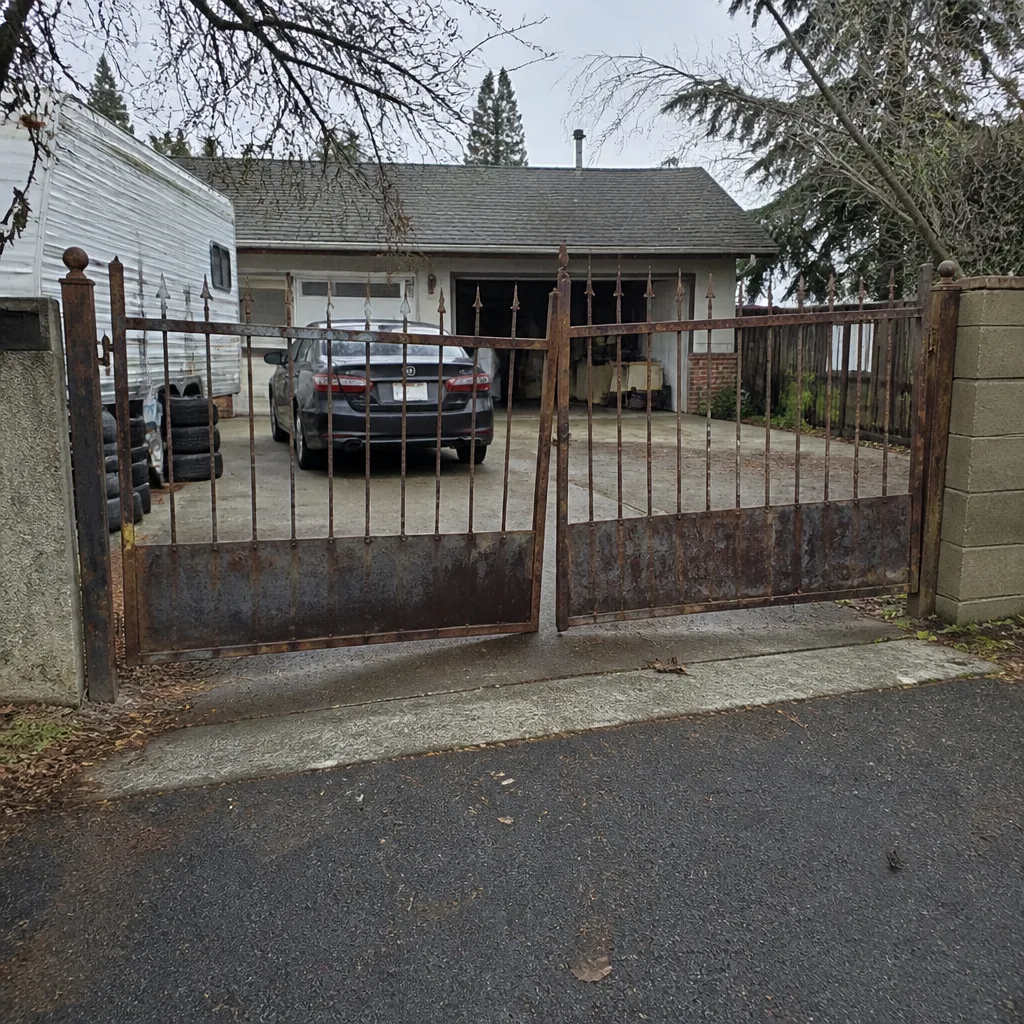
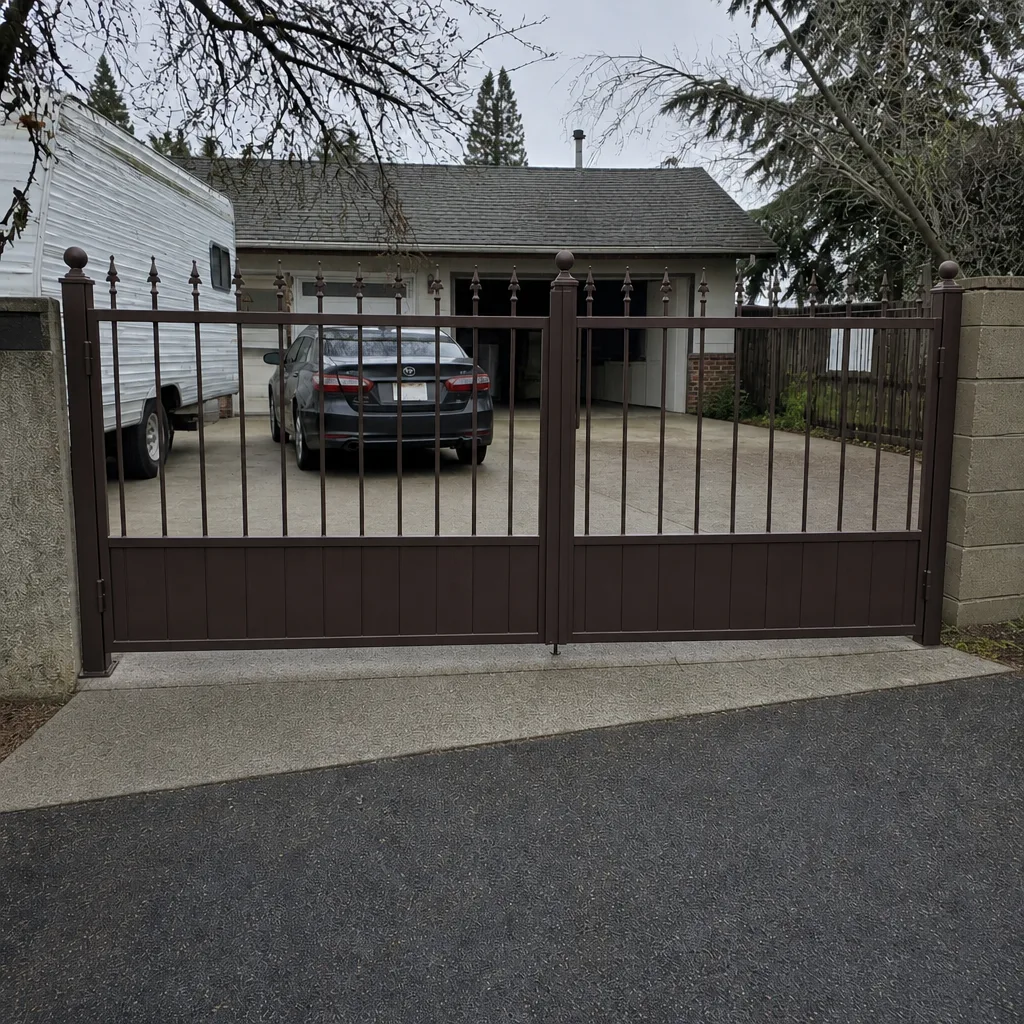
See the difference
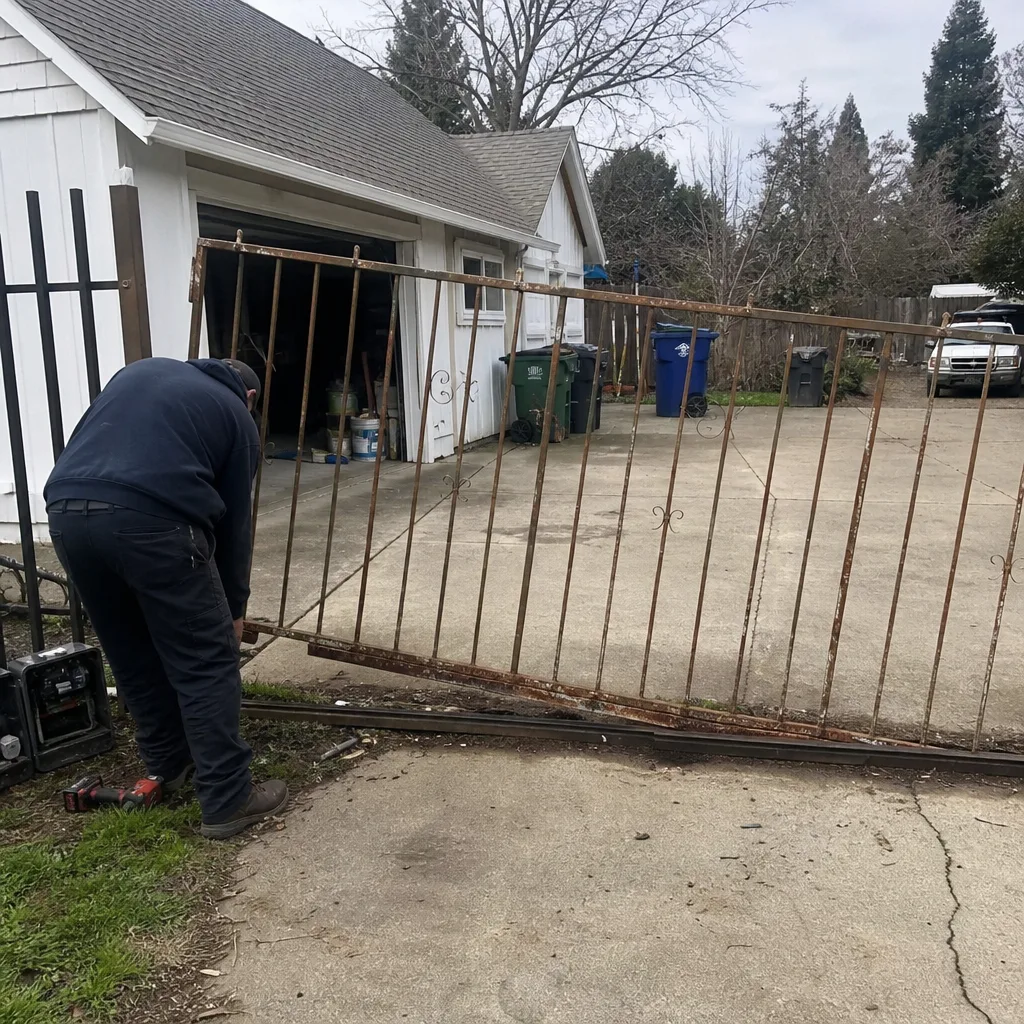 Before
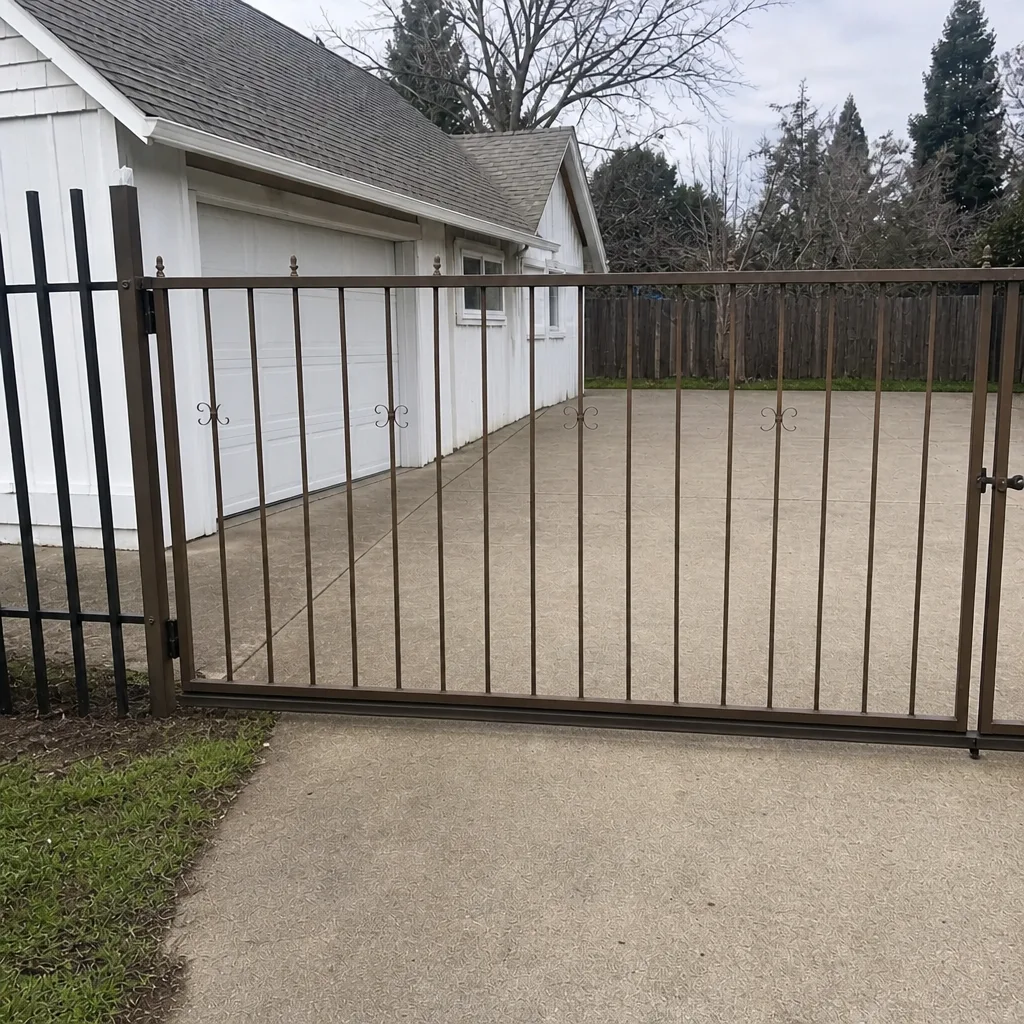 After
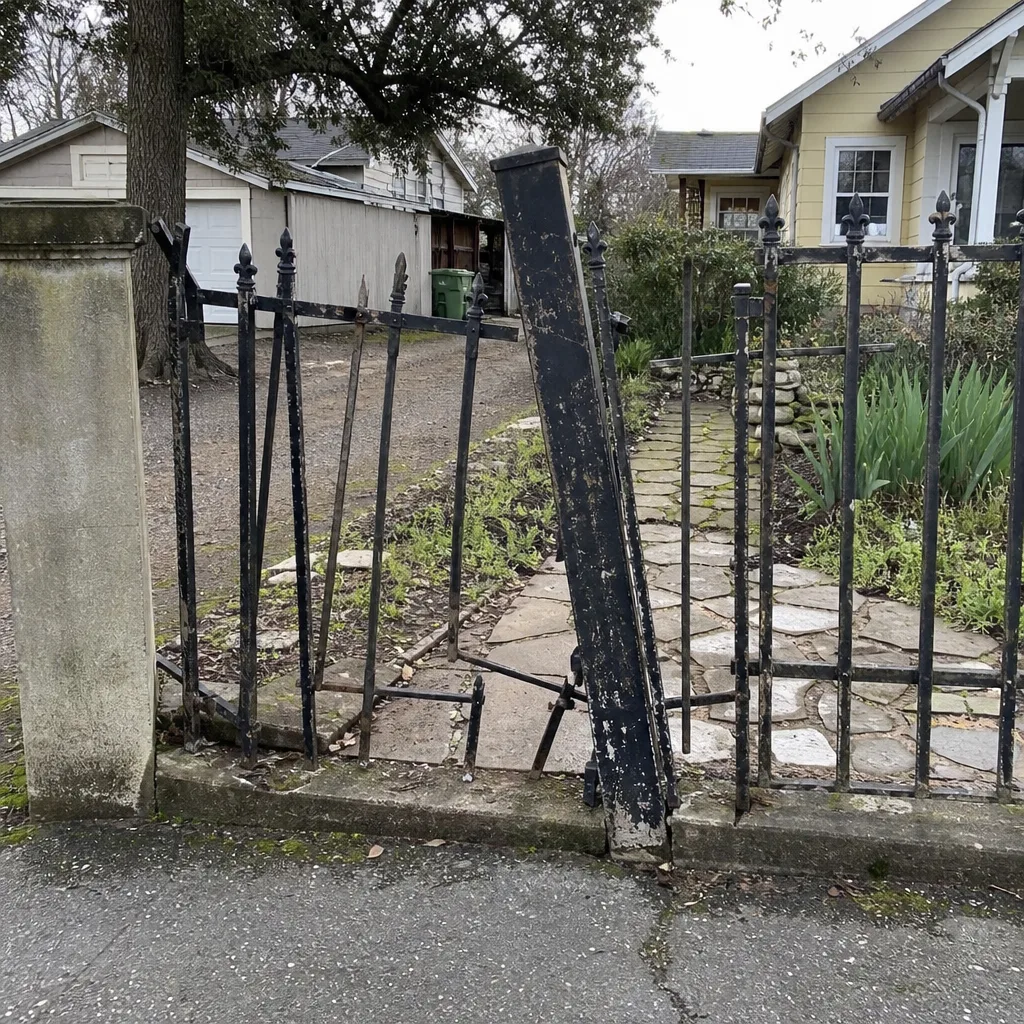 Before
 After
 Before
 After
When to Call a Professional
Some gate issues are obvious. The operator won’t respond to the remote, the gate stops halfway through a cycle, the safety edge reopens the gate on its own. Any of those is a job for a trained technician, not a weekend DIY attempt. Gate operators store energy and run high amperage; the dangerous parts here are the operator’s wiring, the power run to the post, the safety edges, and the heavy gate panel itself. A moving gate that loses a control signal is a crush hazard, and a slide gate that comes off its track is heavier than it looks. Don’t work on the electrical side of a gate operator unless you’re a licensed electrician, and don’t try to repair a heavy gate panel or track on your own. Our technicians have up to 9 years of experience across every phase of gate work, and every job starts with diagnosis. Gate Repair Chico offers free estimates in Chico. Call (866) 369-2364. We answer 24/7. Fast dispatch from 7am to 7pm, Sunday through Friday.
Frequently Asked Questions
For most single-family Chico driveways, LiftMaster and Linear are the right fit because they cover residential duty well, parts are widely available locally, and the diagnostic paths are familiar to any experienced technician. If your property cycles the gate more than fifteen times a day, or you’re serving multiple households from one gate, FAAC and BFT are worth the step up. The right brand is the one that matches your cycle count and heat load, not the one with the biggest market share. Call (866) 369-2364 for a free estimate tailored to your property.
Count the vehicles and pedestrians that pass through your gate on a busy day, double that number to account for both open and close, and add any safety-edge reopens. That total divided by the hours the gate is active gives you your cycles per hour. Anything over 20 cycles per hour needs semi-commercial equipment. Call (866) 369-2364 and we’ll walk you through the count.
Yes. We work on nine named brands across residential and light-commercial equipment: LiftMaster, FAAC, BFT, Linear, Viking, Ghost Controls, DoorKing, Elite, and Mighty Mule. That range covers budget-tier DIY operators on a home driveway and heavy-duty commercial operators on a business lot. Because we work across brands, our diagnosis isn’t tied to one manufacturer’s catalog. Call (866) 369-2364 for a free estimate on any brand we service.
Usually yes. Most failures are component-level, and many discontinued operators share parts with current models within the same brand family. A brand-agnostic diagnosis identifies the exact failed part before assuming the whole system has to go. If a specific part truly isn’t available, we’ll tell you so and offer a replacement plan that fits the gate you already have. Call (866) 369-2364 for a free estimate.
On a typical single-family driveway, no. A commercial-rated operator costs more upfront and offers no benefit if the gate cycles ten times a day; nothing in the commercial class will wear out on that usage. Where commercial gear is worth the money is any property with a duty cycle above 40 cycles per hour, or any gate that serves a business or multi-unit building where a single day of downtime is a real cost. Call (866) 369-2364 and we’ll tell you honestly which class your gate falls into.
Yes. Automated gate work involves the operator, the power run from the house or panel to the gate post, the loop detectors or keypads, and the safety edges and photocells that stop the gate if something’s in the way. All of that is part of the installation and repair scope. Because installation requires a proper on-site measure before the work is scheduled, we don’t quote it over the phone. Call (866) 369-2364 to arrange a free measurement and a written price for your Chico property.
The Bottom Line
The right gate repair brand for a Chico property comes down to three honest answers: what your actual cycle count is, whether the operator can survive Chico’s summer heat for the long haul, and whether parts can be found locally without a week-long wait. Popularity, brand loyalty, and upfront price are distractions next to those three questions. Match the operator class to the property’s duty, favor brands with a deep parts network and a heat-tolerant spec sheet, and always insist on a component-level diagnosis before anyone recommends replacing the whole system. Our Chico technicians work across nine named brands and won’t steer you toward a name just because it’s what we stock. Every job starts with diagnosis, and every estimate is free and agreed with you in writing before work begins.
If your gate is failing, cycling badly, or stuck open, call (866) 369-2364 for a free estimate with Gate Repair Chico. We answer 24/7. Fast dispatch from 7am to 7pm, Sunday through Friday. Whether it’s a Mighty Mule on a driveway or a DoorKing on a commercial lot, we’ll identify the brand, diagnose the actual failure, and quote the repair before any work starts.
Written by the team at Gate Repair Chico.