
Last updated November 16, 2026
 Wrought iron
 Wood & steel frame
 Farm & ranch
 Sliding driveway gates
 LiftMaster operators
Free on-site gate assessment - hinges, posts, and your LiftMaster or Nice gate operator checked before anything is quoted
The assessment is free and the quote is the invoice.
Get your free estimateGate Repair Warning Signs: A Chico Homeowner’s Reference Guide
A gate that hesitates for half a second before it moves isn’t being dramatic. It’s telling you the motor is drawing more current than it should to overcome resistance it shouldn’t be fighting, and that’s a diagnosable problem with a cheap fix if you catch it early. Most gate failures in Chico don’t arrive without warning. They arrive after months of small signals that got normalized: the gate that got a little slower, a little louder, a little less reliable. This guide teaches you to read those signals by sound, by sight, and by pattern, so you’re looking at a modest repair instead of a full operator replacement. We’ll cover what each noise means, how wear shows up differently on swing and slide gates, which intermittent failures predict which component is going, and the Chico-specific warning sign most homeowners miss entirely.
Quick Answer
The main warning signs of a failing gate are unusual sounds (grinding, clicking, humming, or silence when the operator should be running), visible wear like sagging hinges or deformed track, intermittent failures such as shrinking remote range or sensors that trigger randomly, and post lean that has moved past the operator’s auto-adjust threshold. Catching any one of these early usually means a component-level repair rather than a full system replacement. In Chico, post lean from soil movement is the signal homeowners most often overlook.
Styles & brands we work with
- Wrought iron
- Wood & steel frame
- Farm & ranch
- Sliding driveway gates
- LiftMaster operators
Table of Contents
- What Your Gate’s Sounds Are Telling You
- Visual Warning Signs by Gate Type
- Intermittent Failures and What They Predict
- How to Log Gate Behavior So Diagnosis Is Faster and Cheaper
- The Chico Warning Sign Most Homeowners Miss: Post Lean
- Brand-Specific Signals Worth Knowing
- How Chico’s Seasons Affect Gate Wear
- Common Mistakes to Avoid
What Your Gate’s Sounds Are Telling You
Sound is the cheapest diagnostic tool you own. A gate operator is a mechanical system under load, and every abnormal noise points at a specific part of that system. Here’s how to translate what you’re hearing, whether it’s a Mighty Mule on a residential driveway or a commercial-grade operator on a small lot.
Grinding
Grinding almost always means metal-on-metal contact where there should be clearance or lubrication. On a slide gate, it usually points to worn rollers, a track that has debris packed into it, or a gear that’s losing teeth inside the operator housing. On a swing gate, it often means hinge wear or a chain that’s jumped its sprocket. Grinding gets worse fast because the contact accelerates wear, so this is a sound worth acting on within days rather than months.
Clicking
Repeated clicking that doesn’t produce movement usually points at the control board or a relay trying to engage and failing. A single click when the gate starts or stops can be normal relay operation. A rapid click-click-click with no movement is a symptom, and it’s one of the easier things for a technician to confirm on an electric gate repair visit because the sound itself narrows the diagnosis before anyone opens a panel.
Humming
A motor that hums but doesn’t move is trying to work against a physical obstruction, a failed capacitor, or a binding mechanism. On swing gates, check for something jammed in the path or a hinge that’s seized. On slide gates, a hum with no motion often means the gate is binding on its track. Humming is the motor’s version of straining, and letting it strain repeatedly is how motors burn out.
Silence
No sound at all when you press the remote means the command isn’t reaching the operator, or the operator has no power, or a safety device is holding it in a stopped state. Silence is actually one of the most useful signals because it usually points to electrical or control problems rather than mechanical wear.
- Grinding: metal contact, worn rollers, gear damage, hinge wear
- Clicking (repeated, no motion): control board, relay, capacitor
- Humming (no motion): binding mechanism, obstruction, failed capacitor
- Silence: power, remote signal, safety sensor, or board fault
Visual Warning Signs by Gate Type
Different gate types fail in different places, so a visual inspection should start with what kind of gate you’re standing in front of. Walk the gate through a full cycle and watch for these patterns.
Swing Gates: Hinge Wear Patterns
Swing gates pivot, and pivots wear. Look at where the gate meets its hinge or post bracket. A clean, even gap on both hinges is healthy. If the gate has dropped slightly on the latch side, or if the top hinge shows a widening gap while the bottom one looks tight, the hinge is wearing unevenly. You might also see rust streaks or fresh paint cracked at the hinge points, which means movement where there should be none. Swing gate hinges are one of the most common repair items we see, and they’re usually a straightforward fix when caught before the gate drops far enough to drag.
Slide Gates: Track Deformation
Slide gates run on a track or a set of guide rollers, and that path has to stay true. Look down the length of the track for bends, dents, or sections where the gate sits lower than it should. Check the rollers for flat spots. A slide gate that’s started to ride up or drop on one end is telling you the track or the roller carriage is deforming, and that deformation puts extra load on the operator with every cycle.
Barrier Arms: Flex and Sag
Barrier arms on parking or access-control gates should sit level and straight. A visible sag or a bend near the pivot hub suggests the arm has taken an impact or the counterbalance spring has weakened. Flex you can see by eye during operation means the arm is under stress it wasn’t designed for, and the pivot mechanism is the next thing to wear.
- Swing gate: uneven hinge gaps, gate dropping on the latch side, cracked paint at pivot points
- Slide gate: bent track, flat-spotted rollers, gate riding unevenly
- Barrier arm: visible sag, bend near the pivot, noticeable flex during travel
Intermittent Failures and What They Predict
The hardest failures to diagnose are the ones that come and go. An intermittent problem is a component in the early stage of failing, and the pattern of the failure tells you which component. If you can describe the pattern, you’ve done half the diagnostic work already.
Shrinking Remote Range
If your remote used to open the gate from the driveway and now only works from ten feet away, that’s a progressive signal. It can mean the remote battery is weakening, the receiver antenna is compromised, or the control board’s receiver section is degrading. Range that shrinks gradually over weeks points toward the board or antenna. Range that drops suddenly points at the remote itself.
Random Triggering and False Sensor Stops
A gate that reverses for no reason, stops halfway, or refuses to close at all with nothing in the way is usually reporting a safety-sensor problem. Photoelectric sensors get misaligned by bumps, sun glare, or debris, and a sensor that’s slightly off can trigger randomly. This is one of the more predictable failures because it tends to worsen in a specific location or at a specific time of day.
Board Degradation
When a gate starts ignoring scheduled commands, losing its limit settings, or behaving differently after a power interruption, the control board is often the cause. Boards degrade slowly and their symptoms look like a dozen other problems, which is exactly why a written log of what happened and when is so valuable. A brand-agnostic technician who diagnoses a Linear or Viking board on its own terms, rather than assuming it’s a failed motor, will find the real culprit faster.
How to Log Gate Behavior So Diagnosis Is Faster and Cheaper
A short note on your phone is the most useful tool in this entire guide. When a technician knows what the gate did, when, and under what conditions, diagnosis gets faster and the labor bill gets smaller. Here’s a simple system that takes seconds to use.
- Start a note titled with the gate’s location (front driveway, back property, side lot) the moment you notice anything odd.
- Record the date and time of each event, plus the weather if it’s relevant (hot afternoon, after a windy night, after a power blink).
- Describe what happened in plain words: “hesitated,” “reversed mid-close,” “remote didn’t work from the car,” “hummed then stopped.”
- Note anything that changed since it last worked normally, such as a new remote, a landscaping change, or a panel reset.
- Capture a short video when the problem is visible or audible, since a recording of a grinding noise is worth more than a description of one.
- Write down the brand and model from the operator label if you can see it, because knowing the brand is the first thing a technician wants.
Hand that note to a technician and you change the visit from a diagnostic mystery into a targeted repair. That’s true for any electric gate repair call, and it’s even more useful in Chico where the same intermittent problem can be the difference between an afternoon appointment and a morning one when the phone gets busy.
The Chico Warning Sign Most Homeowners Miss: Post Lean
The gates that fail hardest are the ones where the post has started to lean, and the operator has been compensating without complaint. A gate operator is designed to tolerate a small amount of misalignment. But when the hinge post or the gate post moves past the point the operator’s auto-adjust can handle, the mechanism is now fighting the gate’s geometry on every cycle. That’s where small problems become expensive ones.
Why does this matter in Chico? Because clay-heavy soil and seasonal moisture swings in this valley move posts slowly, a fraction of an inch a season. You won’t see it happen. You’ll see a gate that used to close flush and now stops a quarter inch short, or a slide gate that needs a nudge to seat in its catch. Those symptoms read like sensor problems or weak motors, which is exactly why so many gates get unnecessary part swaps before anyone checks the posts.
Here’s how to check for post lean without special tools:
- Stand back about fifteen feet and look at the gate post relative to a straight reference, like a fence line, a wall, or a downspout.
- Look for a gap between the post and the ground on one side, or soil visibly pushed up on the other.
- Compare both posts: if the hinge post and the latch post don’t share the same angle, you have movement.
- Watch the gate as it closes: if the gate looks like it’s steering into its catch, the geometry has shifted.
- Check for fresh cracks in the concrete footing collar or in a poured-pad installation.
Post lean is a gate repair problem with a specific fix, not a mystery. If the movement has only just started, a professional can often re-set or re-align the post before the operator or the gate panels take damage. Ask the city about permits before any post replacement, because Chico and Butte County have their own rules for structures at the property line, and a professional will know what your situation requires.
Brand-Specific Signals Worth Knowing
Gate operators all do the same job, but each manufacturer builds its own personality into the hardware, and knowing the personality shortens diagnosis. We work with nine named brands, and the signals below are the ones that come up most often on residential and light-commercial systems in the Chico area.
Ghost Controls and Mighty Mule
These are the operators most often installed on residential driveways by homeowners themselves, and their warning signs tend to be about installation durability. A Ghost Controls unit that starts refusing to close is often a safety-sensor alignment issue, and the sensor bracket is the first thing to check. Mighty Mule units on gates that are slightly heavy for their rating are prone to stalling and controller resets, which look like board failure but are often the operator working past its mechanical limit.
Linear and Viking
Linear and Viking operators are common in residential and small commercial settings, and their failures lean toward control-board and limit-switch issues. A Linear unit that forgets its open position after a power blink, or a Viking unit that reverses mid-travel with a clear path, usually has a board or limit problem rather than a mechanical one. These are the signals that reward a brand-agnostic diagnostic approach, because a technician who knows the platform can test the right component first.
BFT and the Commercial Tier
BFT and similar commercial-grade operators are built to run hard, and when they misbehave the signals are usually about load. Slower travel times, unusual heat at the housing, and thermal shutdowns under normal use all point to mechanical resistance somewhere in the gate itself. A commercial operator with a load problem will keep running until it wears out the mechanism, so a slowdown on a commercial gate is a sign to look at the gate, not just the operator.
How Chico’s Seasons Affect Gate Wear
Gates live outdoors, so the local climate is part of the diagnostic picture. Chico’s hot, dry summers are the toughest season for gate hardware. Metal expands, lubricants thin out and evaporate, and operators run hotter because the ambient temperature is higher. Heat is the season that accelerates hinge wear and pushes older control boards into thermal shutdown.
The wetter months bring a different set of signals. Damp conditions make sensor misalignment more likely as the ground around a post shifts, and they can trigger intermittent false stops. Debris also builds up faster on slide-gate tracks after wind and rain, which shows up as grinding or humming before any real damage happens. If a gate gets slower in the summer and behaves in winter, that’s a lubrication and tolerance issue worth fixing. If it misbehaves after wet weather, that’s usually a sensor, post, or track issue.
That seasonal rhythm is one reason electric gate repair is often a matter of timing. A symptom that looks like a slow decline over a full year is a couple of small repairs when you catch them, and a much bigger bill when they compound.
Common Mistakes to Avoid
- Bypassing a safety sensor to keep the gate moving. A gate that won’t close because of a sensor is reporting a safety fault. Bypassing it removes the protection that stops the gate on a child, a pet, or a car, and that’s the one “fix” no one should ever make. Call a professional instead.
- Oiling or greasing everything on the gate. Lubricant on a track, rollers, or hinge is right. Lubricant inside an operator housing, on a limit switch, or on a chain that uses dry lubricant is wrong and can attract dust that accelerates wear. Match the product to the part.
- Adjusting an operator to compensate for a moving post. Turning up the torque or extending the auto-adjust is a temporary bandage on a geo-mechanical problem. The gate will keep taking damage until the post is corrected.
- Replacing a control board before checking the remote and receiver. Shrinking remote range and missed commands often come from the handheld or a loose antenna, not the board. Test the cheap parts first.
- Ignoring a gate that works “most of the time.” Intermittent behavior is the early stage of a failure. Waiting for the gate to stop entirely turns a component repair into a system replacement.
- Assuming your gate has torsion springs and needs them replaced. It doesn’t. Gates use different mechanisms, and a technician who talks about torsion springs on a gate hasn’t looked at the machine.
- Hiring a general handyman because the gate “only wobbles a little.” Gate operators and access-control components are a specialized system. A gate-only specialist diagnoses the actual component instead of replacing parts on a guess.
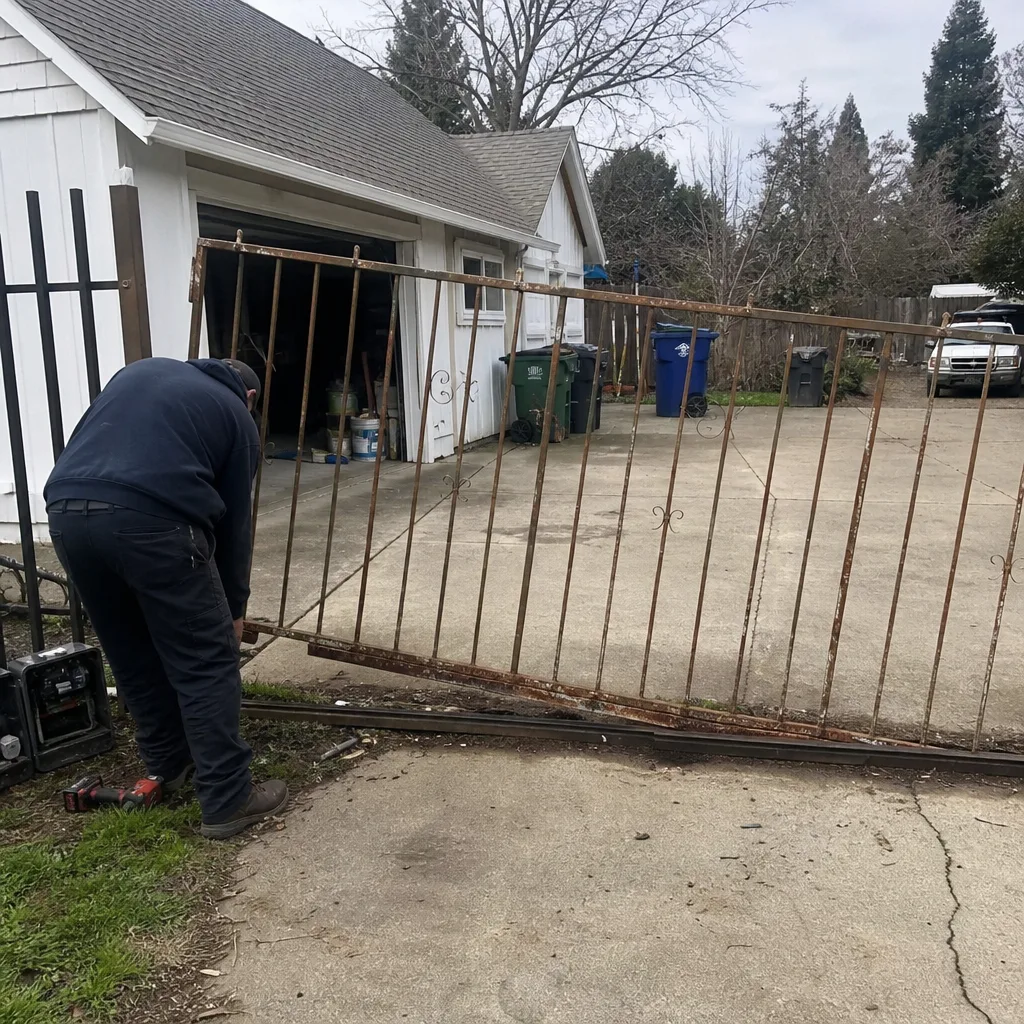
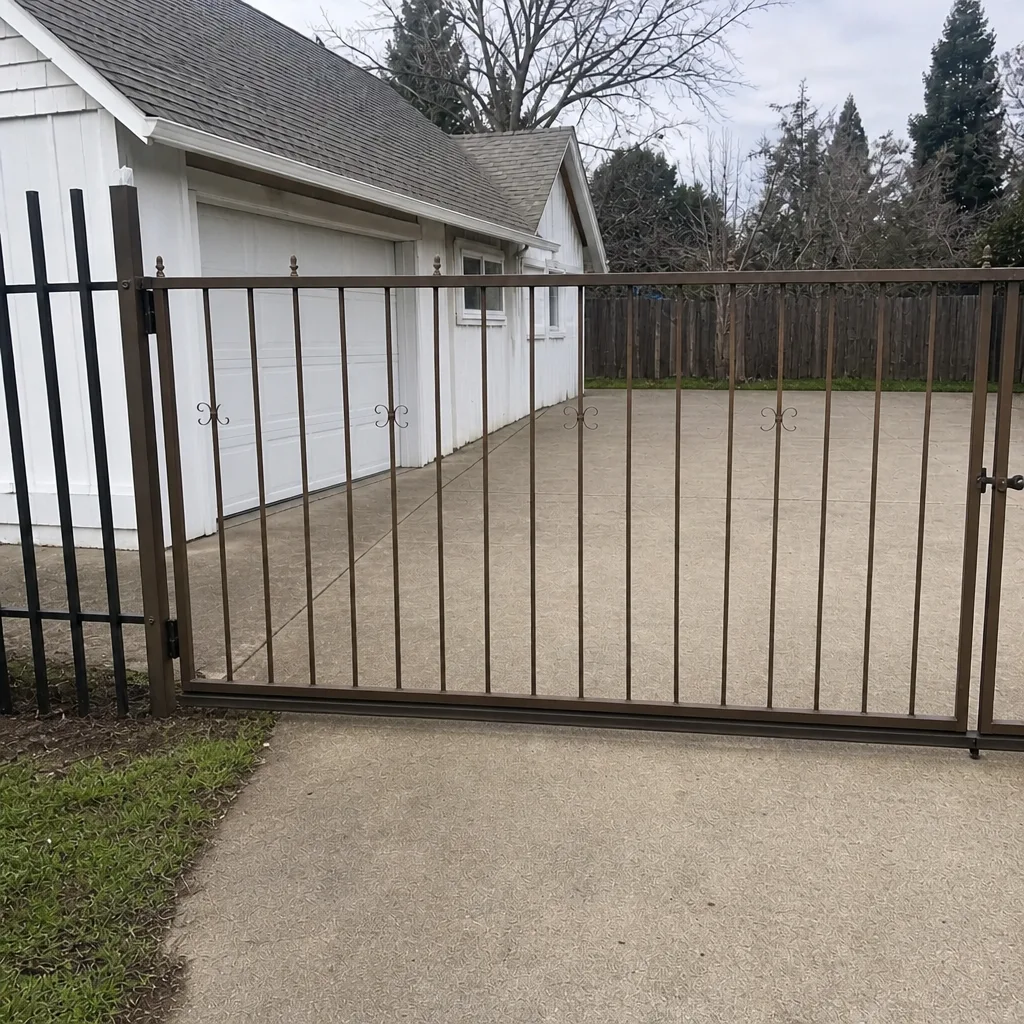
See the difference
 Before
 After
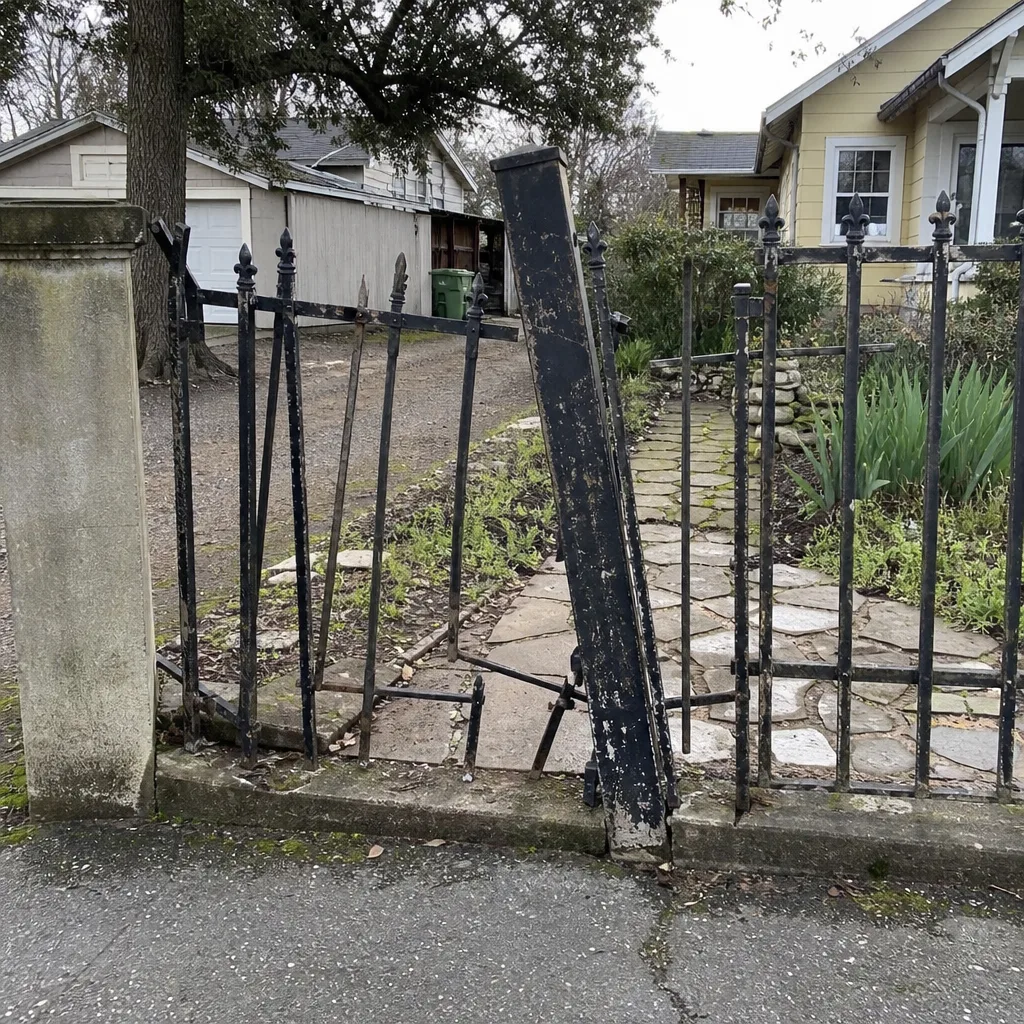 Before
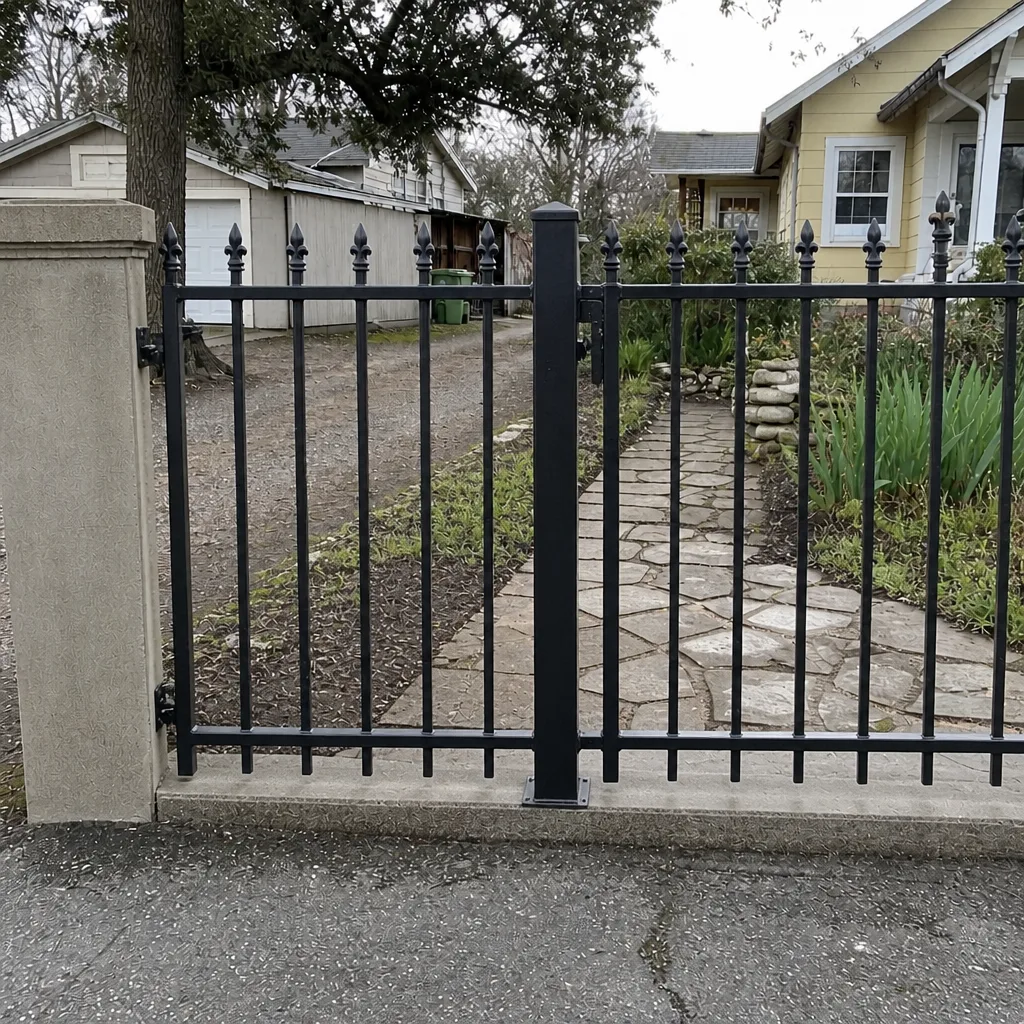 After
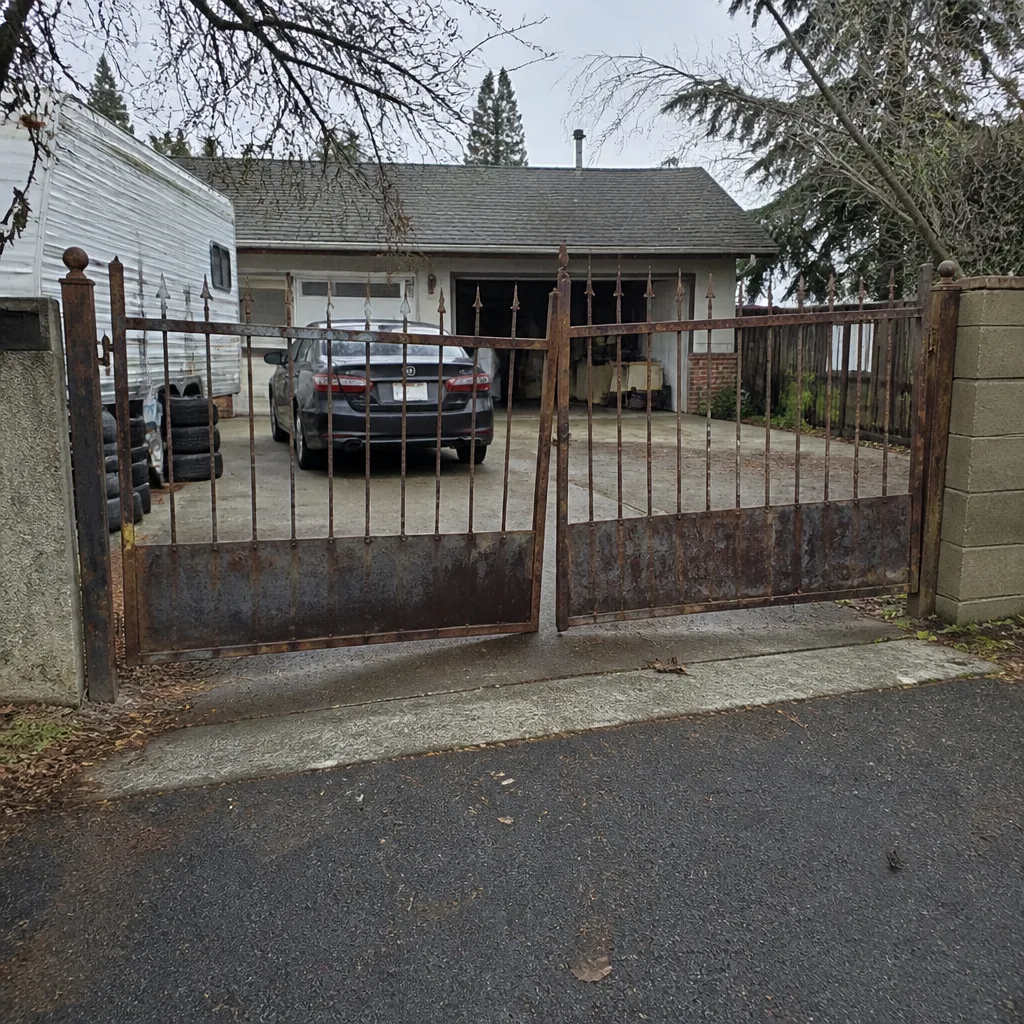 Before
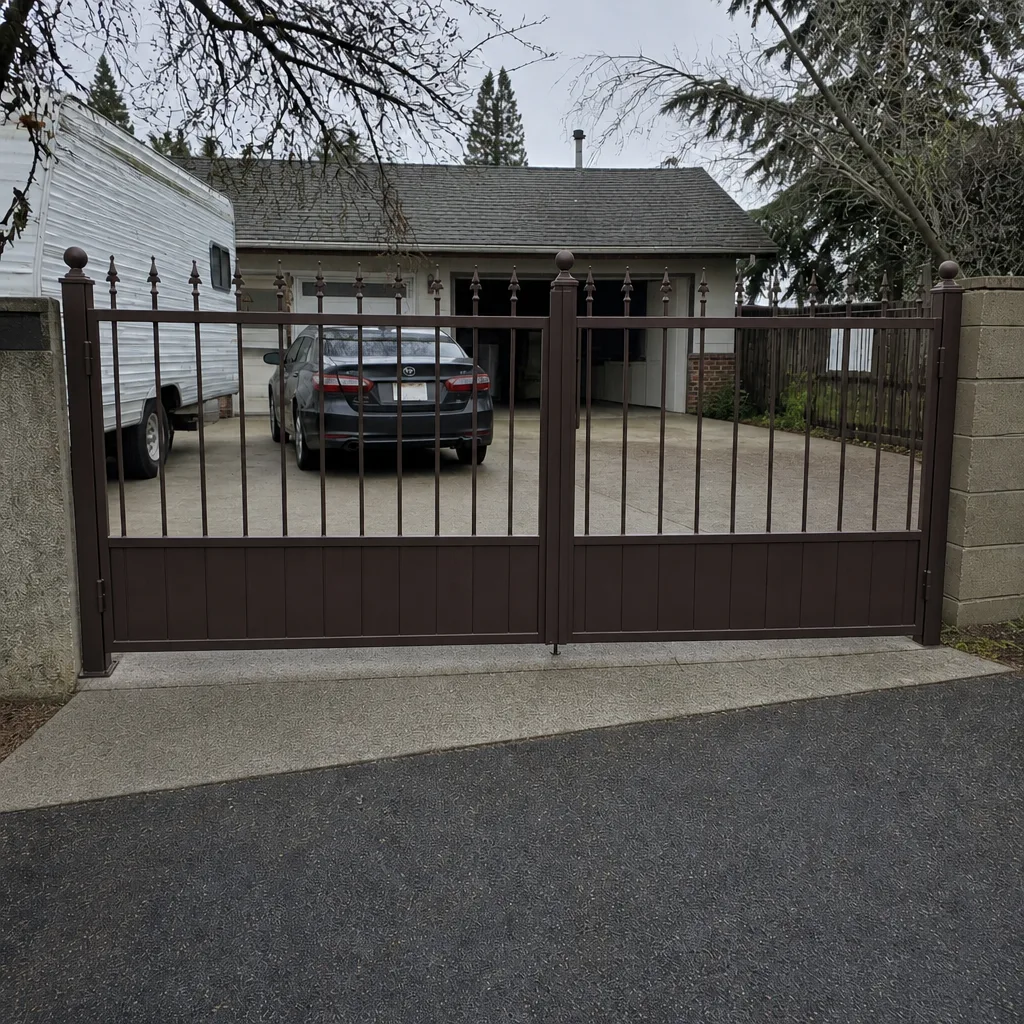 After
When to Call a Professional
Some signals are safe to watch for a few days. Others need a technician’s eyes before the next cycle. Call a professional if the gate hums or grinds without moving, if a safety sensor keeps false-triggering after you’ve cleared the path, if the gate drops or drags at any point in its travel, if a remote loses range suddenly, if the board resets on its own, or if you can see post lean or track deformation. And never bypass a safety device to keep the gate in service. Gate Repair Chico offers free estimates in Chico. Call (866) 369-2364. We answer 24/7. Fast dispatch from 7am to 7pm, Sunday through Friday. We’re closed on Saturday, and a call outside dispatch hours is booked into the next opening. The written estimate sets the price, and you agree it before any work starts. Our technicians have up to 9 years of experience, and a focused gate-only specialist will read these signals faster than anyone with a broader to-do list.
Frequently Asked Questions
The first warning sign is usually a slight hesitation or a new sound when the gate starts to move. A half-second pause before travel, a faint grinding note, or a click that used to be silent all mean something is drawing more current to overcome resistance. That’s a diagnosable issue with a cheap fix if caught early, so call (866) 369-2364 for a free estimate.
A humming motor that isn’t moving is under strain and can overheat if left powered, so treat it as urgent. Turn the gate off at the control and have it looked at. It’s commonly a binding mechanism, an obstruction, or a failed capacitor, and it’s usually a quick fix once the cause is confirmed. Call (866) 369-2364 for an exact quote; estimates are free.
Yes, in most cases a leaning post can be re-set or re-aligned without replacing the gate or the operator, especially if the movement is caught early. The key is identifying the post before the operator compensates to failure. Ask the city about permits before any post replacement. Call (866) 369-2364 to have a technician look at it.
Intermittent failures point to a component in early decline, most often a misaligned safety sensor, a degrading receiver on the control board, or a limit switch that’s starting to fail. The pattern of the failure tells a technician which component is going. Log the events on your phone and call (866) 369-2364 for a free estimate.
We work on nine named brands: LiftMaster, FAAC, BFT, Linear, Viking, Ghost Controls, DoorKing, Elite, and Mighty Mule. That includes DIY residential operators like Mighty Mule and Ghost Controls as well as commercial-grade systems like DoorKing. A gate-only specialist reads the brand-specific signals from the start rather than guessing. Call (866) 369-2364 to book an estimate.
Yes, because intermittent behavior is the warning stage before a full failure. Fixing a component while it’s still functioning costs less than replacing the operator or gate after damage compounds. The written estimate sets the price before any work starts. Call (866) 369-2364 for a free estimate.
The Bottom Line
Gate failure almost never arrives without warning. It arrives as a gate that hesitates, grinds, hums, clicks, or behaves a little differently than it used to, and the homeowner who recognizes those signals is the one who pays for a component repair instead of a full replacement. Write down what you hear and see, log it on your phone, and watch for visual signs by gate type. In Chico, pay special attention to post lean, because the operator’s auto-adjust is masking a geo-mechanical problem right up to the moment it can’t. Catch these signs in the next 60 days and you’ll save money on every repair that follows.
Written by the team at Gate Repair Chico.