
Last updated November 16, 2026
 Wrought iron
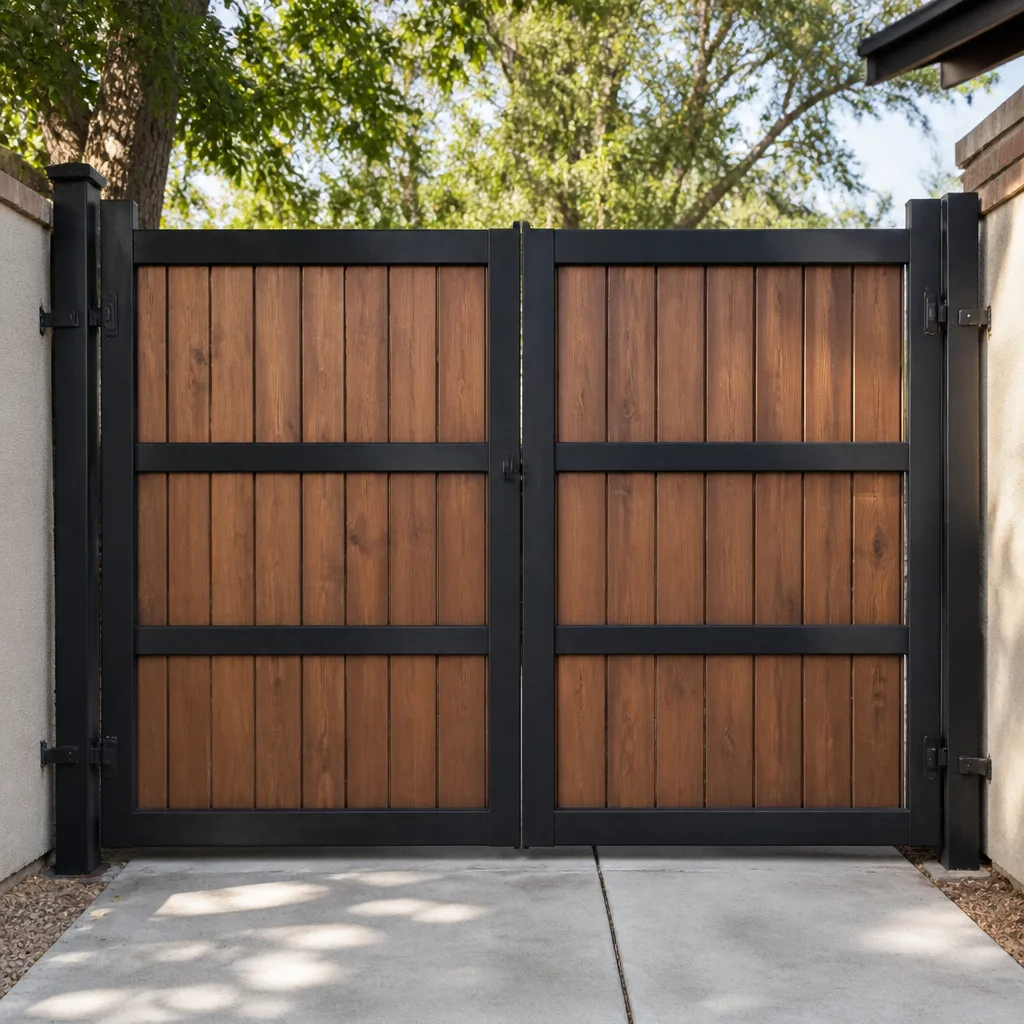 Wood & steel frame
 Farm & ranch
 Sliding driveway gates
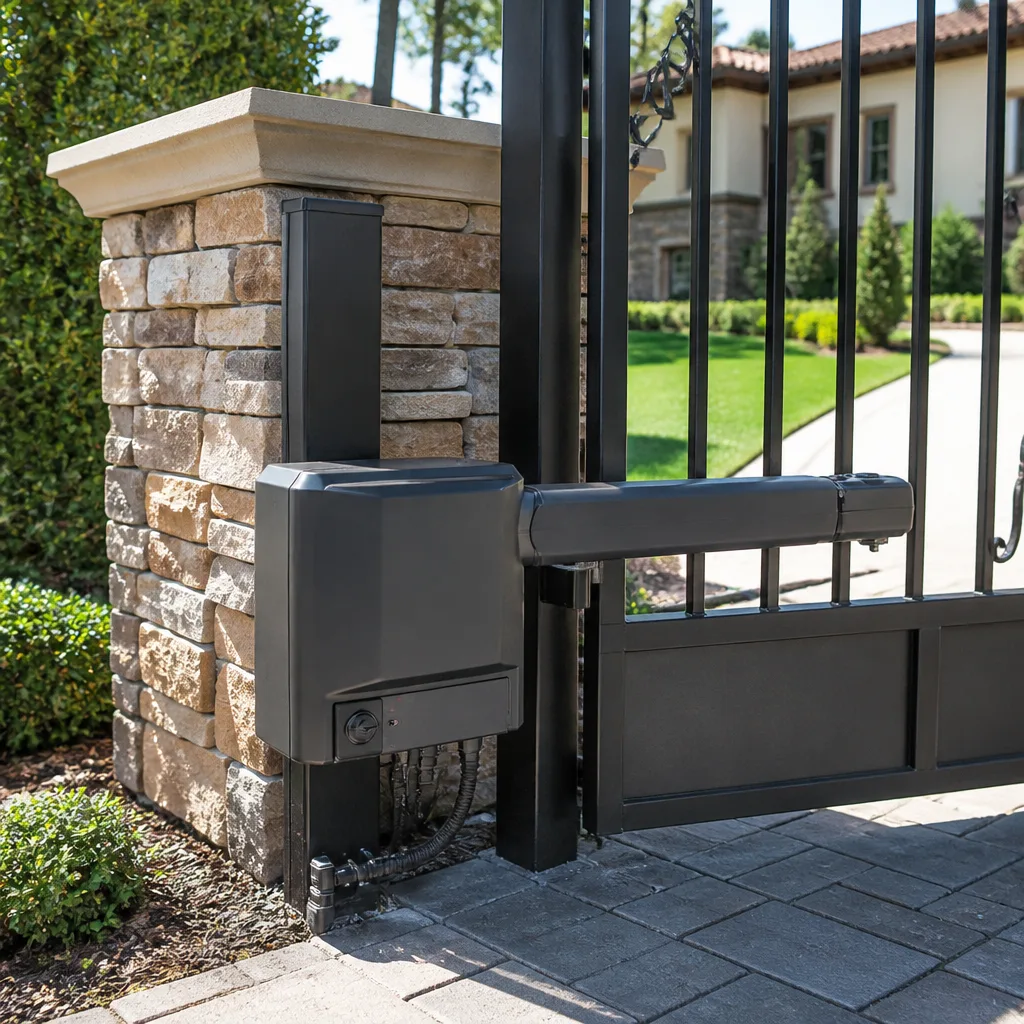 LiftMaster operators
Free on-site gate assessment - hinges, posts, and your LiftMaster or Nice gate operator checked before anything is quoted
The assessment is free and the quote is the invoice.
Get your free estimateSeasonal Gate Repair Care for Chico: Year-Round Homeowner’s Guide
The worst time to find out your gate’s battery backup is dead is during a Chico winter storm that has also taken out your power. That is exactly when most homeowners discover it, because the only test the battery ever gets is the one it fails. Chico doesn’t hand you four equal seasons. It gives you a punishing summer that cooks control boards and a wet winter that eats at hinges and tracks, with two narrow windows in spring and fall where a few hours of attention prevents most of the year’s breakdowns. This guide walks through each window, what to check, and when a gate-only specialist needs to step in.
Quick Answer
Seasonal gate care in Chico follows the local climate, not a generic calendar. The two high-value windows are April (before the heat) and October (before the rain), when you inspect the control board enclosure, test the battery backup, clear drainage around posts, and check alignment after the ground shifts. Summer is for monitoring cycle count and motor strain; winter is for catching water intrusion early. Most failures we diagnose in Chico trace back to one of those windows being skipped.
Styles & brands we work with
- Wrought iron
- Wood & steel frame
- Farm & ranch
- Sliding driveway gates
- LiftMaster operators
Table of Contents
- Why Chico’s Climate Is Hard on Gates
- The Pre-Summer Protocol: What to Do in April
- Summer Monitoring: Catching Motor Strain Before It Burns Out
- The Pre-Winter Protocol: What to Do in October
- Winter Water Intrusion: The First 24 Hours
- The Spring Reset: Alignment After the Rainy Season
- Why the Brand on Your Operator Changes the Maintenance Plan
- Repair or Replace? A Seasonal Decision Framework
Why Chico’s Climate Is Hard on Gates
Chico runs hot in summer and wet in winter, and both extremes hit gate hardware in ways that a mild coastal climate never would. An operator mounted in direct afternoon sun can see internal enclosure temperatures climb well past ambient, and the electronics inside a control board are the first thing to suffer. Then the rain arrives, and water finds every gap in a seal, every cracked wire nut, every hinge pin that lost its grease in July. The two seasons work against each other: summer dries out and shrinks seals, winter pushes water into the gaps that leaves behind. We’ve seen this pattern repeat across Chico neighborhoods from the older lots near downtown to the newer subdivisions on the north side, and it’s why a single annual tune-up rarely covers it. You need two touchpoints, not one.
There’s a second local factor: soil. Chico’s rainy season saturates the ground around gate posts, and when it dries out, that soil settles. A swing gate that was perfectly aligned in November can drag on its latch by March. A slide gate’s track can go out of level by a fraction of an inch, which is enough to make the operator work harder every cycle. None of this is dramatic. It’s slow, cumulative, and almost always cheaper to catch in spring than to fix in July.
If you’re new to the area or new to owning an automated gate, the broader Gate Repair Chico resource covers the fundamentals of how these systems are put together before you get into the seasonal layer.
The Pre-Summer Protocol: What to Do in April
April is the single most valuable maintenance window in Chico, because everything you do now protects the gate through the months when heat does the most damage. The goal is simple: get the electronics cool and dry before the first real hot stretch, and make sure nothing is holding heat where it shouldn’t.
- Inspect the control board enclosure. Open it (with power off at the breaker) and look for dust, cobwebs, insect nests, and any sign of moisture or corrosion on the terminals. Bugs love a warm enclosure, and a nest across a relay is a common cause of intermittent faults that only show up when the gate runs hot.
- Check ventilation and shade. If the operator sits in full afternoon sun with no airflow, that’s where summer failures start. Look at whether a simple shade structure or repositioned cover is practical. Don’t box the unit in tight; it needs air moving through it.
- Inspect wiring insulation. Follow the low-voltage run from the operator to any keypad, loop detector, or safety edge. Look for cracked insulation, sun-baked wire, rodent damage, and connections that have worked loose. Exposed wiring in Chico’s summer sun degrades faster than most people expect.
- Lubricate hinges, rollers, and the track. Use a lubricant suited to the hardware, not whatever’s in the garage. Dry, dusty conditions make an unlubricated hinge grind, and grinding means the operator is pushing harder than it should.
- Test the safety edges and reverse function. Every automated gate should reverse or stop when it meets an obstruction. Test it deliberately with a solid object. If it doesn’t respond, stop using the automation until it’s fixed.
A gate that passes all five in April usually coasts through summer. A gate that fails one of them will tell you about it in August, at the worst possible time. For problems that go beyond what you can safely check yourself, gate repair covers what a technician looks at and how the diagnosis works.
Summer Monitoring: Catching Motor Strain Before It Burns Out
Summer maintenance in Chico isn’t about doing more; it’s about watching for the signals that the motor is working harder than it should. Heat raises resistance in the motor windings and stresses every capacitor and control component. When the gate starts to struggle, the struggle compounds.
The most useful thing you can track is cycle frequency and speed. Count how many times the gate opens and closes in a typical day, then pay attention to whether it’s getting slower, louder, or more hesitant at the start of a cycle. A gate that used to swing smoothly and now pauses for half a second before moving is telling you something. A motor that runs hotter than it used to, or a unit that trips its breaker intermittently, is telling you something louder.
What to watch for during Chico summers:
- Slowing or hesitation at the start of a cycle, which points to a strained motor, a weak capacitor, or mechanical binding.
- Audible strain during travel, especially a change in pitch or a grinding that wasn’t there in spring.
- Breaker trips or fuse blows on the operator circuit, which can indicate a failing motor or a wiring fault.
- Inconsistent stopping points or a gate that reverses partway through travel.
- Error codes or blinking LEDs on the control board. Note the pattern; the specific brand’s manual uses those patterns for diagnosis.
If you see any of these, don’t wait for it to fail completely. A motor caught early is usually a repair. A motor run to failure is often a replacement, and that’s a much bigger job. electric gate repair covers the diagnostic side in detail, including the access control components that often fail alongside the operator.
The Pre-Winter Protocol: What to Do in October
October is the second critical window, and it’s the one that protects everything from the rain. Water is patient. It finds the tiniest gap and works its way in over weeks, which is why the failures show up in January rather than the first storm.
- Look at drainage around the gate posts. After a storm, where does the water pool? If it sits against the post footing, that’s where rot and settling start. Regrade or add drainage before the rains settle in. Check both posts; one side often drains worse than the other.
- Apply a rust inhibitor to hinges and tracks. Clean off the summer dust and old lubricant first, then apply a product suited to the metal. Tracks and hinge pins are where Chico’s wet season does its quietest damage.
- Test the battery backup. This is the step most homeowners skip, and it’s the one that matters most. Cut power at the breaker and watch whether the gate completes a full cycle on battery. If it’s slow, weak, or doesn’t move, the battery needs attention before winter. This is the exact scenario from the opening of this guide, and it’s preventable in about five minutes.
- Seal and inspect the control board enclosure. Check gaskets, cable glands, and the enclosure door for any gap that could let water in. A cracked gland is a common entry point.
- Check the safety devices one more time. Wet weather can affect photo-eyes and edge sensors. Make sure they’re clean, aligned, and responding.
Doing these five in October protects the gate through the wet months and sets up an easier spring. Skipping them means spring becomes a repair season instead of a reset.
Winter Water Intrusion: The First 24 Hours
When water gets into a control board, the symptoms show up fast. The gate might stop mid-cycle, behave erratically, trip the breaker, or simply go dead after a storm. If you suspect water intrusion, the first 24 hours matter more than anything you do afterward.
What to do in the first day:
- Cut power at the breaker. Don’t keep resetting a wet control board; every reset cycle risks further damage.
- Do not open the enclosure if the operator is energized. Control board work involves line voltage and capacitors that hold a charge. This is not a safe task for a homeowner, and we say that as gate specialists who handle it routinely.
- Note the symptoms. When the gate failed, what it did, and whether anything changed after the storm. That information helps a technician diagnose quickly.
- Call a gate repair specialist. Water damage to a control board gets worse with time, especially in a damp enclosure. Chico winters can keep an enclosure humid for days, and corrosion starts the moment the board gets wet.
We can work with your insurer on water-related damage, and we don’t recommend trying to dry out a wet control board yourself. The risk is real and the potential for further damage is high. If you’re not sure whether water got in, describe the symptoms over the phone and we’ll tell you what to look for.
The Spring Reset: Alignment After the Rainy Season
Once the rainy season ends, Chico’s soil settles and gate posts that were perfectly aligned in fall can shift just enough to cause problems. The spring reset is about catching that shift before it wears out the hardware.
What the spring check covers:
- Alignment check on swing gates. Does the gate still latch cleanly? Does it swing freely, or does it drag at the end of travel? A gate that needs a nudge to latch is a gate that will strain the motor over the summer.
- Level check on slide gates. The track needs to be level and clear. A track that has shifted or collected debris forces the operator to work harder.
- Post stability. Push on the posts (gently) and check for movement. A post that has loosened needs attention before the gate’s weight stress it further.
- Hardware inspection. Look for loose bolts, worn bushings, cracked hinges, and anything that moved over the winter.
- Re-test the safety devices. Spring is a good time to confirm everything that protects people still works after a wet winter.
Our technicians have up to 9 years of experience with exactly this kind of seasonal reset, and we see a lot of it in Chico each spring. If the gate has shifted enough that you’re adjusting it every week, that’s the point to call rather than keep adjusting.
Why the Brand on Your Operator Changes the Maintenance Plan
Different operators have different maintenance needs, and knowing the brand is the first step in a good diagnosis. A Linear residential operator and a DoorKing on a commercial lot have different service intervals, different failure patterns, and different parts. A Ghost Controls DIY-installed unit behaves differently from a Viking system, and a Mighty Mule on a rural driveway has its own quirks. We work on all of these, and we don’t try to fit one brand’s maintenance rhythm onto another brand’s equipment.
That brand-agnostic approach matters for homeowners too. When your technician is tied to one manufacturer, the answer to any problem tends to be “replace it with ours.” When your technician works across the full spectrum, the answer is more likely to be “here’s what’s actually wrong.” We repair what can be repaired, and we tell you honestly when a repair no longer makes sense. On a Chico gate, that honestly is worth more than a brand loyalty program.
For homeowners in Chico, that also means you don’t need to figure out which specialist to call for a swing gate versus a slide gate versus an access control problem. It’s all the same specialty.
Repair or Replace? A Seasonal Decision Framework
The repair-or-replace question comes up most often in spring and fall, when a seasonal check turns up a problem. Here’s how to think through it:
- Age of the operator. If it’s been in service a long time and the motor is straining, replacement may be the more economical path.
- Pattern of failures. One repair is normal. The same repair three times in a year suggests the underlying system needs attention.
- Parts availability. Some older operators become hard to source parts for. If a repair means waiting weeks for a component, replacement may be more practical.
- Safety device condition. If the safety edges and reverse function can’t be brought back to reliable working order, the automation shouldn’t be relied on.
- Your actual usage. A gate that cycles twenty times a day wears differently than one that cycles four times.
We don’t push replacement. The seasonal maintenance plan in this guide is built around keeping gates running, not selling new ones. But when a repair won’t hold, we’ll say so plainly, and we’ll walk through the options with you before anything is decided.
Common Mistakes to Avoid
- Waiting for the gate to fail before checking anything. Most of the failures we see in Chico were predictable months earlier. A gate that hesitates in August was usually sending signals in April.
- Skipping the battery backup test. This is the most common missed step and the one with the highest consequence. Test it in October, every year, before the storms arrive.
- Using the wrong lubricant on hinges and tracks. The wrong product attracts dust and gums up in summer, and it can hide the wear signals a technician needs to see. Match the lubricant to the hardware.
- Ignoring drainage around posts. Water pooling at the base of a gate post is the start of a much bigger, more expensive problem. Fix the grade, not just the symptom.
- Resetting a tripping breaker repeatedly. A breaker that trips is doing its job. Resetting it over and over risks damage to the operator and, more importantly, can create a real electrical hazard.
- Trying to fix water intrusion in a control board yourself. Control boards hold line voltage and charged capacitors. This is a job for a trained technician, and the first 24 hours matter.
- Assuming a gate that’s out of alignment just needs a nudge. A gate that drags is a gate that’s straining its motor, and strain adds up over the summer.
See the difference
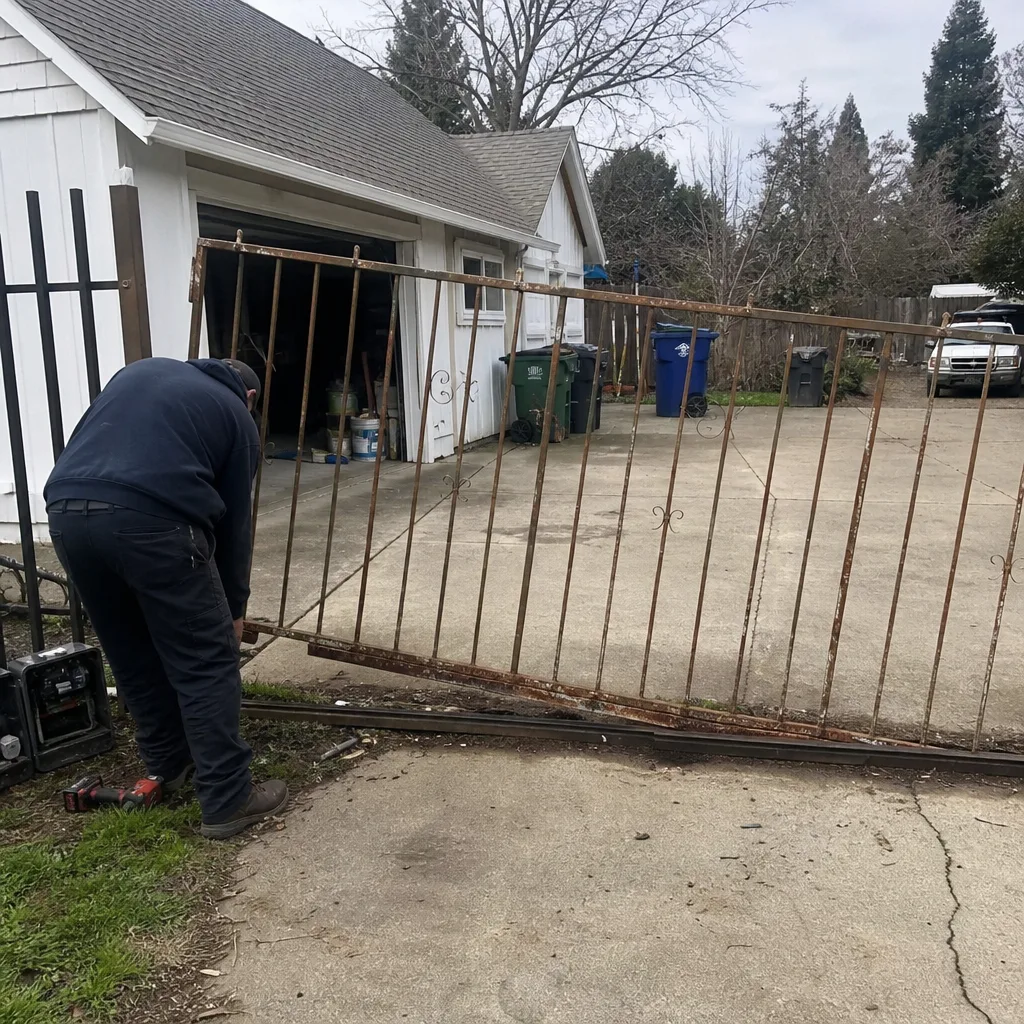 Before
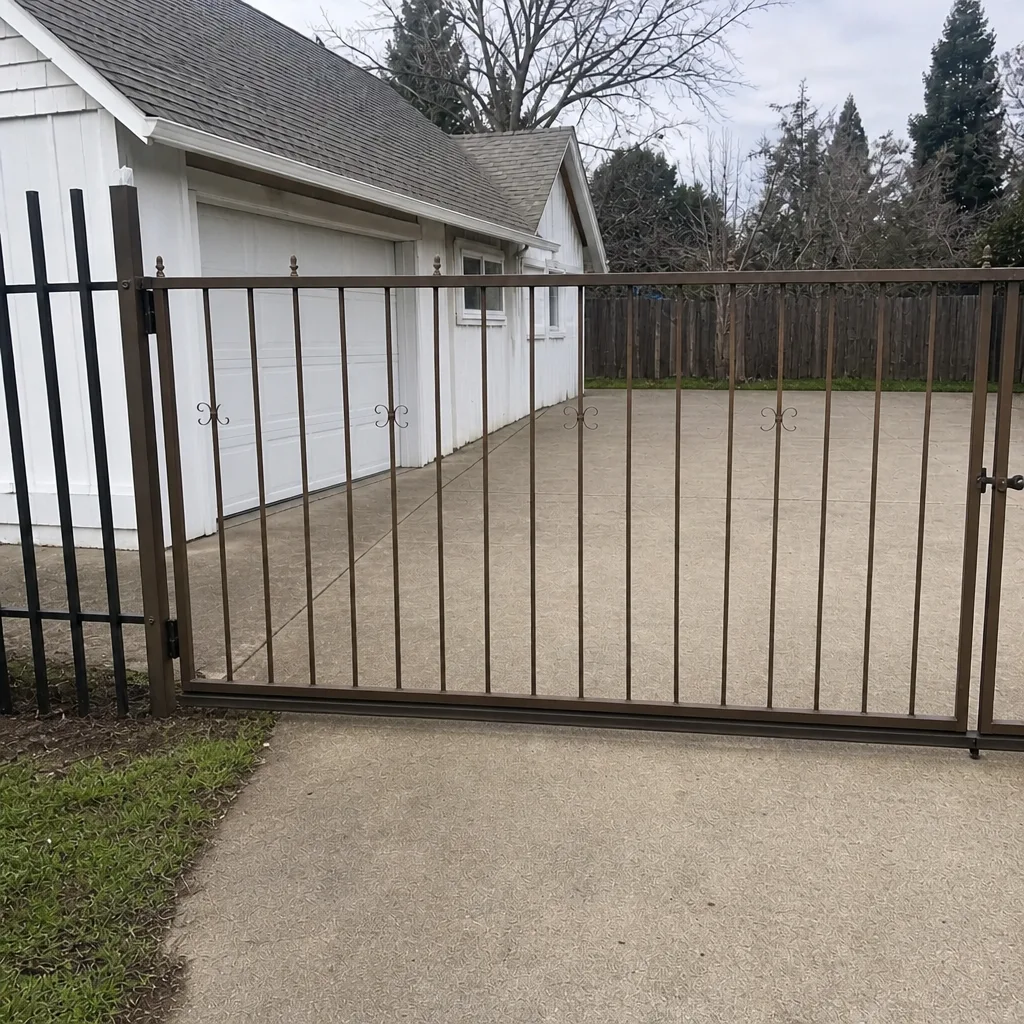 After
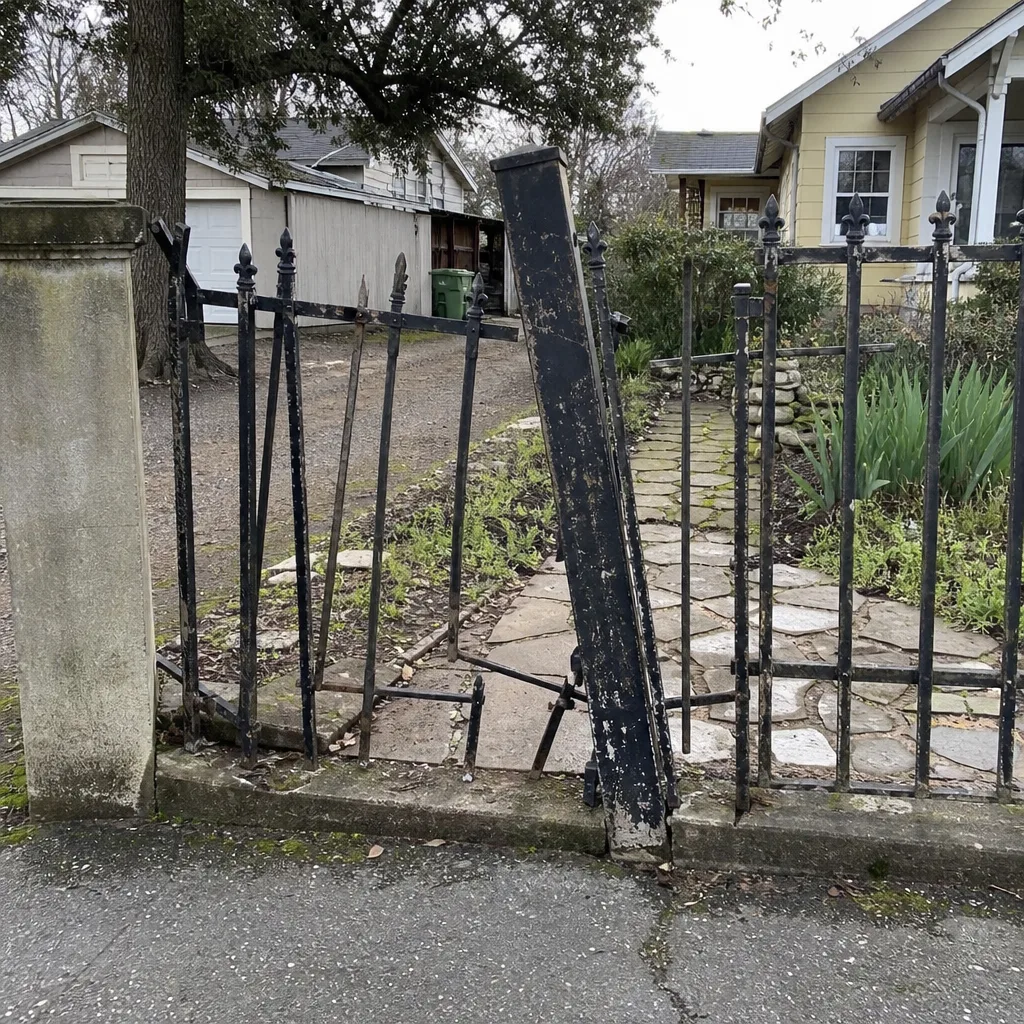 Before
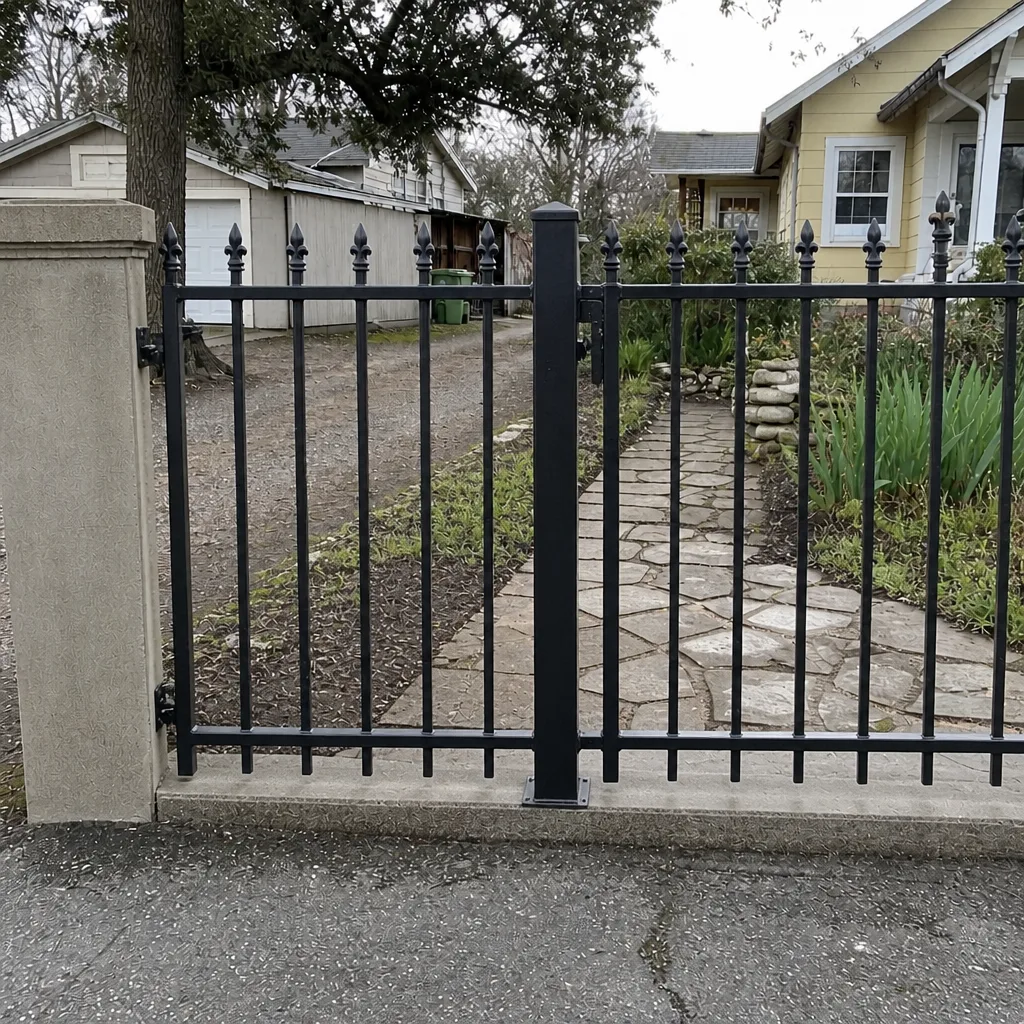 After
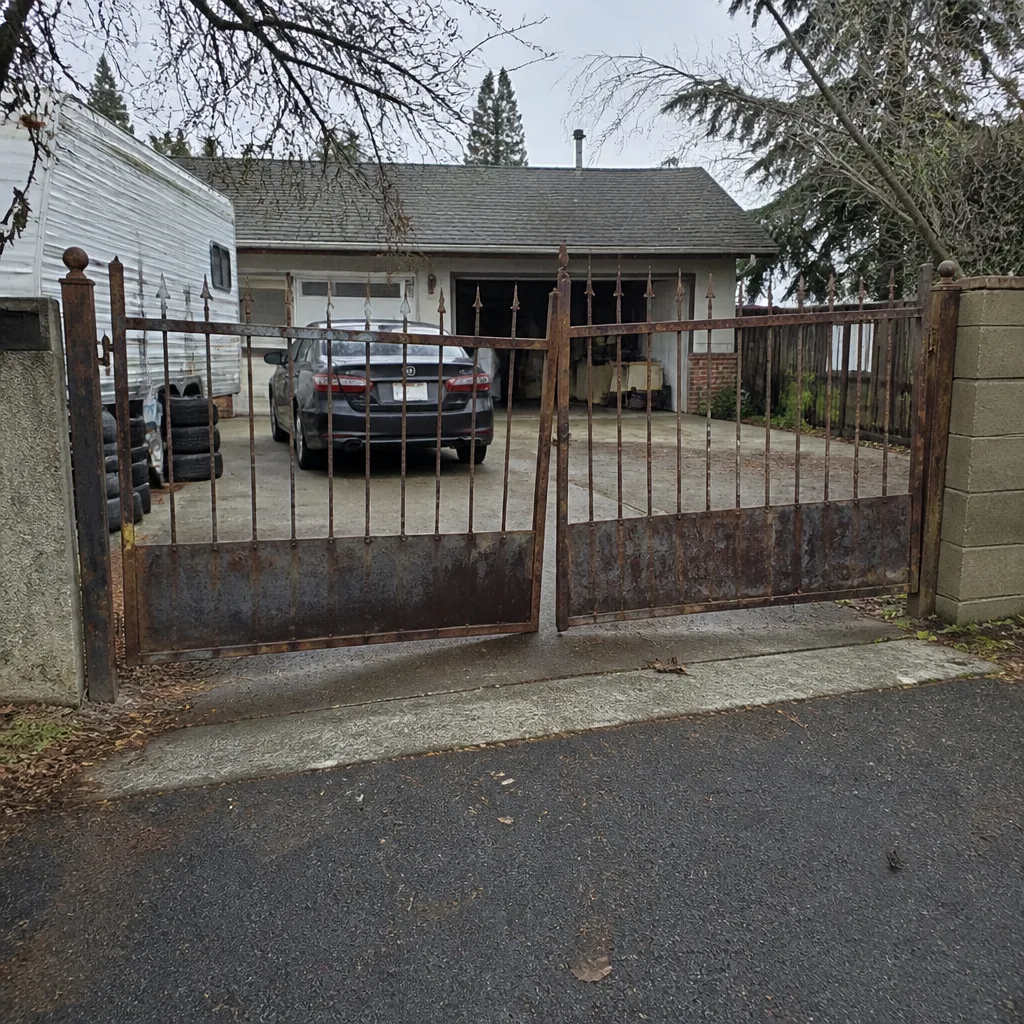 Before
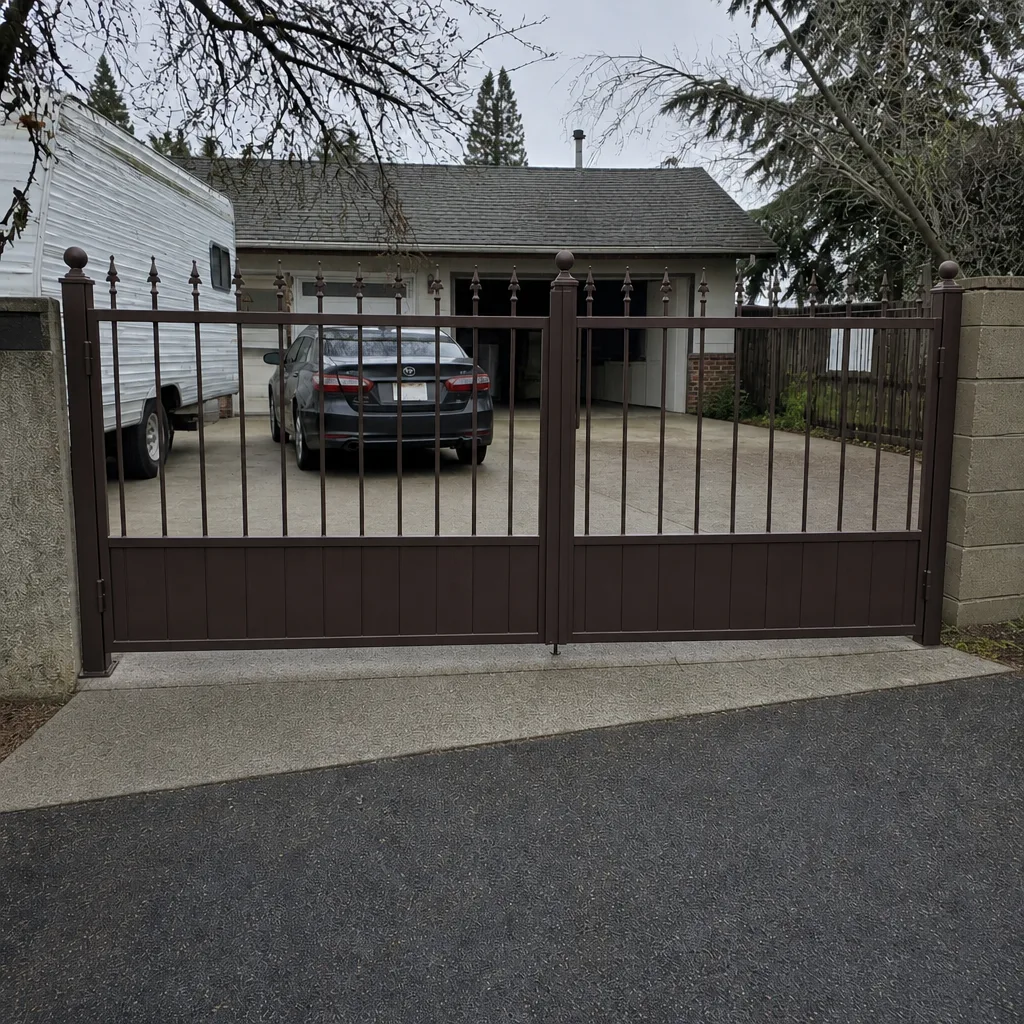 After
When to Call a Professional
Most of the checks in this guide are safe for a homeowner: lubricate the hinges, clear the track, test the battery backup, look at drainage, note the error patterns on the control board. Call a gate specialist when the problem touches the electrical system, the control board, the safety devices, or a structural shift in the posts that keeps coming back. Call immediately if the gate stops mid-travel, behaves erratically after a storm, or the safety reverse function doesn’t work. Call if you’re not sure, too. Gate Repair Chico offers free estimates in Chico: call (866) 369-2364. We answer 24/7, and fast dispatch runs 7am to 7pm, Sunday through Friday.
Frequently Asked Questions
The two best windows are April and October. April protects the gate before the summer heat, and October protects it before the rainy season. If you only do one, do October, because that’s when the battery backup test and drainage check protect the most important systems. Call (866) 369-2364 for a free estimate if you want a professional to walk through it with you.
Test it at least once a year, and October is the right month in Chico. Cut power at the breaker and watch whether the gate completes a full cycle on battery. If it’s weak or won’t move, the battery needs attention before the storms. Call (866) 369-2364 if you’re not sure how to test it safely; we’ll walk you through it or come out and do it.
No, it’s a sign of strain, and heat makes it worse. A gate that slows or hesitates in summer is telling you the motor is working harder than it should, whether from heat, alignment, lubrication, or a failing component. Don’t wait for it to fail. Call (866) 369-2364 for a free estimate and we’ll diagnose the pattern.
Erratic behavior, stopping mid-cycle, a tripped breaker, dead operation after a storm, or error codes that weren’t there before. Cut power at the breaker, don’t reset it repeatedly, and call a specialist. Control board work involves line voltage and charged capacitors, so it’s not a homeowner task. Call (866) 369-2364. We answer 24/7.
Small adjustments to a swing gate’s stops or a slide gate’s track guide are sometimes doable, but if the post has shifted, it’ll come back. A post that keeps moving needs professional attention. Call (866) 369-2364 for a free estimate and we’ll tell you whether it’s an adjustment or a post issue.
Yes. Linear, Viking, Ghost Controls, DoorKing, and the other major brands have different service intervals, different failure patterns, and different parts. Knowing the brand is the first step in a good diagnosis. We work across all of them and we won’t push a replacement when a repair is the right call. Call (866) 369-2364 for a free estimate.
The Bottom Line
Chico gate care is a two-season job, not a one-time tune-up. April protects the electronics and mechanical parts before the heat, and October protects everything from the rain with drainage, rust inhibition, and a real battery backup test. Summer is for monitoring motor strain and catching problems early; winter is for fast response to water intrusion; spring is for realigning what the soil shifted. Do those checkpoints and you’ll spend less time and money on repairs. Skip them and the gate will tell you about it in the worst possible conditions. Call Gate Repair Chico at (866) 369-2364 for a free estimate. We answer 24/7, with fast dispatch from 7am to 7pm, Sunday through Friday.
Written by the team at Gate Repair Chico.