
Last updated November 16, 2026
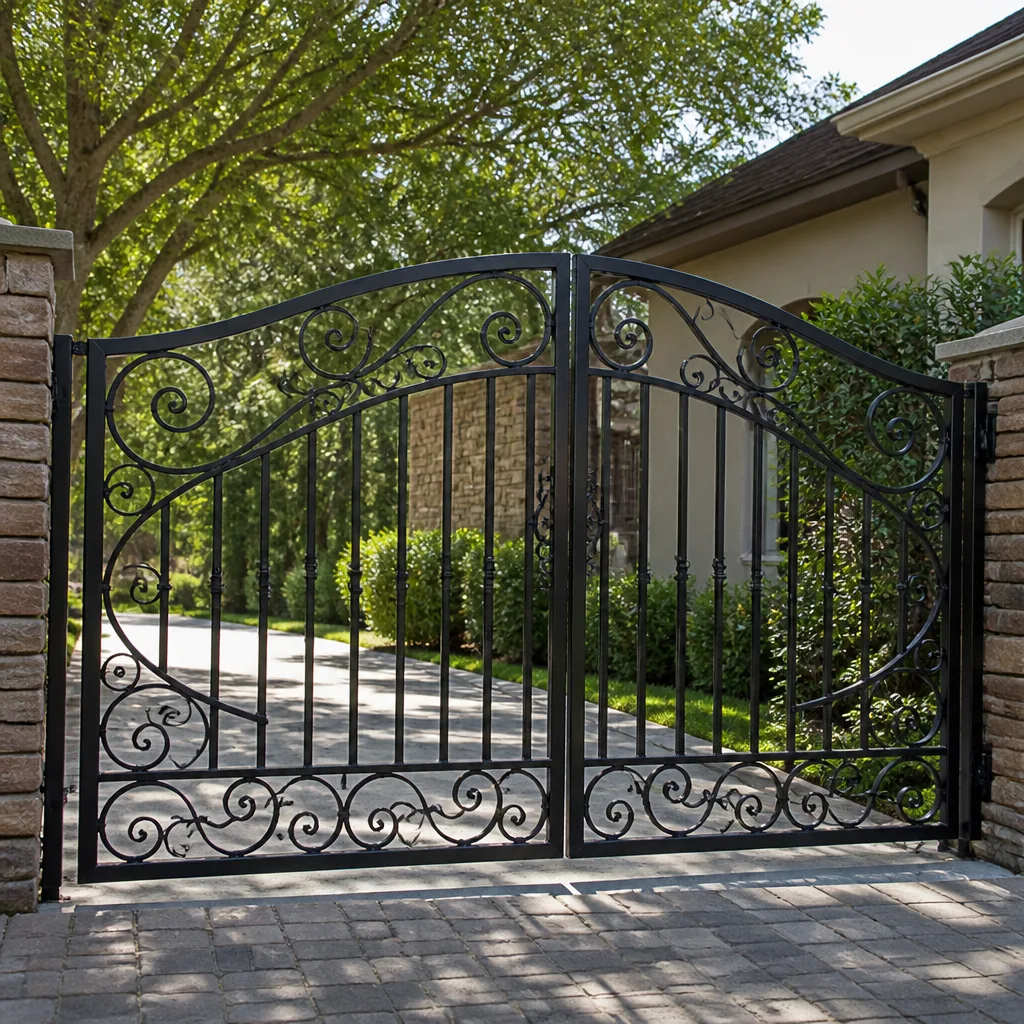 Wrought iron
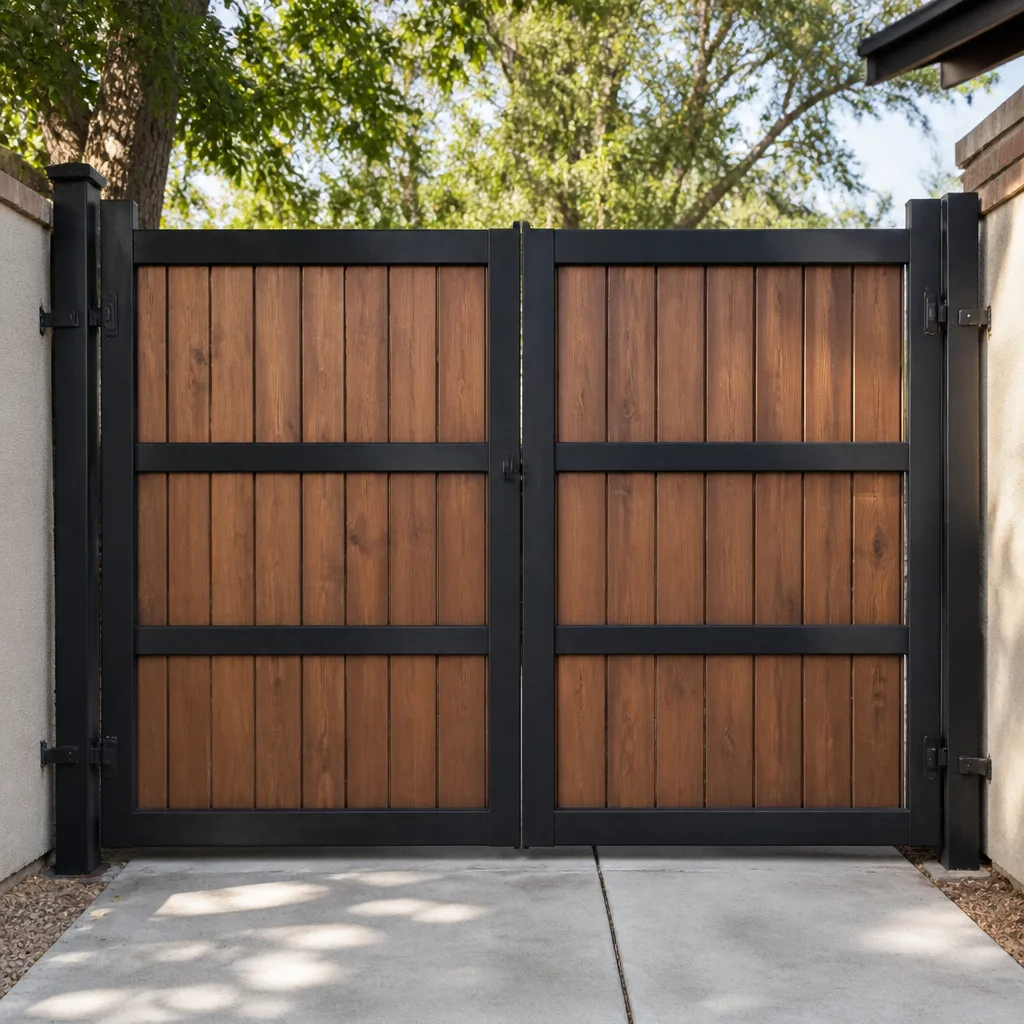 Wood & steel frame
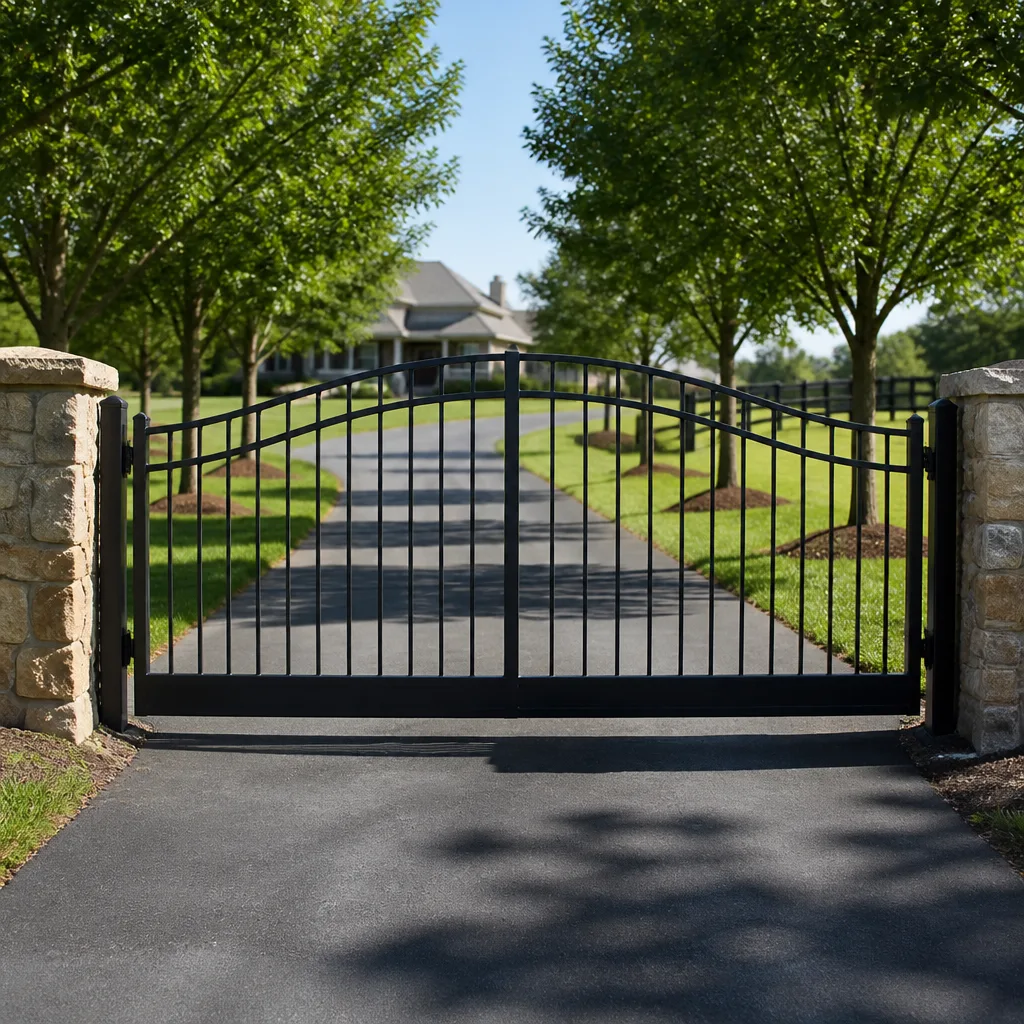 Farm & ranch
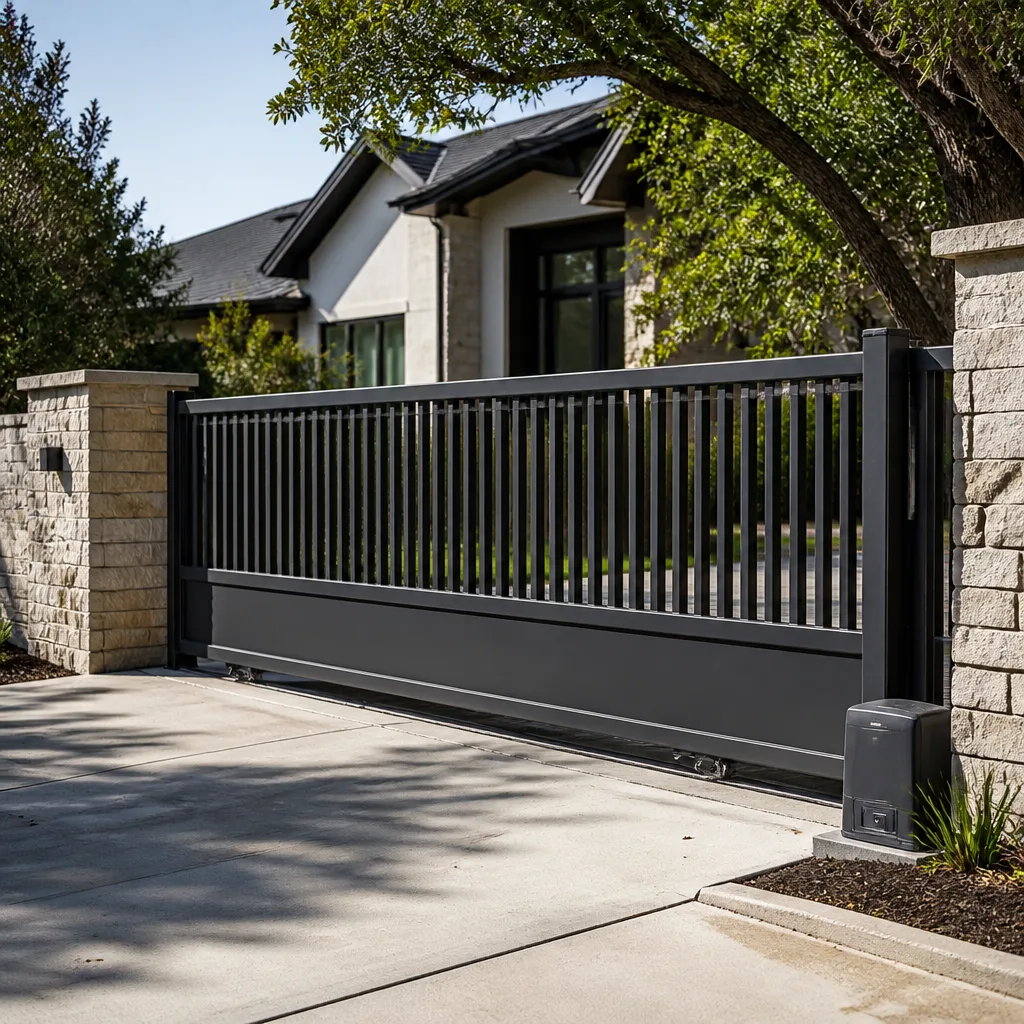 Sliding driveway gates
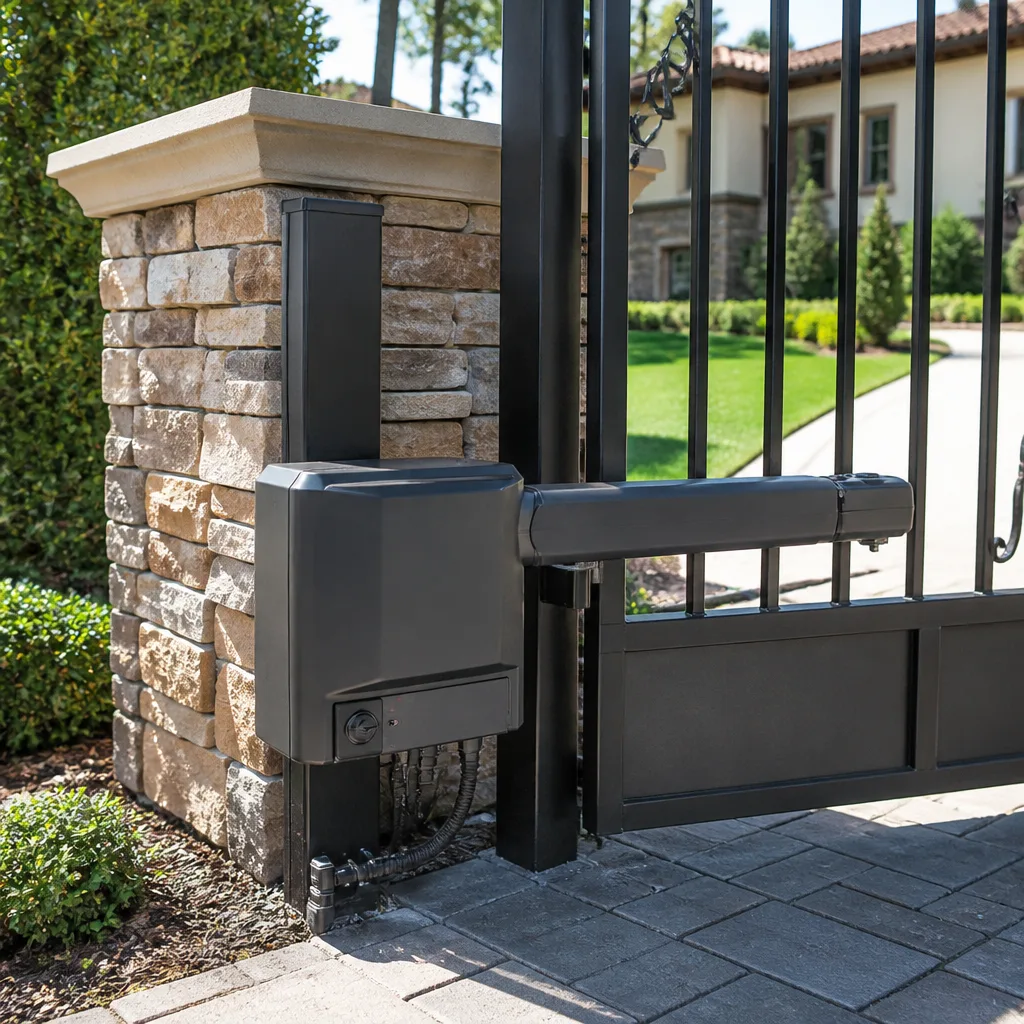 LiftMaster operators
Free on-site gate assessment - hinges, posts, and your LiftMaster or Nice gate operator checked before anything is quoted
The assessment is free and the quote is the invoice.
Get your free estimateGate Repair Cost Breakdown: The Chico Homeowner’s Reference for 2026
The most expensive gate repair isn’t the one with the highest quote. It’s the one where a technician replaced the wrong component, then charged again to find the real problem. In Chico, that scenario tends to play out when a generalist meets brand-specific electronics it doesn’t understand well, so the first visit becomes a guess and the second visit becomes the bill. The repair itself was never the expensive part; the misdiagnosis was.
This guide gives you 2026 cost ranges for the repairs Chico homeowners actually call about, split into parts and labor so you can read a quote line by line. You’ll learn why the same control board replacement lands anywhere from $180 to $340, what separates a sharp quote from a padded one, and the point where replacing a gate genuinely beats repairing it.
Quick Answer
Most residential gate repairs in Chico run $150 to $650, with mechanical fixes like hinges, rollers, and latches at the low end and electronic work like control boards, receiver swaps, and operator rebuilds at the high end. A full operator replacement on an automated driveway gate typically falls between $900 and $2,200 installed, depending on the brand and whether the power run needs rework. The written estimate sets the final price, and that estimate should be free and agreed before any work starts.
Styles & brands we work with
- Wrought iron
- Wood & steel frame
- Farm & ranch
- Sliding driveway gates
- LiftMaster operators
Table of Contents
- What Do the 10 Most Common Gate Repairs Cost in Chico?
- Why Does the Same Repair Quote Differ by Hundreds of Dollars?
- How to Read a Gate Repair Quote Line by Line
- What Does a Misdiagnosis Cost You?
- Repair or Replace? Where the Math Actually Turns
- Electric Gate Repair Costs, Broken Down by System
- Chico Climate, Housing, and What They Mean for Your Gate
- Cheap Quotes and Expensive Quotes: The Real Difference
What Do the 10 Most Common Gate Repairs Cost in Chico?
Most gate repair jobs in Chico land between $150 and $650, but that spread hides a lot. The table below splits the ten repairs we’re called out for most often into parts and labor, so you can check whether a quote is heavy on one or the other. Treat these as typical 2026 estimates, not a fixed menu; the written estimate from a technician who has actually looked at your gate sets the final number.
| Repair | Parts (typical) | Labor (typical) | Total Est. |
|---|---|---|---|
| Hinge replacement (set of two) | $25 – $60 | $90 – $160 | $120 – $220 |
| Roller replacement (slide gate) | $30 – $80 | $100 – $180 | $130 – $260 |
| Gate latch and strike adjustment | $15 – $50 | $80 – $150 | $95 – $200 |
| Operator arm replacement | $150 – $320 | $150 – $280 | $300 – $600 |
| Control board replacement | $120 – $240 | $120 – $200 | $240 – $440 |
| Receiver or remote programming issue | $40 – $110 | $80 – $160 | $120 – $270 |
| Safety loop or photo-eye replacement | $60 – $150 | $120 – $240 | $180 – $390 |
| Keypad or intercom replacement | $80 – $250 | $120 – $250 | $200 – $500 |
| Chain or belt drive replacement | $80 – $180 | $140 – $260 | $220 – $440 |
| Track realignment (slide gate) | $20 – $60 | $150 – $300 | $170 – $360 |
Mechanical repairs are simpler and cheaper because the parts are usually universal or close to it. Electronic repairs cost more because the part has to match your brand and model, and because a technician needs to confirm the board itself is failing rather than a power supply or a wiring fault feeding into it. If your gate is on a Mighty Mule or LiftMaster residential operator, most of these jobs can be handled in a single visit. If it’s a DoorKing or Elite on a small commercial lot, expect slightly higher labor because the systems are more layered and the access control components often sit in the same cabinet.
One pattern we see in Chico: gates that get a lot of dust and sun exposure at the end of a long, dry driveway tend to wear rollers and hinges faster than gates in the shadier, older parts of town near the creek. The cost per repair is the same, but the frequency of repair isn’t. If you’re calling us every year for the same hinge, that’s a sign the underlying swing geometry is off, not the hinge.
Why Does the Same Repair Quote Differ by Hundreds of Dollars?
A LiftMaster control board replacement is the clearest example. One quote says $180, another says $340, and both can be legitimate. The difference almost always comes down to three things: whether the technician stocks or orders the part, whether the technician diagnosed the fault correctly, and whether the company works across multiple brands or only one.
Parts sourcing and the stock-versus-order gap
A technician who already knows your operator’s board family and can pull it locally will quote closer to the bottom of the range. A technician who has to order it, wait, and come back out is pricing in the return trip as separate labor. That’s the honest version of the $180 – $340 spread. When the trip charge is folded silently into the parts line, you can’t see the markup, which is why we push for itemized quotes.
Brand specialization
A specialist who works on LiftMaster, FAAC, BFT, Linear, and DoorKing week in and week out has a mental map of failure points on each system. That shortens diagnosis time and cuts the odds of replacing a board that was never the problem. A generalist starting from scratch on a FAAC 400 series will spend twice as long reading the wiring, and you’ll pay for that time whether or not the first attempt fixes it.
The “replace it all” shortcut
Some companies only quote full operator replacement when the actual failure is a $60 receiver. That’s not always bad intent; sometimes it’s the only way they can guarantee the outcome. But if you’re seeing a $1,800 operator replacement quote for a gate that only fails to respond to remotes now and then, get a second diagnostic opinion. In Chico, we’ve seen this exact pattern on residential driveway gates where the real fix was a $95 keypad reset.
Getting quotes in hand and comparing them line by line is the single biggest protection you have. If a quote arrives as one lump number, ask for the breakdown before you sign. Any company confident in its work will put it in writing.
How to Read a Gate Repair Quote Line by Line
A good gate repair quote tells you what’s broken, what part fixes it, and what the labor covers. A bad one tells you a total and asks you to trust it. Here’s how to sort the two.
- Parts line with a specific brand and model reference. A quote that says “operator board” without naming the manufacturer is a red flag. On a Mighty Mule, a LiftMaster, an Elite, a DoorKing, or a FAAC, the parts are not interchangeable, and the technician should say which one is going in.
- Labor line separate from parts. If labor is bundled into a single total, you can’t tell whether you’re paying $120 for a 20-minute job or $400 for a two-hour one. Ask for the split.
- Diagnostic language in the notes. A confident technician will write the symptom and the diagnosis side by side (“gate reverses immediately after opening; confirmed failing limit switch on board”), which signals a real diagnostic path rather than a guess.
- No hidden trip charge. In our view, the estimate should be free and the price set per job by that estimate. If a number appears out of nowhere on the invoice that wasn’t in the quote, that’s a problem.
- Explicit “what work is included” scope. Does the quote cover testing the safety edges after replacement? Does it cover re-pairing remotes to the new board? A quote that skips these is a quote that will grow.
- An expiration and a warranty on the part. Parts fail. A genuine operation stands behind its parts if they do.
The best quotes read like a short story: here’s what we found, here’s what we’ll do, here’s what you’ll pay. If you’re comparing three quotes on the same repair, you should be able to line them up and see exactly where the difference is coming from, not guess at it. That’s the point of itemizing.
One more habit worth building: take a photo of the operator’s sticker (the one with the model number) before the technician arrives, and keep it in your phone. It’s the fastest way for any company to give you a real number rather than a vague range.
What Does a Misdiagnosis Cost You?
Misdiagnoses add $300 to $600 to a job that should have been straightforward, and the extra cost almost never shows up as a separate line item. It hides in the form of a part you didn’t need, a return visit, and a diagnosis that finally gets it right on the second trip.
The pattern is predictable. A technician who doesn’t know a specific brand arrives, sees a gate that won’t open, and replaces the operator board. Board replacement solves the symptom for a week. Then the gate fails again. The second visit reveals the real fault: a safety loop beneath the driveway apron, a worn photo-eye lens fogged by dust, or a keypad wired to the wrong terminal. The first bill still stands. The second bill adds on.
How the number adds up
- Wrong part installed: $150 – $250 you can’t recover.
- Second visit and second labor charge: $120 – $200.
- The correct repair you should have had on day one: $80 – $180.
- Total instead of the original job: $350 – $630.
The real fix, in almost every case, is taking ten extra minutes to confirm the diagnosis before ordering the part. That means reading the fault codes, testing the limit switches, confirming voltage at the operator, and checking that the safety devices are actually talking to the board. It’s the opposite of a quick call-back fix, and it’s the reason brand-agnostic diagnostic work matters. A company that only knows one manufacturer will see every failure through that manufacturer’s lens.
If you’ve already been through one repair that didn’t stick, don’t accept “we’ll try the next part” as a plan. Ask for the diagnostic reasoning in writing before the next visit. That conversation alone often surfaces the real fault and saves the second bill entirely.
Repair or Replace? Where the Math Actually Turns
Replacement pencils out when the total remaining repair cost over the next two years would exceed the cost of a new operator installed, and that’s usually around the 12-to-15 year mark on a residential operator or the point where a second major component fails in the same year. Repair wins before that. Replace wins after. The trick is knowing which side of the line your gate is on before you spend.
Three questions that decide it
- How old is the operator? Residential automated operators typically have a solid service life, and once you’re inside that window things get repaired, not replaced. Past it, the wear becomes systemic, and you start chasing failures one at a time.
- How many repairs have you done in the last 24 months? One is normal maintenance. Three on the same operator is a pattern, and pattern failures usually mean the next failure is already in the pipeline.
- Is the power run and the physical mounting still sound? If the conduit, footing, and anchored posts are in good shape, a new operator is a clean swap and a fair value. If they aren’t, the replacement cost climbs because the install has to fix the foundation, not just the box.
There’s a fourth consideration that gets missed: the controllers and remotes. Replacing a very old operator usually means replacing the access control layer with it, and the new system may not be compatible with whatever you’re currently using. That’s not automatically a bad thing, but it should be in the math before you commit, not after.
What a full installation includes
On a residential driveway gate, a proper installation includes the operator mounted to the existing or new posts to proper footing depth, the power run, the safety photo-eyes, the control board set up, the remotes or keypad programmed, and a full cycle test. That’s why the range for a full automated operator replacement is $900 to $2,200 installed rather than $400 to $700 for the box alone. If a quote doesn’t mention safety edges or the power run, ask what’s missing before you compare it against a complete one.
For small commercial gates running DoorKing or Elite equipment, the replacement math is usually a five-year decision rather than a two-year one, because the systems are built for heavier duty cycles. In those cases the repair-first rule tends to hold much longer than it does on a residential driveway.
If the mechanical gate itself (not the operator) is failing, that’s a different conversation: gate repair often extends the life of the physical structure well beyond what an operator replacement buys. Get a proper look at both before deciding.
Electric Gate Repair Costs, Broken Down by System
Electric gate problems break into three layers: power, control, and mechanical. A specialist will work through them in that order, because the cheapest fix is often the one hiding at the bottom of the stack. The table below is a rapid reference for the most common electric faults in Chico.
| Electric fault | Typical estimate |
|---|---|
| Remote or keypad pairing failure (no part needed) | $95 – $180 |
| Receiver replacement | $130 – $280 |
| Photo-eye or safety edge fault | $180 – $390 |
| Limit switch adjustment | $120 – $220 |
| Motor capacitor replacement | $140 – $290 |
| Control board replacement | $240 – $440 |
| Full operator replacement (residential swing or slide) | $900 – $2,200 installed |
| Access control or intercom integration work | $250 – $600 |
A safety caveat worth stating plainly: the operator’s wiring and the power feed are the dangerous parts on an electric gate, and a sliding gate that has come off its track is a crush hazard. This is not a do-it-yourself zone. We recommend a trained technician for any work on the wiring side of the system, and we’d say the same if we were quoting a competitor’s install.
The brand on your operator matters here more than anywhere else. A LiftMaster residential operator and a DoorKing commercial operator share almost no parts, and a technician unfamiliar with one will spend an hour just learning the layout. Our technicians have up to 9 years of experience, and they work across the operators we see on gates throughout Chico, from Mighty Mule and Ghost Controls on residential driveways to Elite, FAAC, BFT, Linear, and Viking on more complex systems.
When an electric gate stops working, don’t assume the motor is dead. In our experience, most “dead” gates actually have a working motor and a failed safety device, a failed control input, or a power fault upstream. Chasing the motor first is the beginner’s move. Chasing the power, then the controls, then the motor is the cheap path.
Chico Climate, Housing, and What They Mean for Your Gate
Chico’s climate puts specific pressure on gate hardware, and it’s not the pressure you might expect. Our summers are long and dry, with weeks of intense sun and soil movement from heat cycles. Our winters are mild, so freezing isn’t the issue. Sun, dust, and dry swings are.
What the seasons actually do to a gate
- Summer heat softens and dries things. Vinyl, sealing gaskets, and plastic components on lower-end operators get brittle and crack earlier here than they would in a cooler climate. A Mighty Mule cabinet sitting in full afternoon sun can degrade faster than the same unit installed in shade.
- Dust travels. Chico’s long dry stretches mean driveways, especially rural ones at the edge of town, carry fine dust into hinges, rollers, and photo-eye lenses. Photo-eye faults on dusty gates are one of our most frequent call-outs, and they’re usually a $180 – $390 fix rather than a new operator.
- The soil moves. Clay-heavy soil that dries and re-wets can shift gate posts by a half inch over a season, and a half inch at the post becomes a full inch at the gate panel. Track and swing misalignment follow. If your slide gate is dragging the ground three summers in, the real problem is the footing, not the track.
- Winters are mild, so ice isn’t the risk. That means the seasonal patterns here favor repair over replacement longer than they do in colder parts of the country. A gate that survives a mild winter usually has another full service season in it.
Housing stock matters too. Chico has a mix of older neighborhoods where original iron gates have been retrofitted with newer operators, and newer subdivisions where the whole assembly went in as a package. The retrofitted gates are more interesting to repair because the physical gate is often heavier than the original operator was designed for, which shortens the operator’s life. If your gate has ever felt like it “asks a lot” of its motor, that’s usually the reason.
Permits for gate installation vary by jurisdiction, so the right answer is always to check with the City of Chico or Butte County building department before installing new electrical work. Don’t take a neighbor’s word for it and don’t rely on a contractor’s assumption. Ask the city directly. For context on the area’s neighborhoods and property types, our Chico page walks through the parts of town we know best.
Cheap Quotes and Expensive Quotes: The Real Difference
The cheapest quote on a gate repair is often not the cheapest repair, and the most expensive quote often is. That’s not a paradox. It’s the nature of work that depends on correct diagnosis. A low quote for a 20-minute guess costs more than a fair quote for a 45-minute diagnosis that holds.
What actually separates one quote from another
- Diagnosis depth. A company that puts a technician on site with a meter and a plan charges for that time. The result is a correct fix on visit one.
- Brand fluency. A specialist who works on LiftMaster, FAAC, BFT, Linear, Viking, Ghost Controls, DoorKing, Elite, and Mighty Mule will see failure patterns they recognize. A generalist sees a metal box and a manual.
- Parts honesty. The source of the part matters. A generic aftermarket board can cost less and fail sooner. An OEM part costs more and lasts the way the manufacturer intended.
- Warranty. A company willing to warrant its part and labor is pricing in the return trip it may have to eat. That’s built into the quote, and it’s worth paying for.
- Scope clarity. The quote that names every line item is usually the one you can trust on the final invoice. The one-liner is the one that grows.
When we quote a job, we tell customers the price in writing before we lift a tool, and that written number is the number you pay. We’re gate-only specialists, so we see these systems every week and we don’t need to charge discovery time for a brand we haven’t seen before. That’s the real reason a quote can be fair and still be lower than the alternative: less guessing, not less work.
The other side of this is knowing what you’re comparing. If a quote comes in dramatically under the range for a given repair, ask what’s missing. It’s usually the safety test, the re-pair, or the return visit. None of those is optional, and none of them are free. For more on how electric gate repair diagnostics are scoped, that’s the right place to start.
Common Mistakes to Avoid
- Paying for a diagnostic and accepting a single lump-sum total. Ask for the parts and labor split before you sign. Without the split, you can’t tell whether a $500 job is a $200 part with $300 of labor or a $40 part with $460 of mystery.
- Letting a generalist work on brand-specific electronics. In Chico, the most common source of a call-back is a technician unfamiliar with the operator brand. If your gate is on a LiftMaster, Mighty Mule, Elite, or DoorKing, ask whether the company works on that specific system before you book.
- Replacing the operator before testing the safety devices. Photo-eyes, safety edges, and safety loops are the cheapest thing on the gate and the most common reason a gate stops responding. Test those first. It’s the difference between a $200 fix and a $1,500 one.
- Ignoring footing problems until the gate stops moving. A slide gate that drags is warning you that the footing has shifted in Chico’s clay-heavy soil. Ignoring it turns a $200 realignment into a $500 footing repair.
- Doing electrical work on the operator yourself. This is not a safe DIY project, and we mean that. The wiring and the power feed can seriously injure you. The mechanical work on the gate panel is one thing; the electrical cabinet is another.
- Accepting an emergency-priced repair you didn’t need to rush. A gate that won’t close is worth calling about, but a gate that opens slowly or beeps on arrival is not a 2 a.m. job. Knowing the difference saves real money and keeps the right call volume moving.
- Not keeping the operator’s model sticker photograph. Ten seconds with your phone camera saves a full diagnostic visit. Every honest company will quote faster and more accurately with the model number in hand.
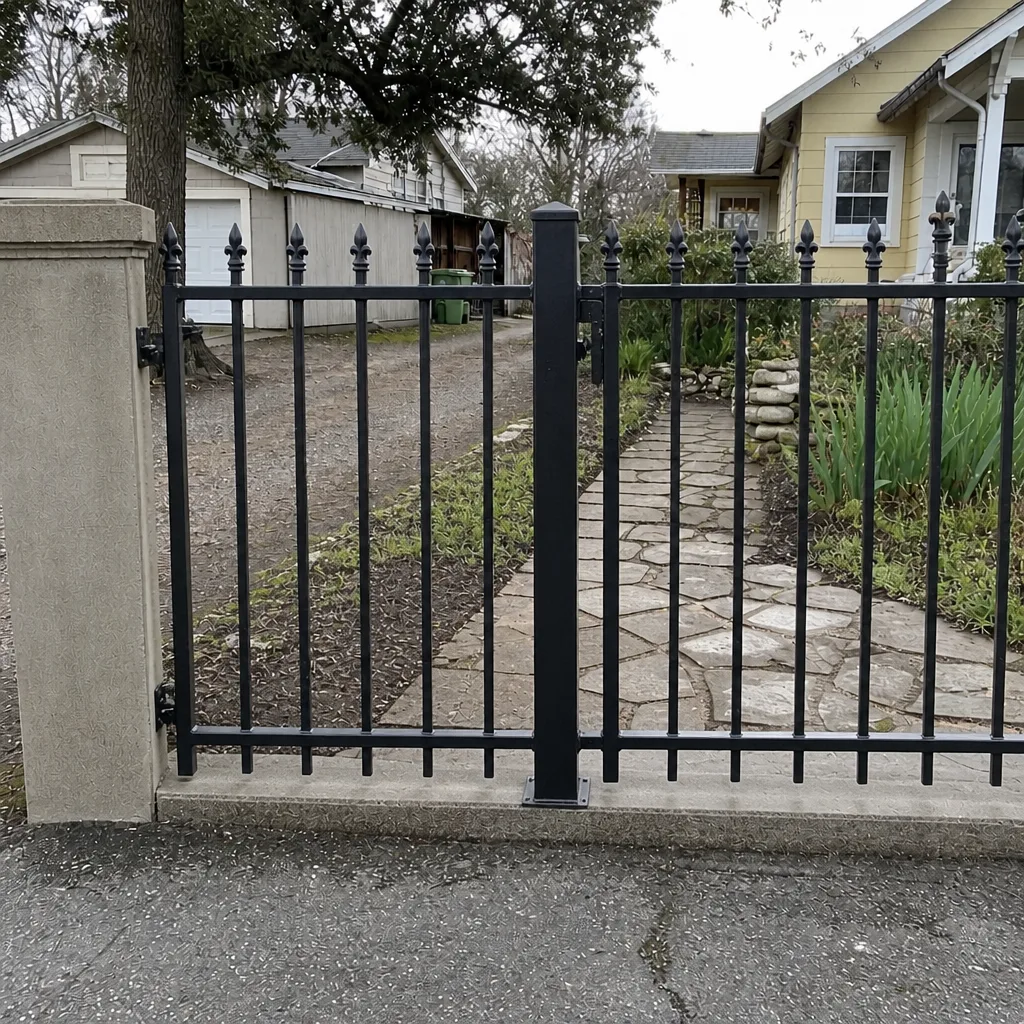
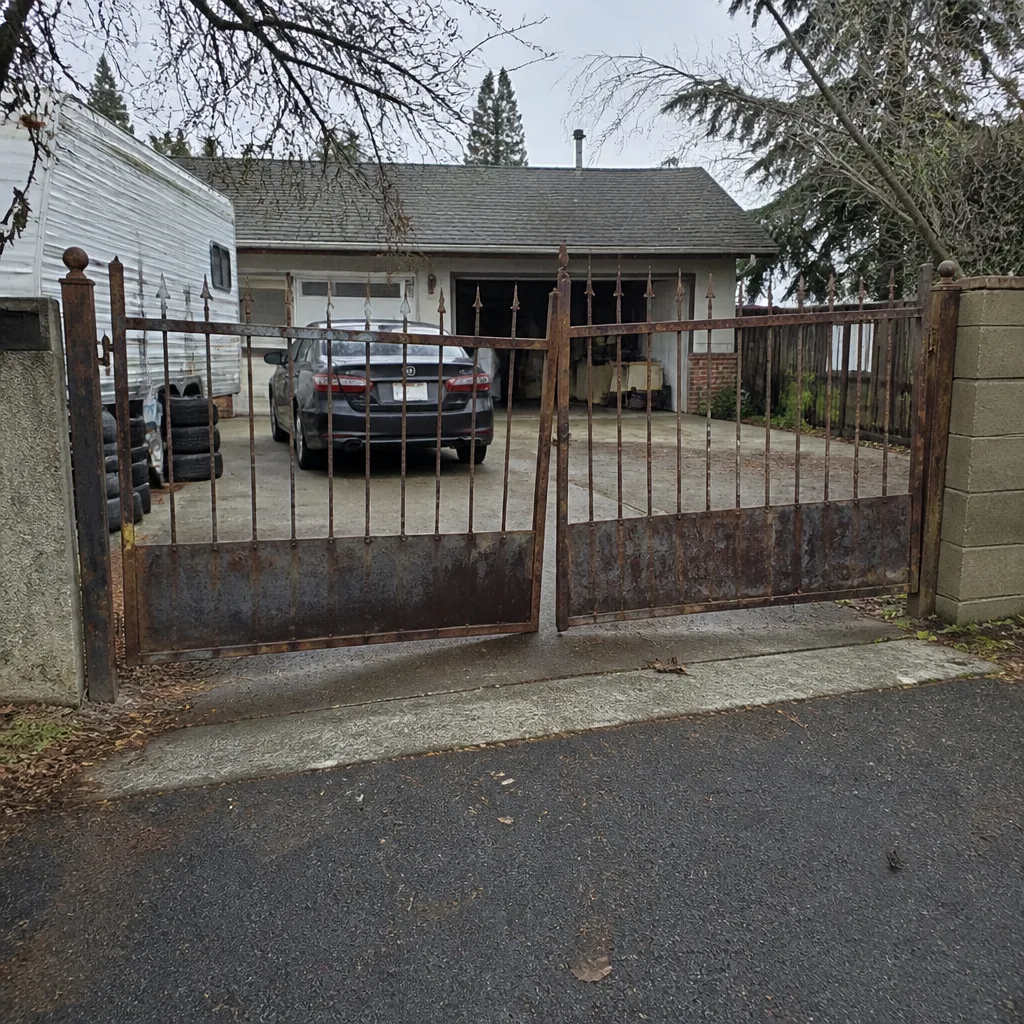
See the difference
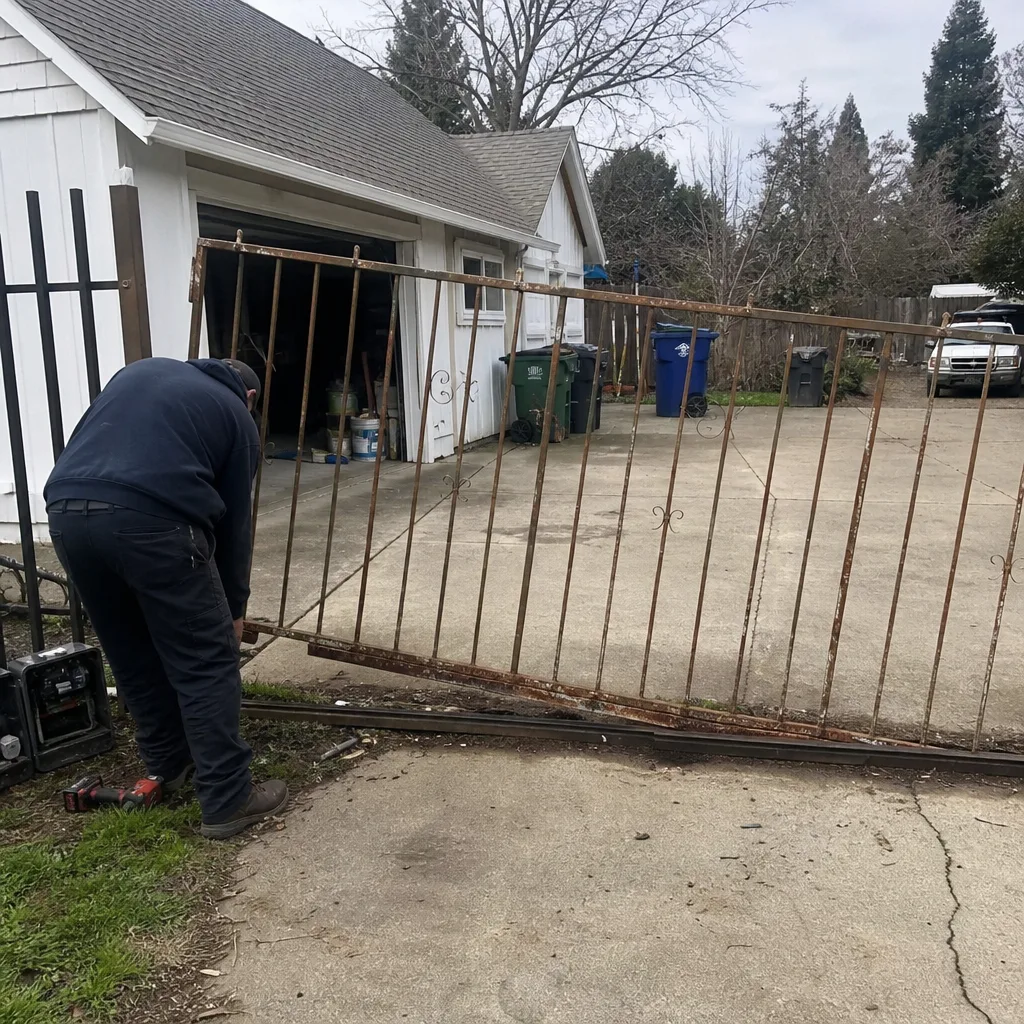 Before
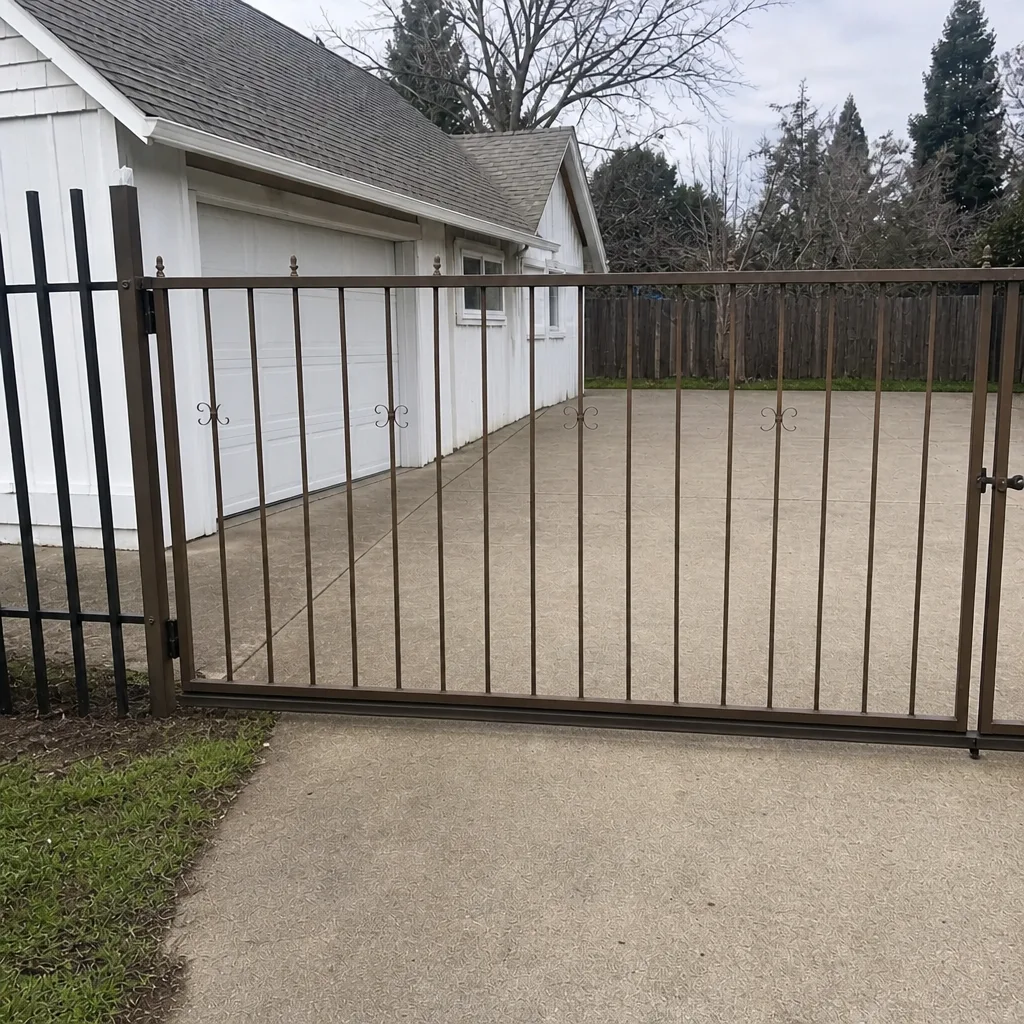 After
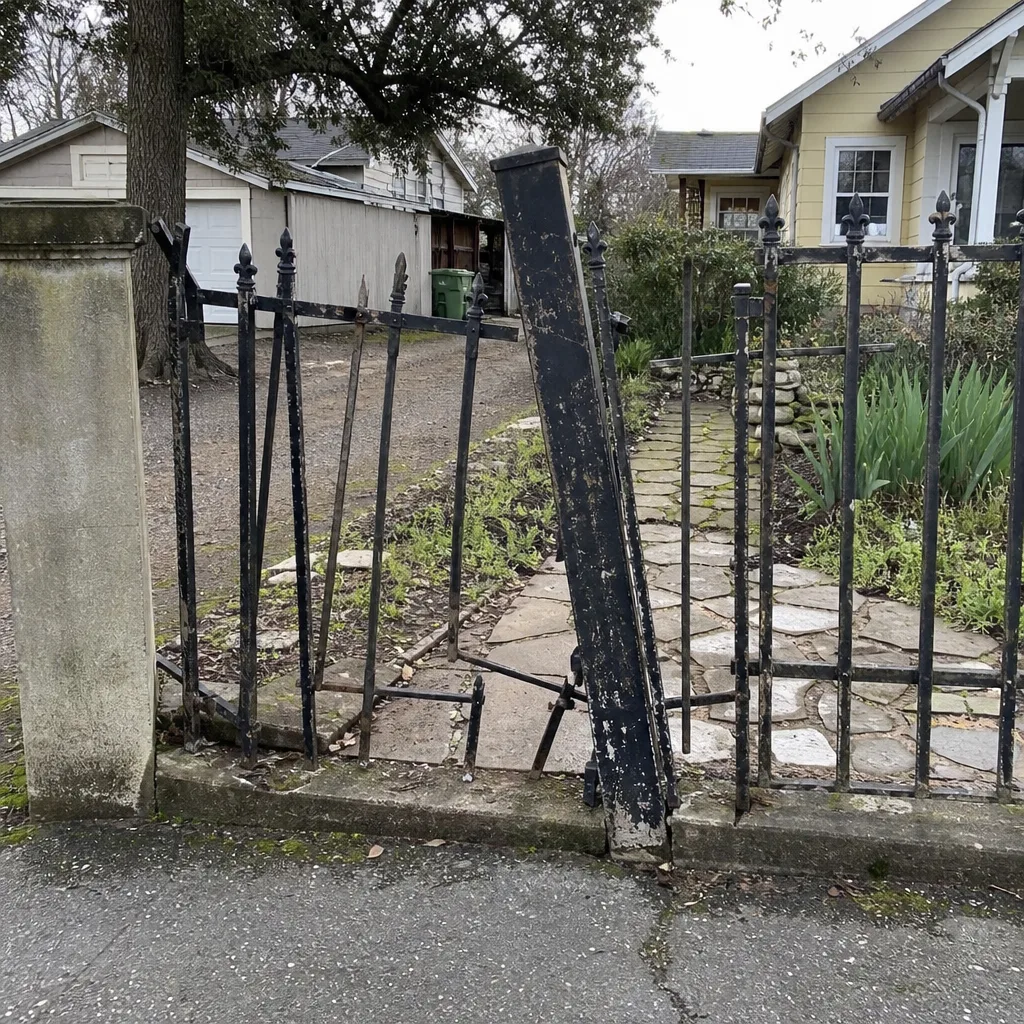 Before
 After
 Before
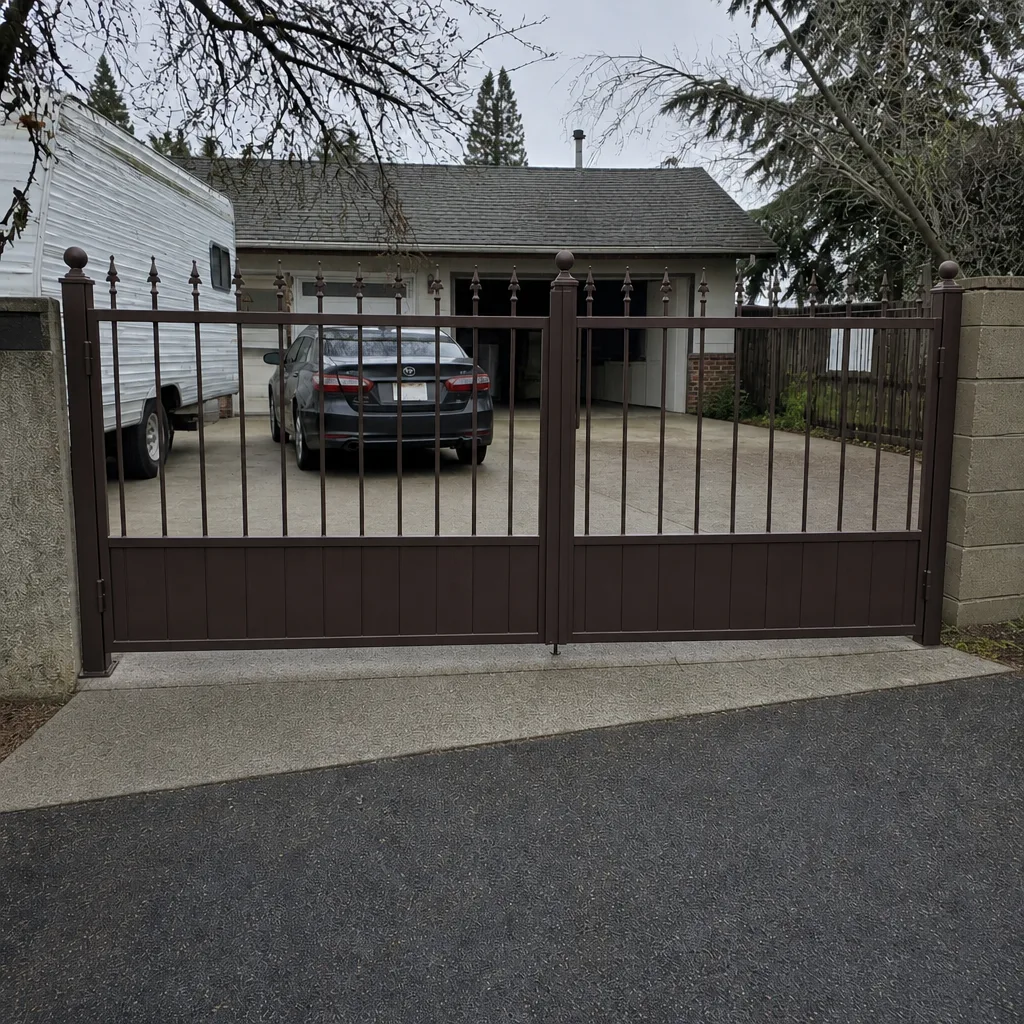 After
When to Call a Professional
Call a professional when the gate’s electrical system is involved, when a slide gate is off its track or binding, when the operator keeps tripping a breaker or resetting itself, when the safety devices have stopped working, or when a repair you’ve paid for has failed within the last year. Any of those situations means a proper diagnosis is the cheaper path. If you’re a homeowner with a mechanical gate and a hinge that just needs tightening, that’s fine to handle yourself. The moment the gate has a motor attached, safety edges, or a control cabinet, hand it to a trained technician. Electrical work on a gate is not a DIY risk worth taking, and the heavy panels on a failed swing or slide gate can crush a hand or worse.
Gate Repair Chico offers free estimates in Chico. Call (866) 369-2364. We answer 24/7, with fast dispatch from 7am to 7pm, Sunday through Friday. We’re closed Saturday. A call outside dispatch hours is booked into the next opening, Sunday through Friday, 7am to 7pm.
Frequently Asked Questions
Most residential gate repairs in Chico run $150 to $650, with a typical single-visit mechanical fix around $200 and electronic repairs toward the top of that range. Full operator replacement on an automated residential gate usually falls between $900 and $2,200 installed. The written estimate sets the final price, and estimates should be free. Call (866) 369-2364 for a price with your gate’s model in hand.
In most cases yes. We answer 24/7 and dispatch Sunday through Friday, 7am to 7pm. A gate that won’t open is usually a diagnostic problem, not a parts problem, so the first visit is about finding the real fault before we bill for anything else. Call (866) 369-2364 and have your operator’s model number ready if you can.
The spread usually comes down to who is stocking the part versus ordering it, and whether the return trip is being billed separately. A technician with the board on hand quotes lower. A technician who has to order it prices the second visit in. Ask whether the quote includes the return visit, and whether the part is OEM or aftermarket. Call (866) 369-2364 for an itemized quote.
Yes, in specific ways. Long dry summers and dusty rural driveways wear out rollers, hinges, and photo-eye lenses faster than in cooler, wetter climates. Clay-heavy soil that dries and re-wets can shift gate posts and misalign tracks. Winters are mild here, so freezing damage isn’t the issue. It’s sun, dust, and soil movement. Call (866) 369-2364 if you’re seeing the same repair repeat every season.
Replacement pencils out when a second major component fails within the same year on an operator that’s already near the end of its service life, or when the total repair cost over the next two years would exceed a new installation. Before that, repair almost always wins. A full automated installation includes the operator, power run, safety devices, and programming. Call (866) 369-2364 for a free measure and written quote.
Yes. We work on DoorKing, Elite, and other commercial-grade systems in addition to residential operators like LiftMaster, Mighty Mule, Ghost Controls, FAAC, BFT, Linear, and Viking. On commercial systems the repair-first rule holds longer because the equipment is built for heavier duty cycles. The diagnosis is the same: power, then controls, then mechanical. Call (866) 369-2364 to book an on-site estimate.
The Bottom Line
Gate repair pricing in Chico varies by a factor of three for the same job, and the difference almost always comes down to diagnosis, parts sourcing, and brand fluency. The cheapest quote on paper is rarely the cheapest repair in practice. The number that matters is the one on the final invoice, and the way to keep that number honest is to ask for a line-item quote, confirm the brand of your operator, and hire a company that works on that system every week rather than once a year. Once you know the range for your repair type and the questions that separate a sharp quote from a padded one, you have everything you need to compare quotes with real context.
If you’d rather start with a diagnosis and a written number, Gate Repair Chico is where to begin. Whether it’s a Mighty Mule on a residential driveway or a DoorKing on a light-commercial lot, we’ll tell you what’s wrong, what it costs, and what you’ll pay before we start.
Call (866) 369-2364 for a free estimate. We answer 24/7. Fast dispatch from 7am to 7pm, Sunday through Friday. We’re closed Saturday.
Written by the team at Gate Repair Chico.