
Last updated November 16, 2026
 Wrought iron
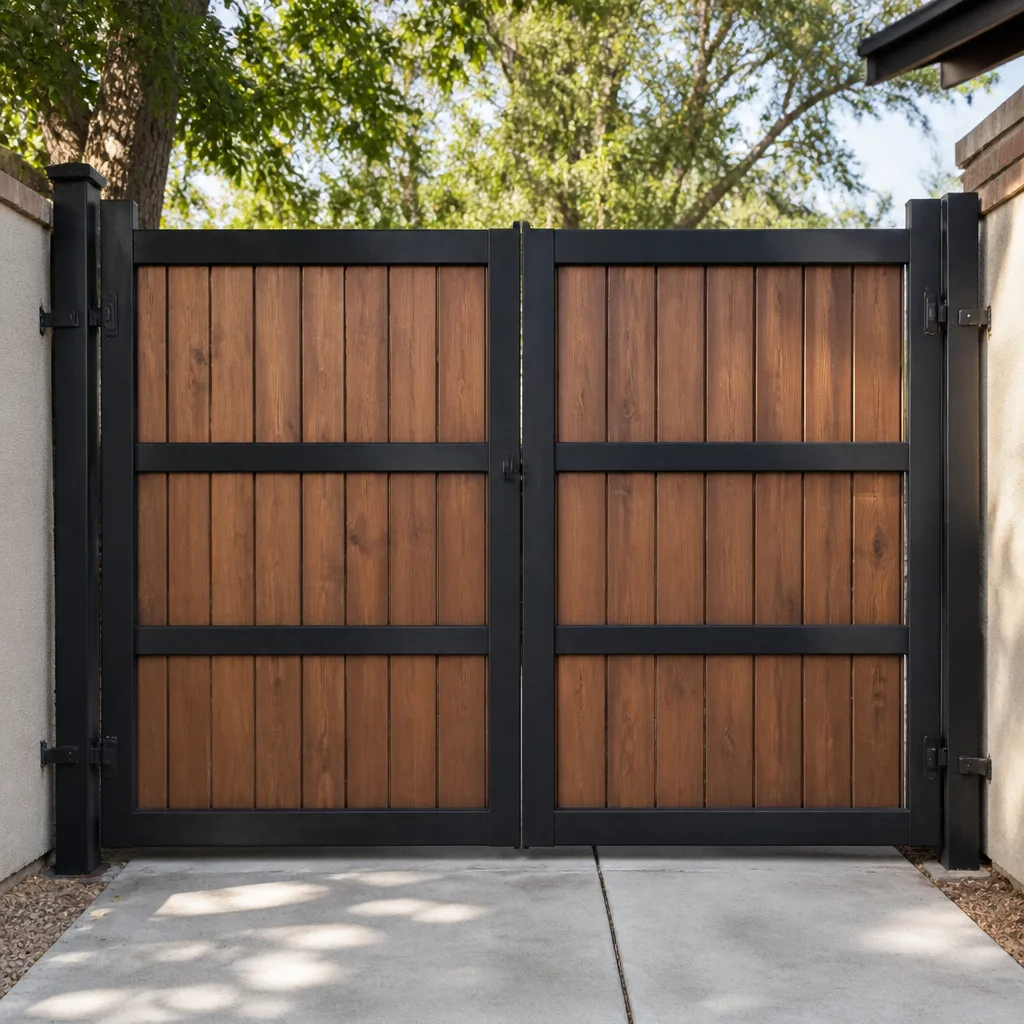 Wood & steel frame
 Farm & ranch
 Sliding driveway gates
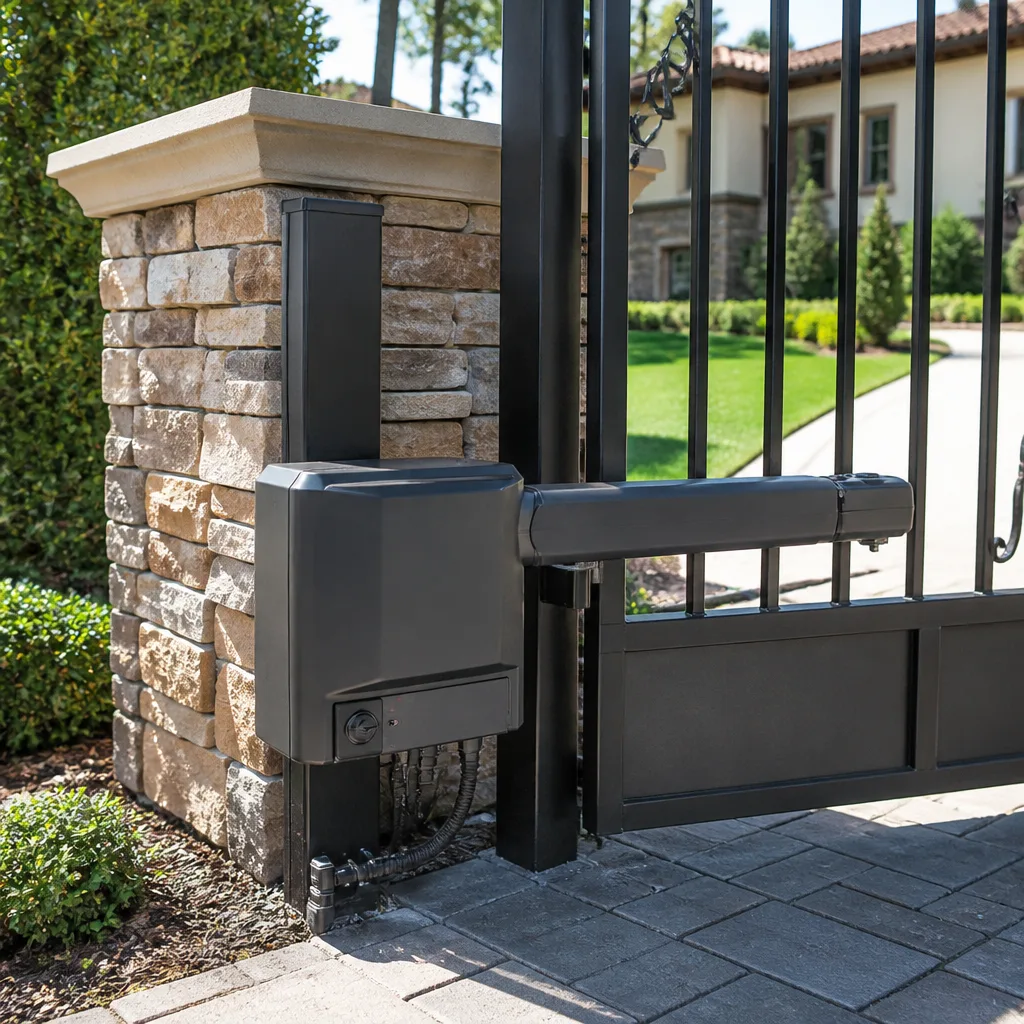 LiftMaster operators
Free on-site gate assessment - hinges, posts, and your LiftMaster or Nice gate operator checked before anything is quoted
The assessment is free and the quote is the invoice.
Get your free estimateGate Repair Maintenance Schedule: What to Do and When
Most gate owners treat maintenance as a once-a-year event: call someone, get it tuned, forget it until the gate stops moving. That single-visit mindset is exactly why so many residential and light-commercial gates in Chico wear out faster than homeowners expect. Gate systems don’t degrade on a yearly calendar. They degrade in three separate windows tied to our seasons: spring pollen and dust that cloud photo-eye sensors, summer heat that expands metal tracks and stresses lubricants, and fall debris that loads hinges and rollers. Collapsing those windows into one visit leaves the gate running rough for months. This guide lays out a month-by-month schedule built around what actually degrades in Chico and when, so you can tell what you can handle yourself, what needs a technician, and what warning signs mean you have weeks, not hours.
Quick Answer
The core gate maintenance schedule is: quarterly lubrication of hinges, rollers, and the chain or belt drive; monthly sensor wipe-downs and a visual walk-around; a spring inspection targeting pollen and dust; a summer check on track expansion, operator heat, and battery health; a fall clearing of leaves and debris from tracks and hinge points; and one annual technician service for limit-switch adjustment, torque calibration, and control-board inspection. The four-minute task most people skip entirely – lubricating the chain or belt drive – prevents the single most common repair call we get on residential systems. Everything else can be layered around it.
Styles & brands we work with
- Wrought iron
- Wood & steel frame
- Farm & ranch
- Sliding driveway gates
- LiftMaster operators
Table of Contents
- Why One-Year Coverage Fails a Gate in Chico
- The Three Seasonal Windows of Gate Maintenance
- Month-by-Month Gate Task Breakdown
- Homeowner Tasks vs. Technician Tasks
- Choosing Lubricants for California Heat
- Warning Signs of Impending Failure
- Keeping a Maintenance Log That Protects a Warranty Claim
- Common Mistakes to Avoid
Why One-Year Coverage Fails a Gate in Chico
Most gate manufacturer manuals give a generic interval – “annually” or “semi-annually” – and don’t account for the environment the gate actually lives in. Chico runs hot for a good stretch of late spring through early fall, and it receives a heavy pollen season as the valley greens up. That combination changes what degrades and how fast. A gate that would sail through an annual service in a mild, damp climate sees far more thermal cycling here.
Heat matters because metal tracks expand and contract with temperature swings. A slide gate track that’s set perfectly in a cool morning can bind against the rollers by mid-afternoon. Swing-gate hinge pins wear unevenly in summer because the gate panel’s own weight distribution shifts with heat expansion. And the operator’s control board, sitting inside an unshaded housing, runs hotter than its rated window on the worst days. That heat accelerates capacitor aging and can shorten the life of the control board if airflow is blocked by debris.
Pollen matters because the photo-eye sensors on any automated gate are optical. Dust and pollen coat the lenses and the reflector, and the gate starts behaving inconsistently: reversing unexpectedly, stopping halfway, or refusing to close. Owners often call assuming the control board is failing when a three-second wipe of the sensor lens fixes it. We see this pattern constantly when we’re called out for electric gate repair across Chico. A maintenance schedule that doesn’t account for pollen is a schedule that generates false repair calls.
Fall debris loads hinges and rollers, jams slide-gate tracks, and packs into the operator housing vents. Leaves that collect at the bottom of the track trough get rained on, mat down, and create a hard, gritty layer that grinds the rollers. That’s slow mechanical wear, not a sudden failure, which means most of it is preventable with a ten-minute clearing once or twice through the fall.
The Three Seasonal Windows of Gate Maintenance
Instead of thinking about maintenance on a yearly cadence, think of it in three windows. Each one has a specific target, a specific set of tasks, and a specific reason it’s timed where it is. If you can only do one window per year, do all three in the span of one month. If you can do all three on schedule, your gate will last materially longer and generate far fewer repair calls.
Spring Window (March through May)
Spring in Chico is pollen season. The window’s job is optical hygiene and sensor confidence.
- Wipe Photo-Eye Lenses and Reflectors: both sides of the gate, both sensors, both reflectors. Use a soft cloth (microfiber is fine); avoid abrasive paper which scratches the plastic.
- Clear Operator Vents: pollen and dust settle into the vents on the operator housing. A soft brush or a can of compressed air clears them. Blocked vents cause overheating come summer.
- Walk the Gate Path: check for cracked pivot points, loose hinge fasteners, and any debris collected in the track trough.
- Test the Obstruction Safety: with the gate running, wave an object in front of the photo-eye path. The gate should reverse immediately. If it doesn’t, that’s a safety issue, not a hobby fix.
- Grease the Chain or Belt (Light Application): a light coat of the correct lubricant, not heavy and not dripping. We cover the product choice below.
Summer Window (June through September)
Summer is heat and electrical stress. The window’s job is operator health and torque confidence.
- Check Track Expansion and Alignment: on a slide gate, run the gate fully open and fully closed and listen for any growl or scuff. Alignment shifts show up as a rough section in the middle of the run.
- Inspect Operator Housing Temperature: with a hand, feel the operator case after the gate has cycled a few times. It should be warm, not hot to the touch. Hot-to-the-touch indicates airflow or motor trouble – call a technician.
- Test Battery Backup: on systems with backup batteries, disconnect the mains and cycle the gate once. If it drops or stalls, the battery is on its way out. Battery health matters more in heat, which is exactly when they age faster.
- Remote and Keypad Battery Swap: cheap, easy, and prevents the most frustrating “the gate won’t open” call. Changing it proactively once a year is fine.
- Check Manual Release Function: make sure the physical override works. If you haven’t tested it since last year, that’s the month.
Fall Window (October through November)
Fall is debris and mechanical wear. The window’s job is load management and hinge health.
- Clear the Track Trough: leaves, twigs, and grit from the trough, then wipe the trough clean.
- Inspect Hinges and Rollers: any hinge with visible play, any roller that wobbles, gets flagged. Wobble is a warning sign (more on this below), not an emergency.
- Lubricate a Second Time: after summer heat and before fall rain, the second lubrication pass of the year.
- Check Gate Alignment at Closed Position: on a swing gate, does the leading edge meet the center stop cleanly, or is it drifting? Drift here is a warning sign for limit switches.
- Clear Debris from Around the Operator Housing: leaf buildup against the operator base traps moisture and accelerates rust.
Month-by-Month Gate Task Breakdown
Here’s the whole schedule laid out by month. The recurring items (sensor wipe-down, visual walk-around) show up every month because they take two minutes and catch most small issues early. The seasonal items are placed where they do the most good.
- January: Monthly sensor wipe; walk-around check; remote battery health.
- February: Monthly sensor wipe; test manual release function; check hinge play by hand.
- March: Spring pollen pass – deep-clean photo-eye lenses and reflectors; clear operator vents; light chain or belt lubrication.
- April: Monthly sensor wipe; walk-around with attention to hinge fasteners (any vibrating loose?).
- May: Test obstruction safety; check battery backup state; re-check vents after pollen peak.
- June: Summer heat pass – track expansion and alignment check; operator housing temperature test; remote and keypad battery swap.
- July: Monthly sensor wipe; walk-around with attention to track smoothness at both travel extremes.
- August: Cycle-test battery backup; check control board compartment for heat and dust; observe cam/limit-switch indexing on approach to full open and full close.
- September: Monthly sensor wipe; visual on operator housing for rust or cracks.
- October: Fall debris pass – clear track trough; check hinges and rollers; second lubrication of the year.
- November: Gate alignment at closed position; clear debris from around operator; sensor wipe.
- December: Full walk-around; note any items for the annual technician visit; sensor wipe.
Add the annual technician service anywhere on the calendar that fits; many owners do it in spring before pollen season or in fall before the rain starts. That’s the one visit a year that handles the tasks that need calibration, not just cleaning.
Homeowner Tasks vs. Technician Tasks
There’s a clear line between what’s safe and reasonable to do yourself and what should be reserved for someone with the right tooling and training. Crossing that line is how minor issues become expensive ones – and in some cases, how safety systems stop functioning when you think they’re nominally in place.
Homeowner-Serviceable Tasks
- Sensor wipe-downs: soft cloth, both lenses, both sides of the gate.
- Track clearing: leaves and grit out of the trough, no tools required.
- Light lubrication: chain or belt drive, hinges, rollers – using the correct product (see next section).
- Remote and keypad battery replacement: swap them proactively, keep a spare on hand.
- Visual walk-around: look for looseness, play, rust, cracks, and debris around the housing.
- Obstruction-safety test: wave an object in front of the photo-eye and confirm the gate reverses.
Tasks for a Technician
- Limit-switch adjustment: this is a calibration task, and small changes have big effects on where the gate stops.
- Torque calibration: the operator’s torque setting is a safety function; if it’s set wrong, the gate can hit hard enough to hurt someone.
- Control-board inspection: capacitors, relays, terminal connections, error codes – this is electrical diagnosis, and it isn’t a homeowner task.
- Photo-eye alignment: a sensor can be occluded at a level you can’t see; realignment needs proper testing.
- Manual-release adjustment: if the release mechanism feels loose or the key isn’t engaging, a technician should inspect.
- Track realignment: even small shifts in the track geometry require controlled adjustment.
- Motor or gearbox work: regardless of brand, that’s a job for a technician.
When your gate is on a DoorKing residential system or an Elite commercial operator, those calibration tasks have brand-specific procedures. That’s why we lean on our gate repair focus for the mechanical work that pairs with electric diagnostics; the two almost always need to be handled together anyway.
Safety caveat: gate systems carry serious energy – a swing gate panel is heavy enough to crush, a slide gate rolling off its track can drop, and the operator’s wiring is electrical. Don’t disassemble the operator housing, bypass any safety edge or photo-eye, or adjust torque or limit settings yourself. If a safety function has failed, stop using the gate until a trained professional has inspected it.
Choosing Lubricants for California Heat
Not all lubricants work for Chico’s summer temperature range. The wrong one is worse than none, because it can get gummy above roughly 95°F and pull grit into the moving parts instead of letting it fall away. Once a lubricant breaks down at high heat, it drags on the chain and hinge points and accelerates wear – the exact opposite of what you were trying to prevent.
What Works
- Synthetic chain lubricant: specifically designed for high-temperature operation and available in aerosol or drip form. It stays fluid above 95°F and doesn’t gunk up.
- White lithium grease (light coat): acceptable for hinges and rollers, applied thin. Thick white grease on a chain is a mistake.
- Dry PTFE (Teflon) spray: good for slide-gate track troughs; it doesn’t attract dirt.
- Silicone spray: fine for light-duty lubrication of rollers and pivot points. It won’t hold up on a heavy chain drive.
What Breaks Down Above 95°F
- Basic household oil: breaks down and turns sticky under summer heat, which pulls grit in.
- Generic “multi-purpose” grease: the grade usually stated on the can isn’t rated for persistent high heat; it migrates under summer load.
- Heavy gear oil: too viscous for a chain drive and holds grit against the moving surface.
- Automotive engine oil (used motor oil): common advice, wrong for a gate – it drips and won’t form a stable film.
The correct approach on a chain drive is a light, even coat of a synthetic chain lubricant, applied when the chain is relatively clean. Don’t overdo it. Excess lubricant holds dirt. A little, applied quarterly and again before winter, is far better than a heavy coat once a year. On a belt drive (some Ghost Controls and Mighty Mule models), you generally don’t lubricate the belt itself; you lubricate the pulleys, the idler bearings, and the pivot points of the gate. Check what your operator manual calls for – it varies by brand, and we’ve seen belt-drive systems damaged by someone treating them like a chain.
Warning Signs of Impending Failure (60 – 90 Days, Not Immediate)
Most gates don’t fail suddenly. They give weeks of warning, and the language of that warning is small and specific. Learning to read it changes everything about timing and cost. An observed sign is a scheduling cue: call to book a service before it fails completely, don’t wait for a callout when you no longer have a way in.
Signs That Say “60 – 90 Days”
- Slight hinge play: the gate sags a millimeter or two when you press it. That’s bushing wear. It gets worse slowly.
- Uneven growl in one section of the track: the roller is starting to bind. Fast fix now, expensive fix later when it grinds into the track.
- Operator cycling slower on approach: usually a torque calibration issue or an aging capacitor. Not failing yet, but trending.
- Slow response to a remote command: battery health or antenna range. Fails completely in weeks if you don’t check it.
- Gate “overshoots” and reverses on close: limit-switch indexing is drifting. Needs calibration, not replacement.
- Slightly sluggish obstruction-safety test: the reverse is happening, but slower than it should – photo-eye alignment is degrading.
Signs That Say “Call Now”
- Gate reverses at random with no obstruction.
- Gate won’t reverse on obstruction test.
- Operator housing is hot to the touch.
- Gate runs in short cycles and stops.
- Chain or belt is loose or off its pulleys.
- Gate panel is visibly sagging or has shifted off the track.
What changes about your timing is simple: on a 60 – 90 day warning, you can schedule the service, get a written estimate, and have parts ordered if needed. On an immediate-failure sign, you’re calling for a service visit without the gate working at all. That’s the difference a scheduled call makes – not the cost of one callout, but the weeks of calm versus scrambling to get past a gate that won’t open.
Keeping a Maintenance Log That Protects a Warranty Claim
If a part fails prematurely and you want to claim warranty coverage, the first question the manufacturer’s warranty department will ask is whether the system was maintained as specified. A simple log answers that question instantly. Without one, you’ve got no record, and a claim that might otherwise have gone through can get denied on the maintenance-attestation clause.
There’s no official form. A notebook or a shared spreadsheet is fine, as long as it records the right information. Here’s what each maintenance log entry should contain:
- Date and time of the service (or self-service, if you did it yourself).
- Task performed – be specific (“sensor lenses cleaned” not “maintenance done”).
- Tools or products used – the lubricant brand and product name are the ones a technician will care about in a warranty context.
- Any observation – “slight hinge play on lower hinge” is worth logging even if the gate is fine. Trending notes are what a warranty claim actually hinges on.
- Technician name or company where relevant; and mark entries you performed yourself as such.
- Photos – before and after for anything meaningful. Hinge play, track condition, sensor lens condition. Photos are the single best evidence a piece of a claim should be honored.
Keep the log somewhere retrievable. A Google Drive folder works; a notebook in the kitchen works. The important thing is that you can produce it when someone asks. If you’re using a particular brand’s warranty program, check what interval they actually require – some systems require documented preventative maintenance to stay in warranty, and interval requirements vary by manufacturer. A printed copy of the manual page that specifies the interval, clipped to the log, is worth the small effort.
Common Mistakes to Avoid
- Treating all lubrication the same. Household oil and generic grease break down in Chico’s summer heat and pull grit into the moving parts. Use synthetic chain lubricant or PTFE; leave the heavy greases off the chain drive entirely.
- Using a pressure washer on the gate. Very common with summer dust. High-pressure water drives grit into the operator bearings, forces moisture into the control-board compartment, and strips good lubricant off the chain. A garden hose on a low setting and a soft cloth is enough.
- Cleaning the track trough only when the gate stops. By the time the gate stops, the trough has been grinding for weeks. Clear it at both ends of fall, not once.
- Skipping the obstruction-safety test. It’s the one monthly test that manages the safety of anyone at the gate. If you do nothing else, do this.
- Believing “it’s just the battery” when a gate misbehaves. Sometimes it is; often it’s sensor alignment or limit indexing. A quick battery test tells you which, but only if you actually test it.
- Blocking the operator’s vents with vegetation. Low shrubs and vines look good and starve the operator of airflow. Clear at least a hand’s width around the housing vents, more if the summer gets hot.
- Ignoring warning signs on the theory that they’ll “get worse slowly”. They will, until they don’t. A wobbling hinge today is a sagged gate panel in three months, which is a much larger repair.
See the difference
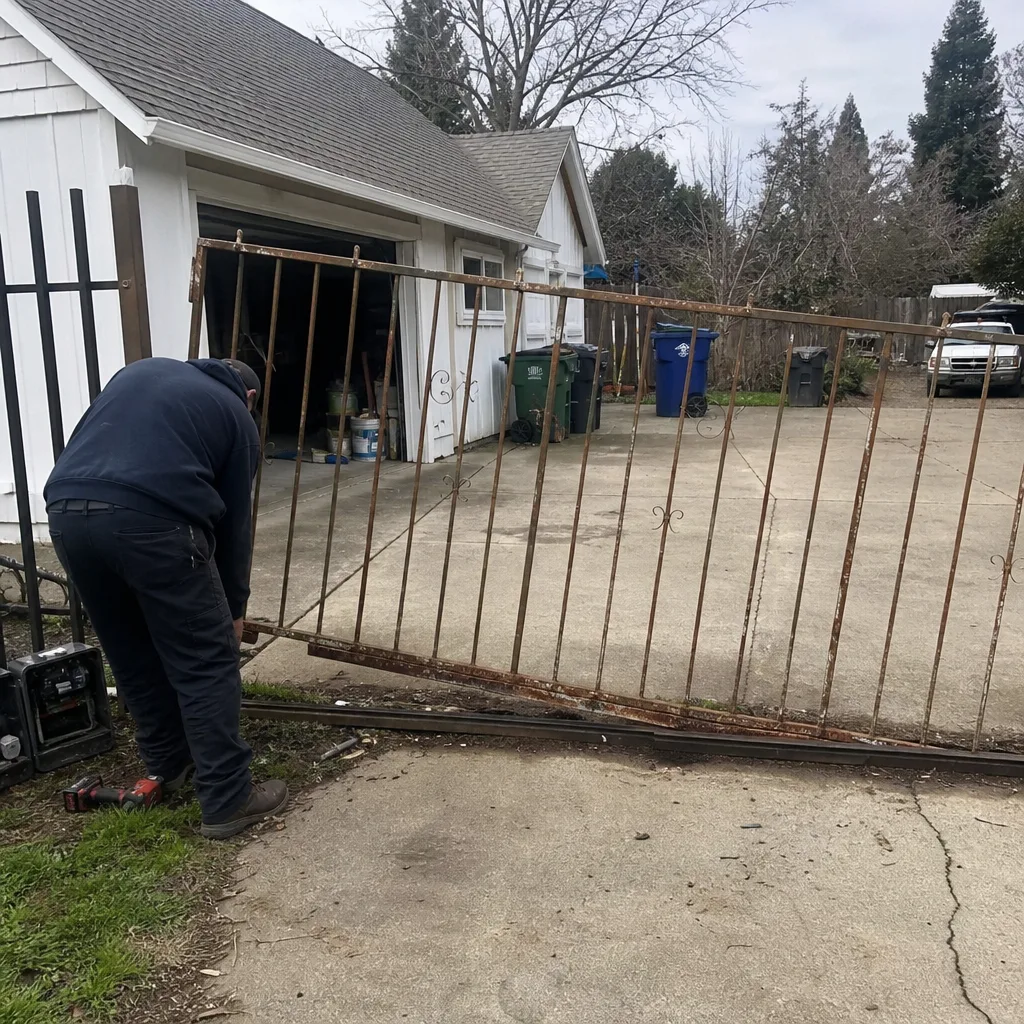 Before
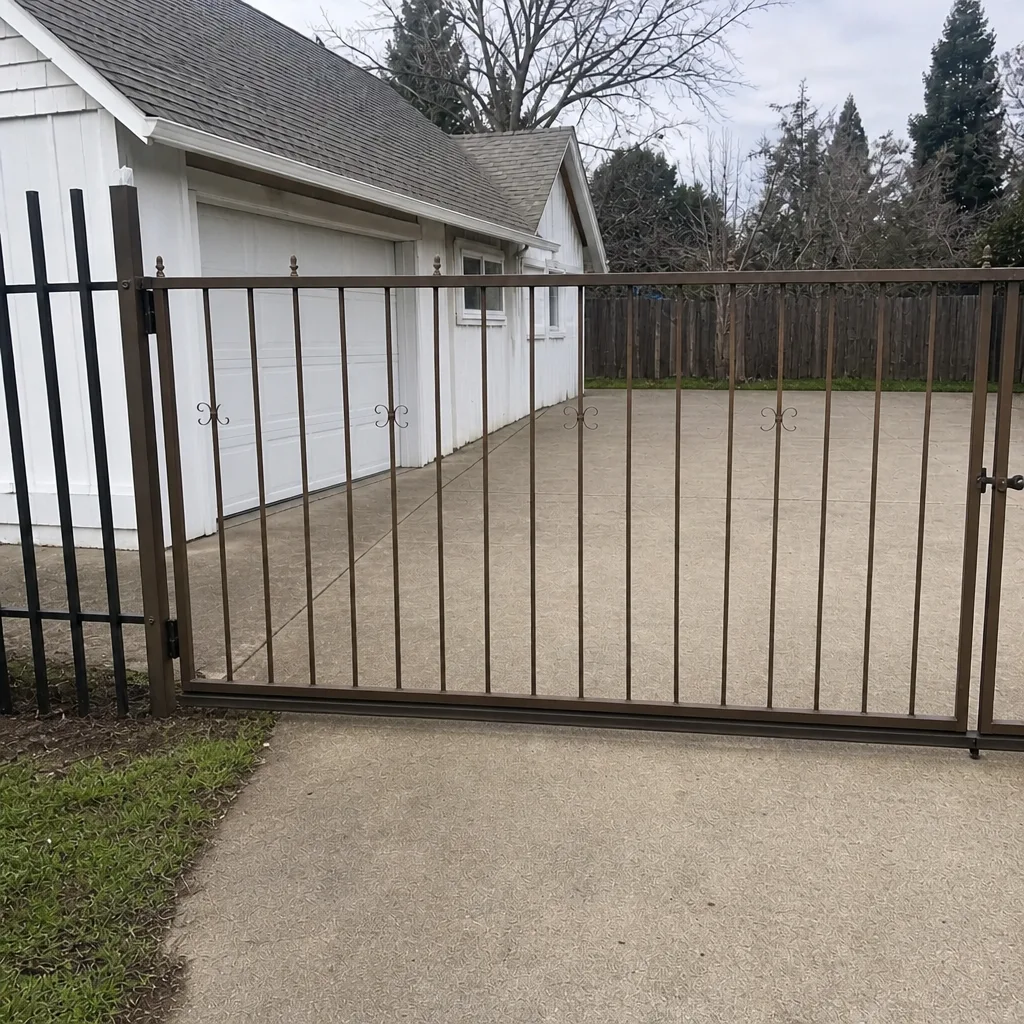 After
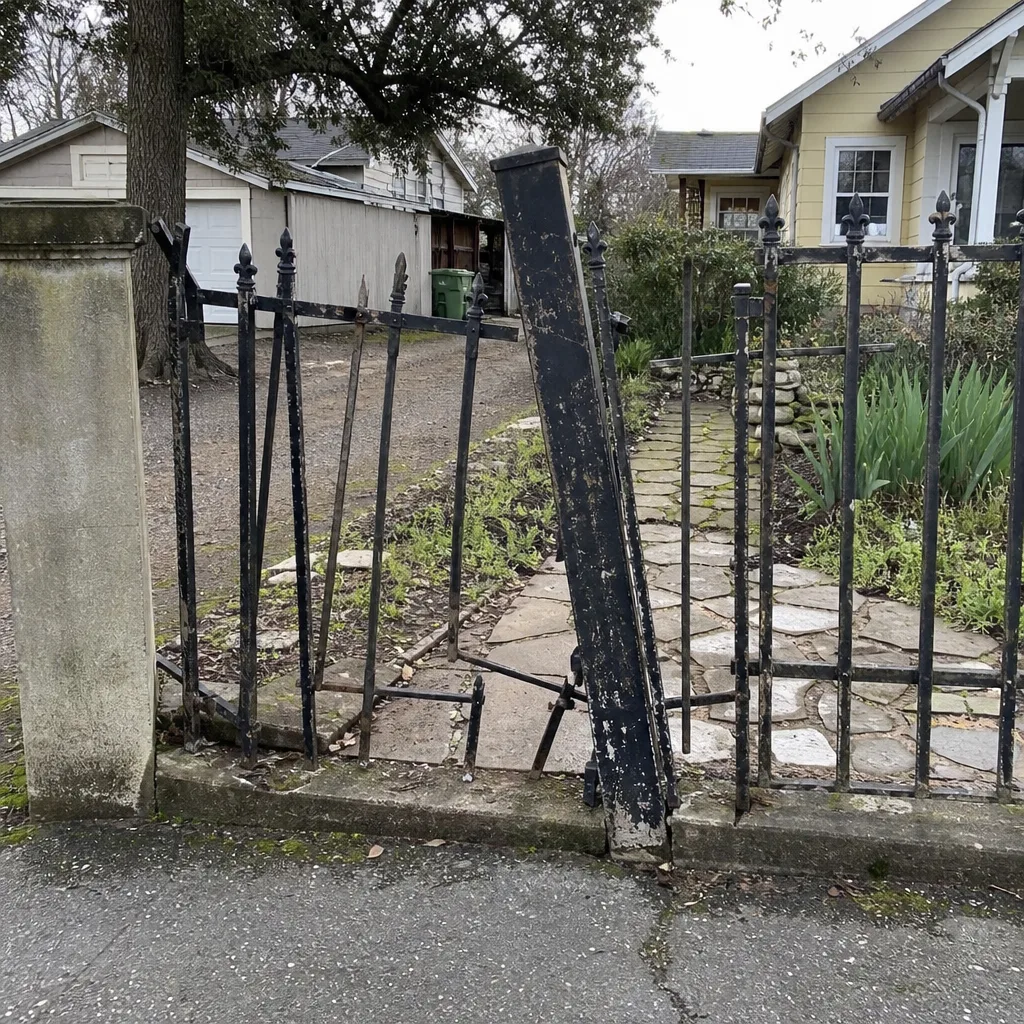 Before
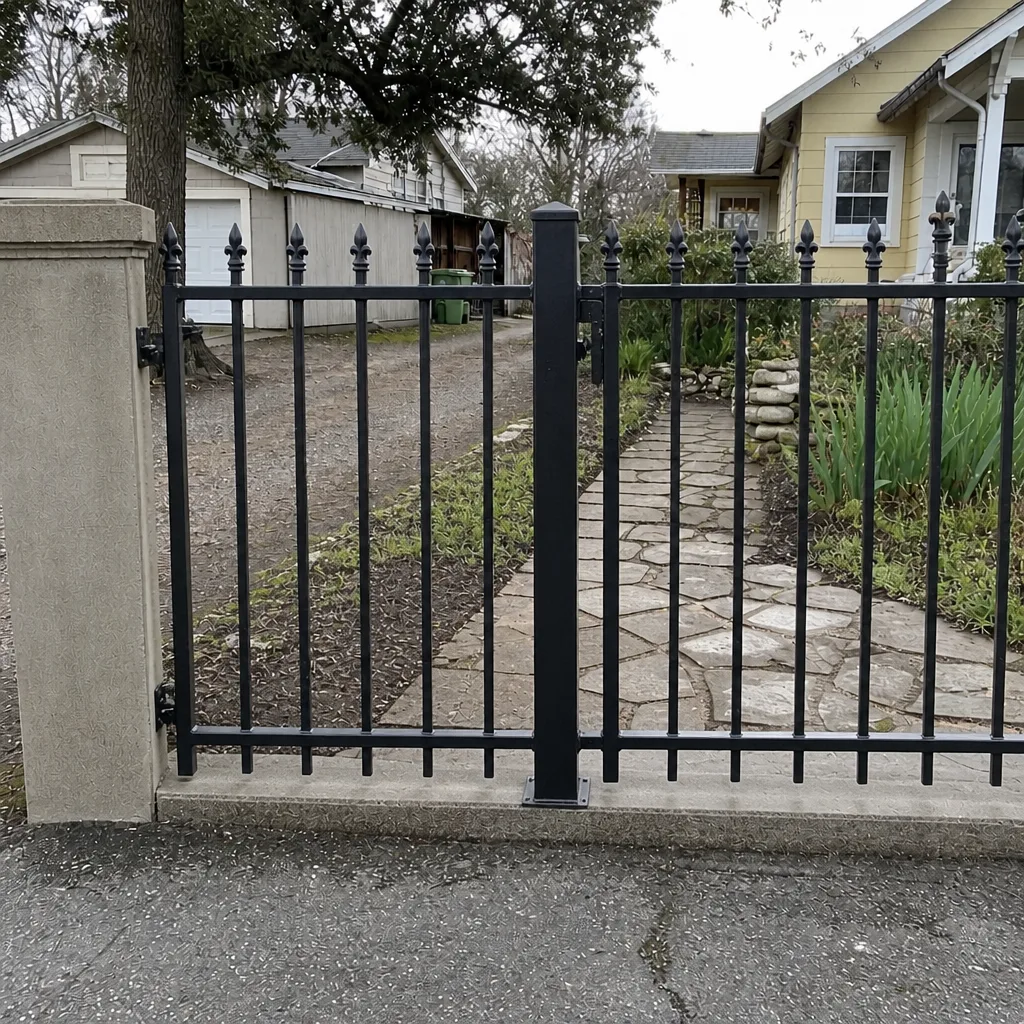 After
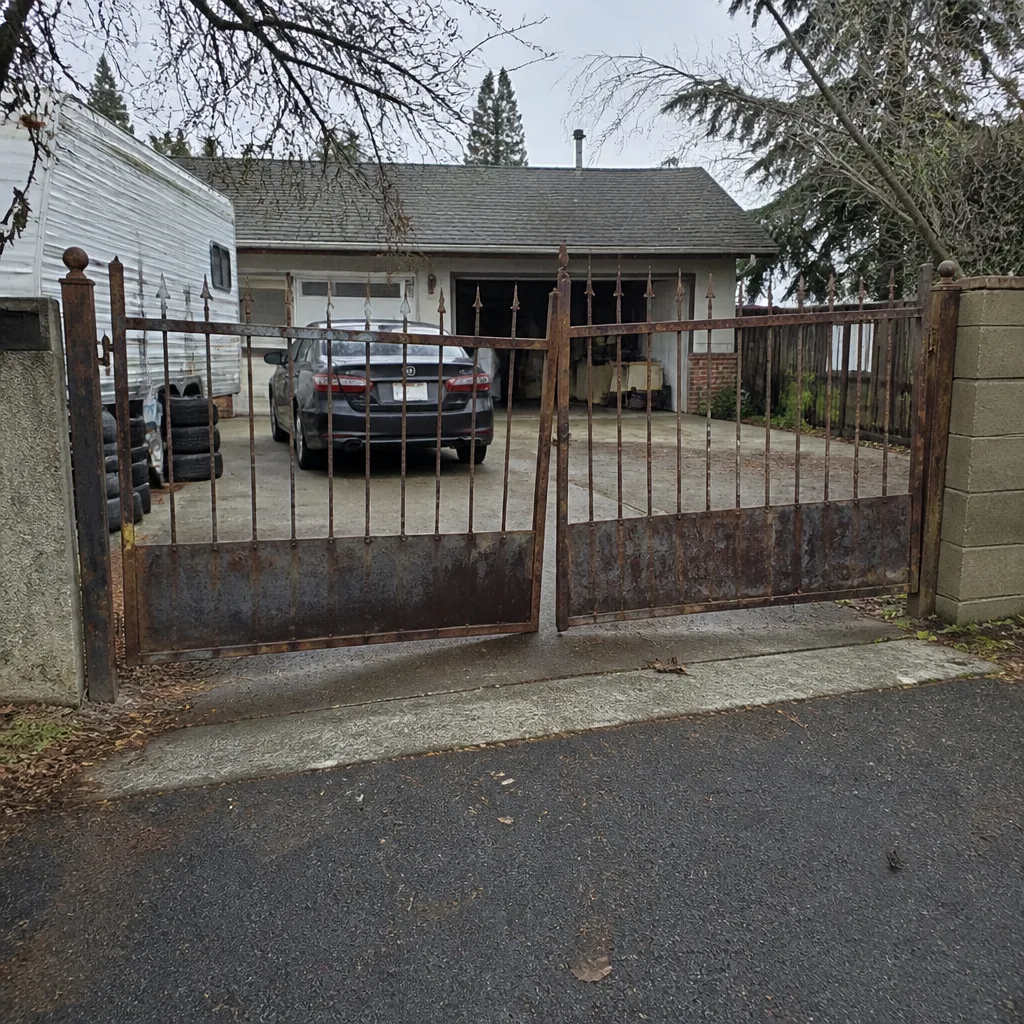 Before
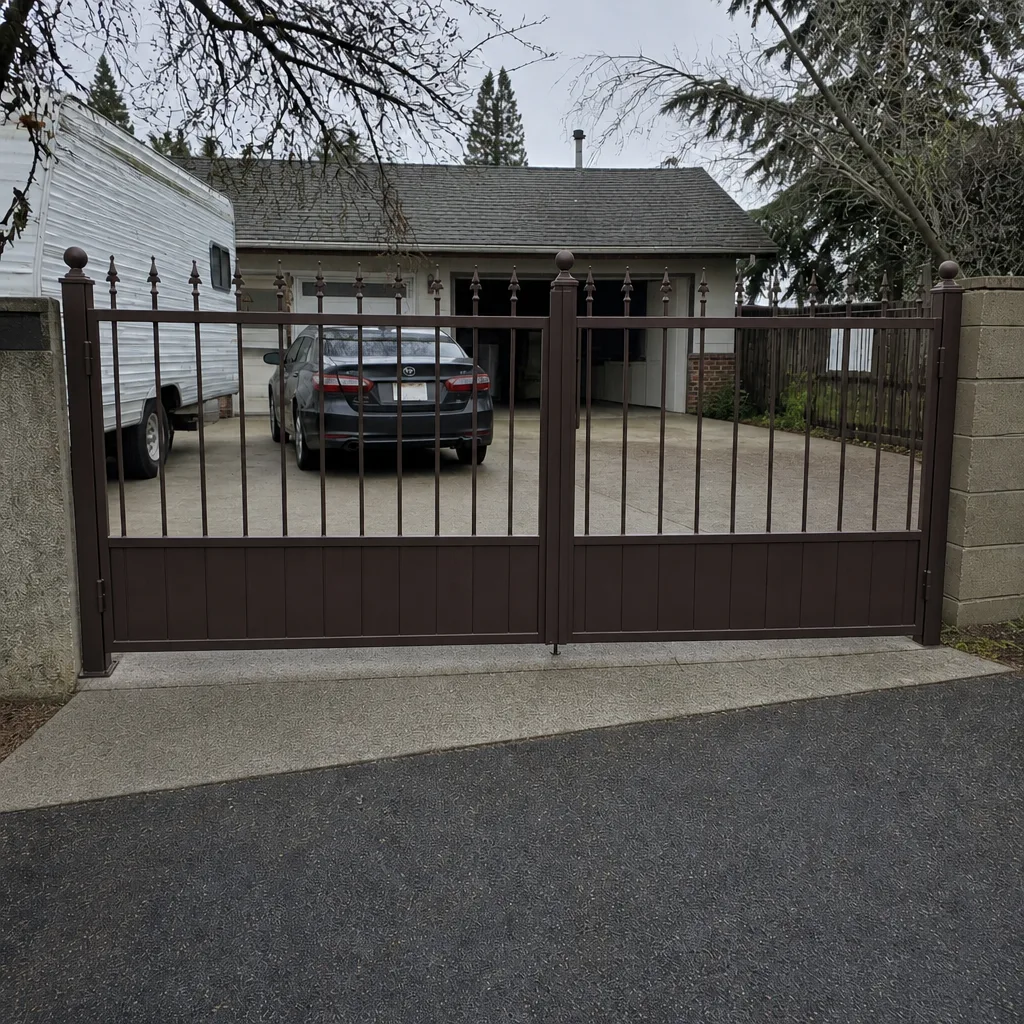 After
When to Call a Professional
You should call a technician when any of the following shows up during your walk-around: a failed obstruction-safety test, a control-board fault code, a torque or limit-setting problem you can’t correct from the manual, a manual release that won’t engage, a gate that has visibly shifted off its track, or any sign that electrical components inside the operator housing have failed. If a gate panel is sagging, or a slide gate has come off its track, stop using the gate until it’s inspected. These are the moments where the danger isn’t inconvenience – it’s a heavy panel, moving under power, with a safety function that may not be working. Call a trained professional. Gate Repair Chico offers free estimates in Chico – call (866) 369-2364. Estimates are quoted and agreed before any work starts, and estimates are free. We answer 24/7. Fast dispatch from 7am to 7pm, Sunday through Friday. Our technicians have up to 9 years of experience across brands like DoorKing, Ghost Controls, Elite, and Mighty Mule, and we work on your brand rather than pushing a replacement. If you’re looking for Gate Repair Chico for a diagnosis, that’s exactly the niche we serve.
Frequently Asked Questions
Quarterly lubrication, monthly sensor wipe-downs and a visual walk-around, and one annual technician service for calibration tasks. That’s the schedule that keeps a Chico gate running through both pollen season and summer heat. In practice, most owners who call us skipped at least one of those cycles for a year or more and found warning signs they’d been walking past.
Yes, for the light tasks: sensor wipe-downs, track clearing, chain lubrication, remote and keypad battery swaps, and the obstruction-safety test. No, for limit-switch adjustment, torque calibration, control-board inspection, photo-eye alignment, and anything involving the operator housing interior. The line is safety-critical functions and electrical diagnostics. Those aren’t hobby tasks, and getting them wrong can leave the safety functions nominally “on” but not actually working.
A synthetic chain lubricant rated for high-temperature use, applied in a light even coat. Avoid basic household oil, generic multi-purpose grease, heavy gear oil, or automotive oil – all of them break down or migrate above 95°F, which is exactly when Chico needs the lubricant to hold. White lithium grease and dry PTFE spray are useful for other components but not for the chain itself. Better a light coat quarterly than a heavy coat once a year.
Keep a written maintenance log with the date, task performed, products used, any observations, and photos where relevant. When a warranty claim is filed, the manufacturer’s warranty department will ask whether maintenance was performed to spec, and the log is the answer. Photographs of the component and its condition before and after each maintenance event are the strongest evidence. If the manufacturer specifies an interval, note the interval and keep to it.
Slight hinge play, a growl in one section of the track, the gate cycling slower on approach, a slow remote response, and overshoot-then-reverse on close. These are 60 – 90 day warning signs – not emergencies, but scheduling cues. The failure signs that mean call now are a gate reversing with no obstruction, an obstruction test that doesn’t reverse, a hot operator housing, or a gate that has come off its track.
Yes, in one specific way: commercial systems usually run cycles far more often than a residential gate, so interval compression matters. A DoorKing commercial operator that cycles fifty times a day needs the same task list done more frequently – typically at shorter intervals on lubrication and safety testing – simply because wear happens faster. The calendar windows (spring pollen, summer heat, fall debris) still apply; the interval between professional services is what changes. Ask about interval guidance specific to your model when you book.
The Bottom Line
Gate maintenance isn’t one annual visit. It’s three seasonal windows – spring for optical hygiene, summer for heat and electrical stress, fall for debris and mechanical wear – plus a light quarterly lubrication habit and a monthly safety test. The four minutes you spend lubricating the chain or belt prevents the most common repair call we get. The warning signs you catch during a walk-around – hinge play, growing track noise, slow remote response – give you weeks to schedule a service. The signs you bypass – an obstruction test that doesn’t reverse, a gate that has come off its track, a hot operator housing – are what turn small problems into large ones. Write it down, keep it, and the gate stays predictable. If you’d rather have someone walk it with you, that’s what we do.
Call (866) 369-2364 for a free estimate. We answer 24/7. Fast dispatch from 7am to 7pm, Sunday through Friday. We’re closed Saturday. Estimates are quoted and agreed before any work starts. Gate Repair Chico is a gate-only company – mechanical repair, electric gate repair, and full installation – serving homeowners and property managers with equipment from LiftMaster, FAAC, BFT, Linear, Viking, Ghost Controls, DoorKing, Elite, and Mighty Mule. If you’re in Chico and your gate is due for its annual service or showing any warning sign, we’ll come out and give you an honest diagnosis.
Written by the team at Gate Repair Chico.