
Last updated November 16, 2026
 Wrought iron
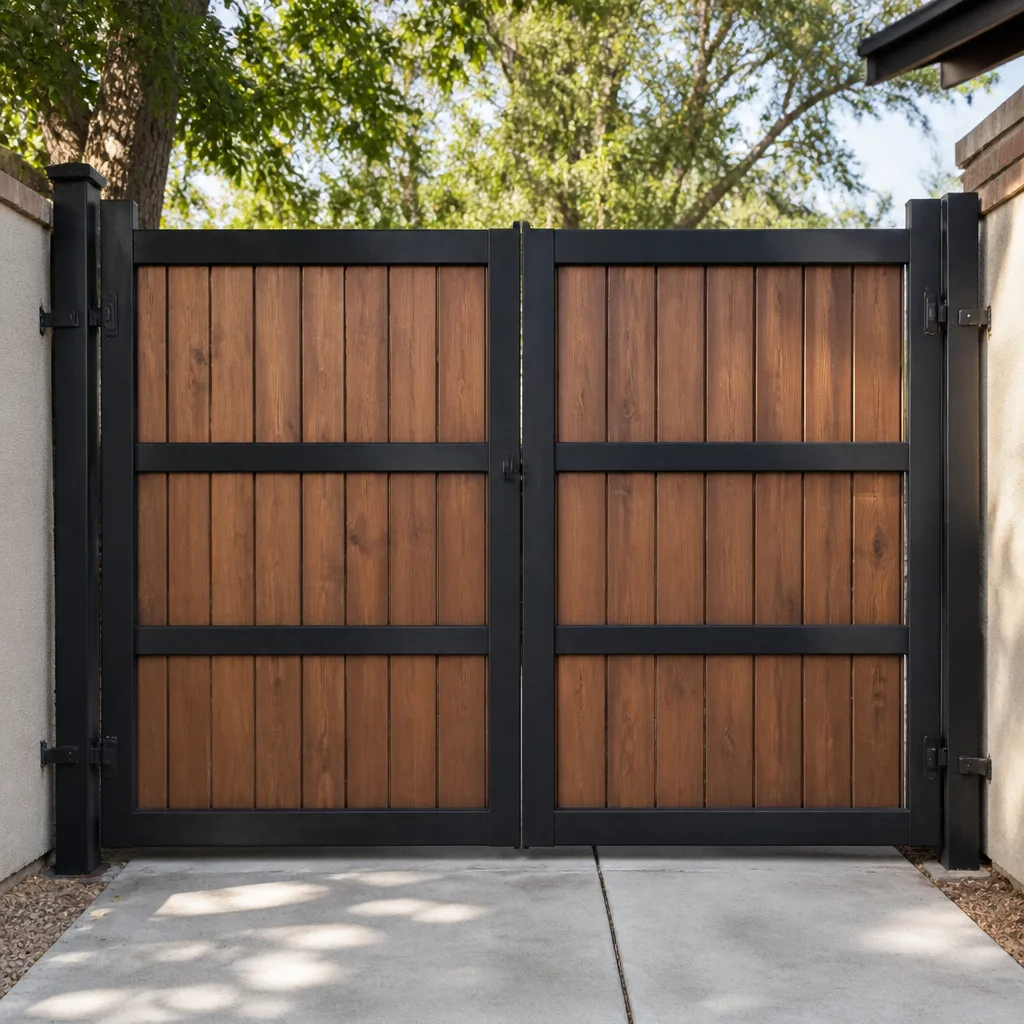 Wood & steel frame
 Farm & ranch
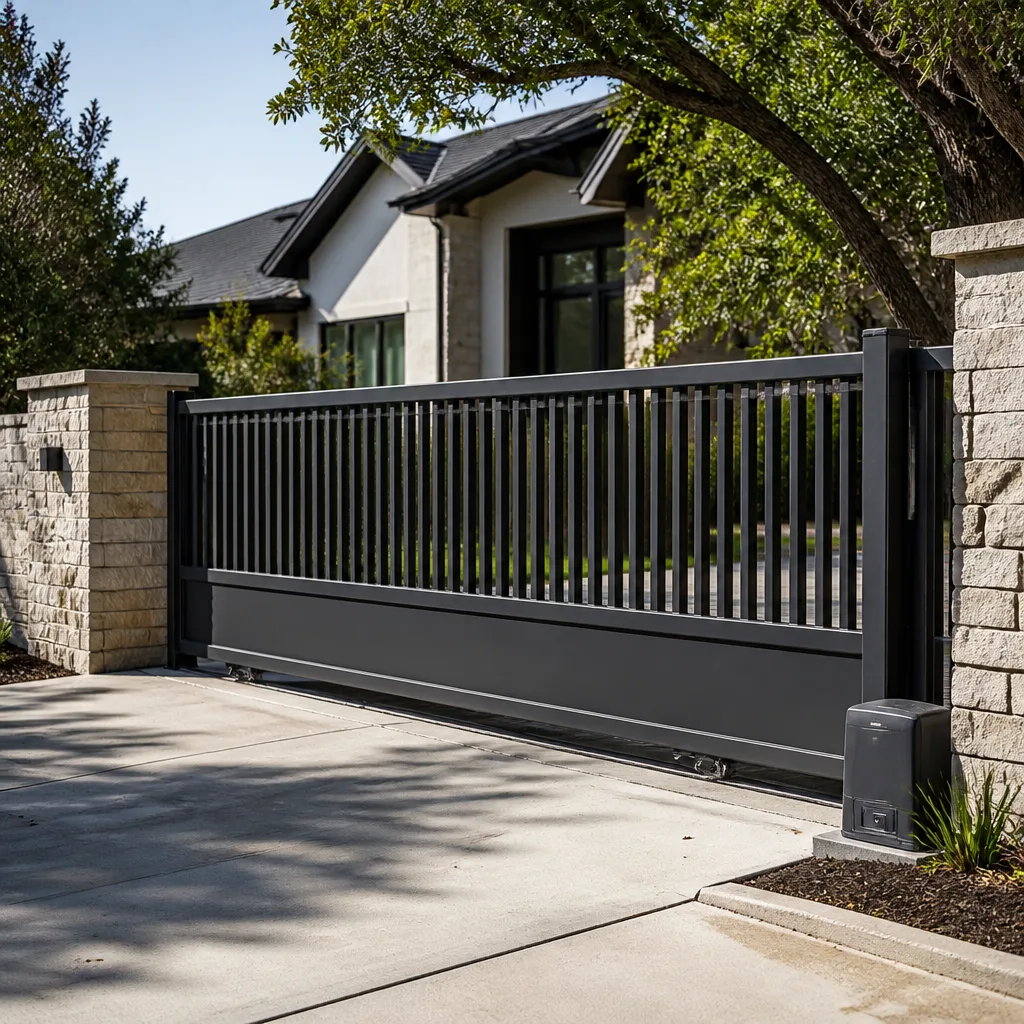 Sliding driveway gates
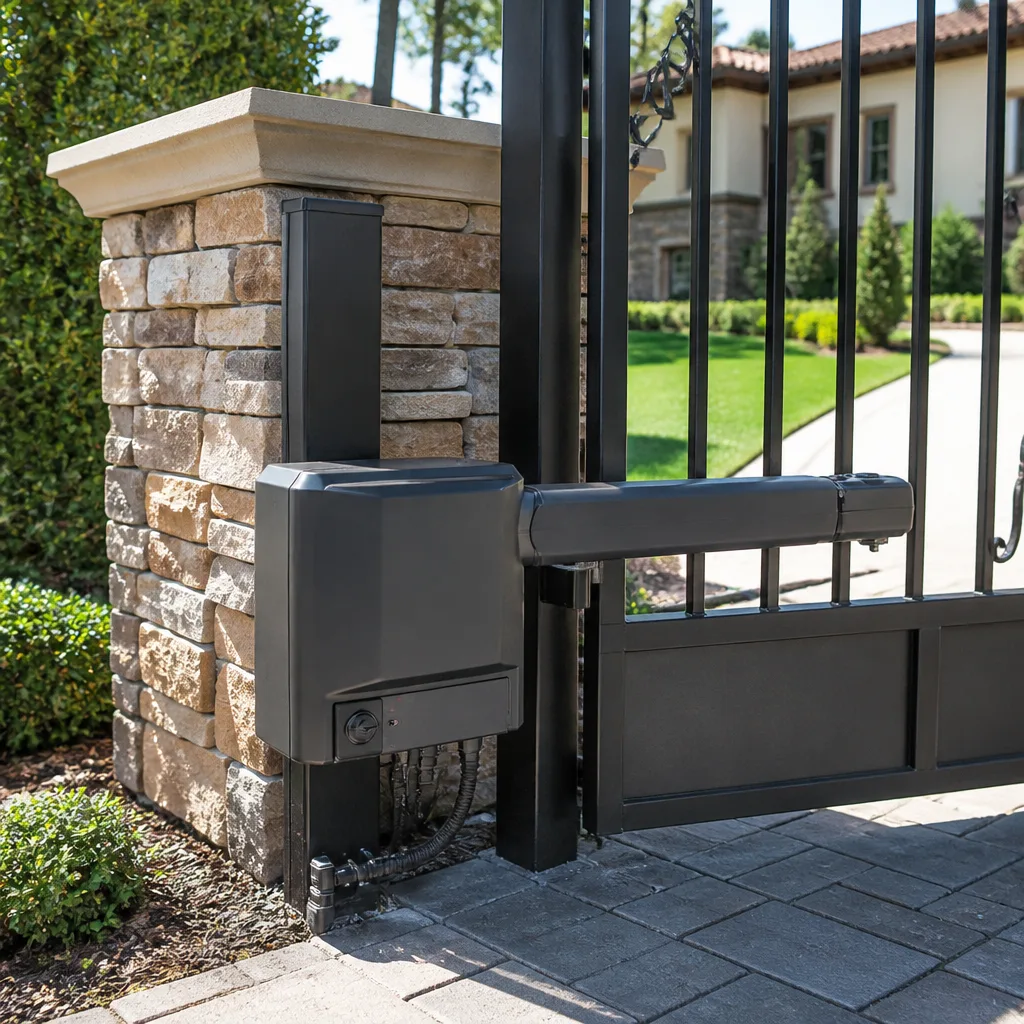 LiftMaster operators
Free on-site gate assessment - hinges, posts, and your LiftMaster or Nice gate operator checked before anything is quoted
The assessment is free and the quote is the invoice.
Get your free estimateGate Repair Emergency Preparedness Guide for Chico Homes
The call that scares us most isn’t the one about a gate that won’t open. It’s the one from a homeowner whose gate won’t open and who has no idea how to release it by hand. Most people assume an automated gate is a permanent fixture, something that only moves when the operator tells it to. That’s the misconception worth correcting before anything else. An automated gate is a machine with a manual override, and knowing where that override lives turns a security crisis into a thirty-second job. This guide walks through the three emergencies a Chico gate owner actually faces: the gate that traps a vehicle, the gate that fails open, and the gate that dies entirely. You’ll get specific manual release steps for common operators, a buildable emergency kit, and a clear way to tell whether a power-related failure is a dead battery, a surge, or a reset waiting to happen.
Quick Answer
A gate emergency in Chico comes down to three moves: release the gate manually so people and vehicles aren’t trapped, secure the opening if the gate fails open, and diagnose whether the operator lost power, lost its battery backup, or took surge damage. Every automated gate has a manual release, and the time to learn it is now. Call (866) 369-2364 when the release is stuck or the control board is involved. We answer 24/7, with fast dispatch from 7am to 7pm, Sunday through Friday.
Styles & brands we work with
- Wrought iron
- Wood & steel frame
- Farm & ranch
- Sliding driveway gates
- LiftMaster operators
Table of Contents
- Manual Release Procedures for Common Chico Operators
- What to Do When a Gate Traps a Vehicle
- Emergency Security Protocol When a Gate Fails Open
- Power Outage: Battery Backup, Surge Damage, or Simple Reset?
- Building a Gate Emergency Kit for Your Chico Property
- Preventing Emergency Gate Failures Before They Happen
- When to Call a Professional
Manual Release Procedures for Common Chico Operators
Every automated gate operator sold for residential and light-commercial use has a manual release. That release lets you disengage the motor and move the gate by hand when the operator has no power or has faulted out. The exact mechanism differs by brand, and knowing yours before an emergency is what matters. Here’s how the three operators we see most often on Chico driveways handle it.
LiftMaster operators
- Locate the release handle on the operator arm or the top of the housing. On most LiftMaster swing and slide operators it’s a lever or a keyed release.
- Turn the key if the release is locked, then pull or turn the lever to disengage the drive gear.
- Move the gate slowly by hand once you feel the motor release. Don’t force it if it binds.
- To re-engage, move the gate back to its closed position and reverse the release procedure until it clicks.
Viking operators
- Find the manual release key or lever, usually on the side of the operator housing.
- Insert the key and turn it, or lift the release lever, to disengage the gear drive.
- Push the gate open by hand. Viking swing and slide operators release the same way, but the lever position differs between models.
- Re-engage by running the gate back to its start position and locking the release.
Ghost Controls operators
- Open the operator housing cover by removing the access screw or lifting the latch.
- Pull the manual release pin or lever inside the housing to disengage the drive.
- Move the gate by hand, keeping firm pressure on the gate leaf so it doesn’t swing freely.
- Reset the release and close the housing before restoring power.
If the release won’t budge, don’t force it with a tool. A seized release usually means corrosion in the mechanism or a bent release arm, and pushing harder can snap it. That’s a job for a technician, and it’s where a focused gate repair company earns its keep. We work on your brand, from Viking to DoorKing, so the release mechanism and the parts behind it get diagnosed properly instead of guessed at.
What to Do When a Gate Traps a Vehicle
A gate that closes on a car is the emergency with the highest risk of expensive damage. The instinct is to reverse or push through. Both make it worse. Here’s the safe sequence, whether the gate is holding a vehicle in or out.
- Stop the vehicle. Don’t keep rolling forward against the gate, and don’t reverse hard. Pressure on a gate leaf can bend a hinge, strip a track, or damage the operator arm.
- Check for people first. If anyone is out of the car, keep them clear of the gate leaf and the swing path. Heavy panels can crush, and slide gates can come off the track under pressure.
- Use the manual release. Every operator has one. Release the drive and push the gate free by hand. This is the step that frees the car without damaging anything.
- If the release won’t work, cut power at the breaker or the operator’s disconnect. A gate with no power can usually be pushed by hand once the drive disengages.
- Call for help from the car. If the gate is truly jammed and the release fails, don’t try to climb over or squeeze past a loaded gate. Call a technician and stay put.
Once the car is free, the gate needs a look before you cycle it again. A gate that trapped a vehicle usually has a sensor, a limit switch, or a hinge problem behind it. Running it back and forth without checking just repeats the failure. In our experience, the causes we see most often are misaligned photo-eye sensors, a safety edge that failed, and limit switches that drifted out of position. A gate repair visit resets the limits, tests the safety devices, and confirms the gate cycles cleanly.
One thing worth knowing about Chico properties specifically: many driveways here are short and slope toward the gate, which means a vehicle sitting against a closed gate can put load on the operator’s arm even after the motor stops. If your driveway pitches toward the street, test the manual release once a season so you know it works under weight.
Emergency Security Protocol When a Gate Fails Open
A failed-open gate is the quiet emergency. Nothing is trapped, nothing looks broken, but your perimeter is wide open and you may not notice until morning. Restoring security before the repair is the priority, and it’s something you can do without touching the wiring.
Step 1: Secure the opening
- Physically close the gate by hand after releasing the drive, and block or chain it in the closed position if there’s no keeper.
- If the gate can’t stay closed, park a vehicle across the opening or place a visible barrier in the drive.
- Check that the gate can’t be pushed open from outside by hand. A gate that swings freely is a security problem, not just a mechanical one.
Step 2: Protect the property behind it
- Turn on exterior lighting or motion lights facing the opening.
- Move valuables, tools, and anything easy to carry out of view of the drive.
- If you have cameras, point one at the opening and check the recording works.
Step 3: Understand why it failed open
Gates fail open for a reason, and it usually falls into one of four buckets:
- Safety device fault: the photo-eye or safety edge thinks something is in the path and holds the gate open. A dirty or misaligned sensor is the most common cause.
- Limit switch failure: the operator loses track of the open position and stops mid-cycle.
- Control board fault: the logic board loses its memory or throws a fault, and the gate parks open.
- Power interruption: the operator resets on power restore and defaults to open unless the battery backup carries it through.
If the gate is holding open because a sensor is blocked, cleaning and realigning the photo-eye can restore normal operation. If it’s the control board, that’s electric gate repair territory, and it’s better handled by someone who knows the board on your operator rather than someone guessing. We see the full range on Chico properties, from a Mighty Mule on a driveway to a DoorKing on a commercial lot, and the diagnosis path is different for each. Call (866) 369-2364 and we’ll get a technician scheduled.
Power Outage: Battery Backup, Surge Damage, or Simple Reset?
When a gate stops working after a power interruption, the cause is one of three things: the battery backup didn’t carry the operator, the surge damaged a component, or the operator just needs a reset. Here’s how to tell them apart.
Battery backup failure
Most residential automated gates have a battery backup designed to cycle the gate a limited number of times when grid power drops. If your gate worked for a few cycles after the outage and then died, the battery is the likely culprit. Backup batteries age, and a battery that’s several years old will hold less charge than one installed last season.
- Signs of a battery failure: the gate works briefly on battery, then stops; the operator beeps or flashes a low-battery fault; the gate won’t move at all once power returns until the battery is replaced.
- What to do: test the manual release, keep the gate parked where you want it, and have the battery checked and replaced. That’s a straightforward service call.
Surge damage
A power surge can damage the control board, the transformer, or both. Surge damage usually shows up as an operator that has power but does nothing, or one that cycles erratically after the outage.
- Signs of surge damage: the operator has power but shows no display; the control board has visible damage; the gate behaves unpredictably after the power comes back.
- What to do: don’t reset it repeatedly hoping it clears. Board damage doesn’t reset away, and cycling a faulty board can make the problem worse. Get it diagnosed.
Simple reset
Sometimes the operator just needs a clean restart after the grid comes back. If the gate has power, the operator shows a display or normal LED status, but the gate won’t cycle, a reset is worth trying first.
- Cut power to the operator at the breaker or the disconnect.
- Wait a full minute so the control board clears.
- Restore power and watch the operator’s status lights.
- Cycle the gate once by remote and watch for faults.
- If it faults again, stop cycling and call.
For anyone with an Elite or Ghost Controls operator on a Chico property, the reset behavior and fault codes vary by model, so check the operator manual if you have it. If you don’t, that’s a call worth making.
Building a Gate Emergency Kit for Your Chico Property
A gate emergency kit is six items, and it takes an afternoon to assemble. The four physical items handle the release and the temporary security; the two information items tell you and anyone else at the property what to do.
The four physical items
- The manual release key or tool for your operator. Many operators ship with a key or an Allen key for the release. Keep it on a hook by the door, not lost in a drawer.
- A padlock and a length of chain. If the gate fails open, a chain and padlock let you secure it closed without waiting for a repair.
- A heavy-duty flashlight with fresh batteries. Most gate failures happen after dark, and you’ll need to see the release and the control panel.
- Photocopies or photos of the operator’s model and serial plate. Storing the model info on your phone means a technician can identify the exact operator before the visit and confirm parts are on hand.
The two information items
- A written release procedure for your operator. Write down the specific steps for your brand and tape them inside the control box or by the door. If someone else is at the property, they can release the gate without your help.
- A list of who to call. Include the gate repair line and any property manager or neighbor who needs to know. Writing it down means no one is searching for a number in the dark.
Chico’s summers push these items harder than people expect. Dust and high heat wear on photo-eyes, batteries, and control boards, and a flashlight sit in a hot garage all summer loses battery life. Store the kit in a shaded cabinet if you can, and check the batteries once a season.
Preventing Emergency Gate Failures Before They Happen
Most gate emergencies are preventable, and the prevention doesn’t take much. The failures we see on Chico gates cluster around a handful of parts. A quick seasonal check catches the ones that fail gradually before they fail completely.
What to check each season
- Test the manual release. Do it with the gate parked in each position. A release that sticks today becomes a release that won’t work during an outage.
- Clean the photo-eye sensors. Run a soft cloth over both lenses and confirm the gate reverses when a hand crosses the beam.
- Inspect the safety edge. Press the edge and confirm the gate reverses. If it doesn’t, the edge is a call, not a note for later.
- Test the battery backup. Cut power at the breaker and see if the gate cycles on battery. If it won’t, the battery needs attention before the next outage.
- Look at the hinges and the track. Worn hinges, a bent track, or a slide gate that has come off the track show up before they strand a car.
- Watch the gate cycle. A gate that hesitates, jerks, or reverses partway through is showing you a fault before it becomes an emergency.
One seasonal check is about all most residential gates need, and it takes fifteen minutes. If anything fails the check, get it serviced while it’s still an inconvenience. Repairing a hinge or replacing a battery on your schedule beats calling a technician out of bed.
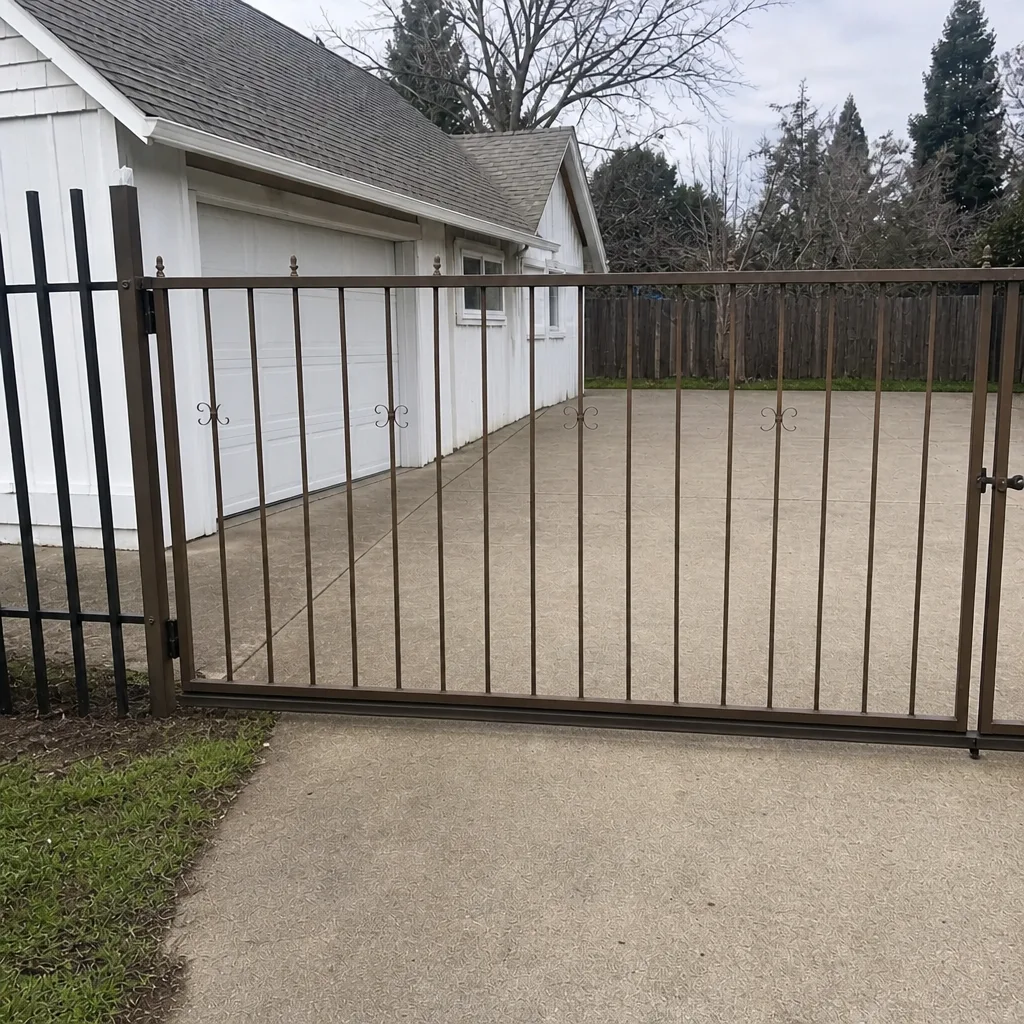
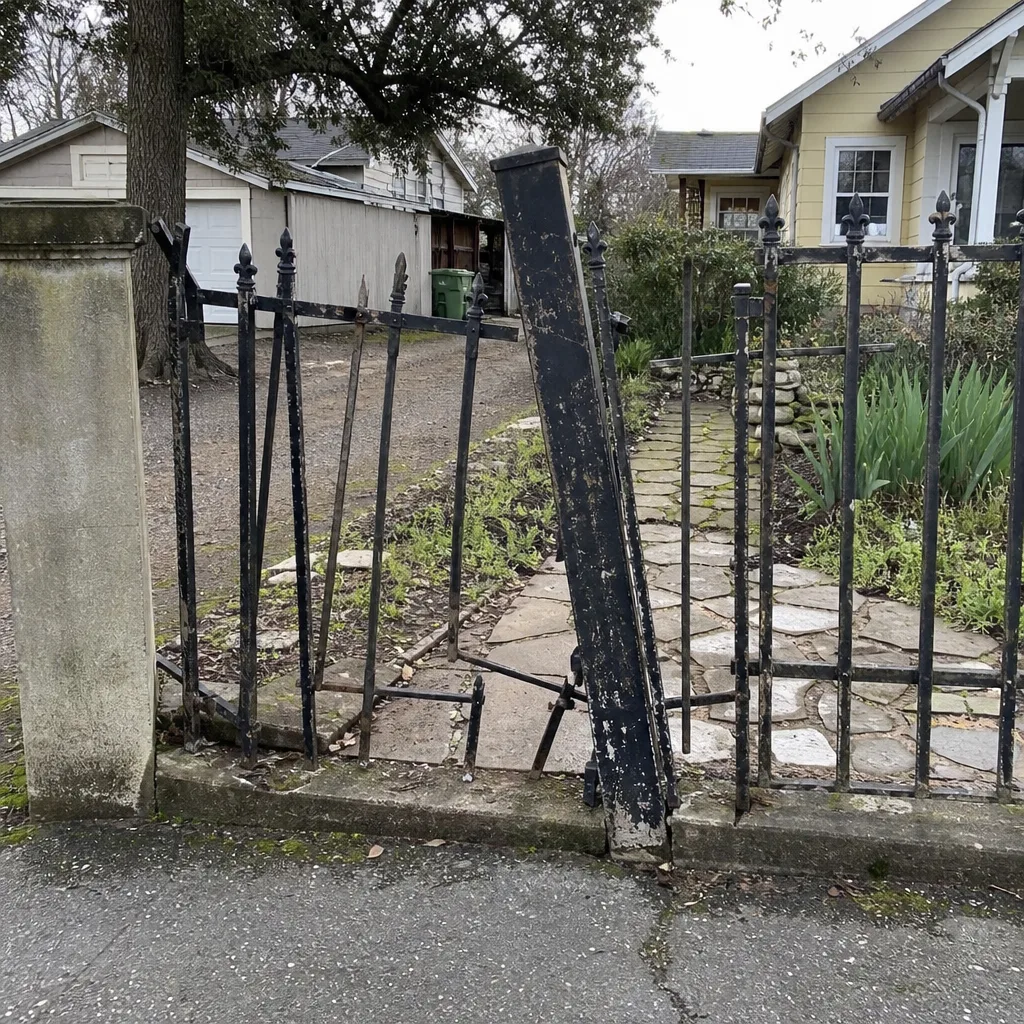
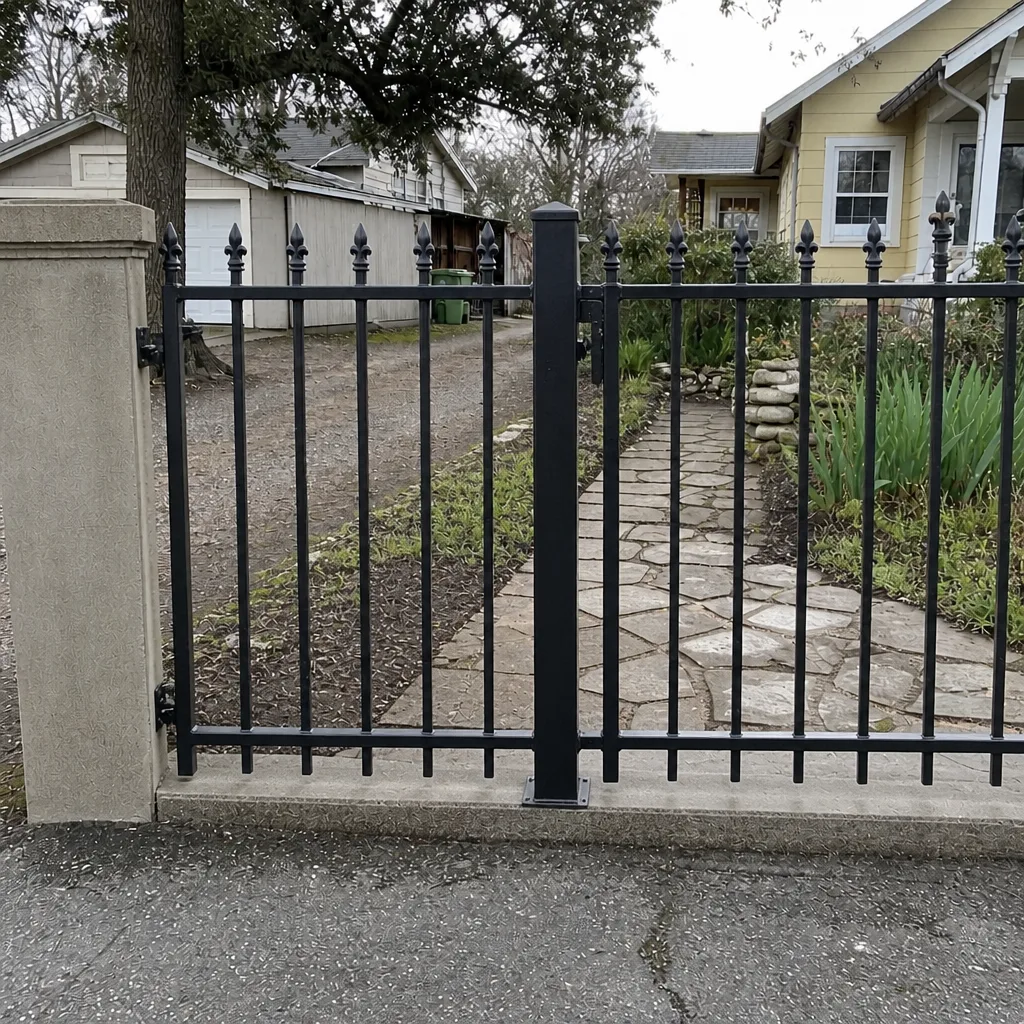
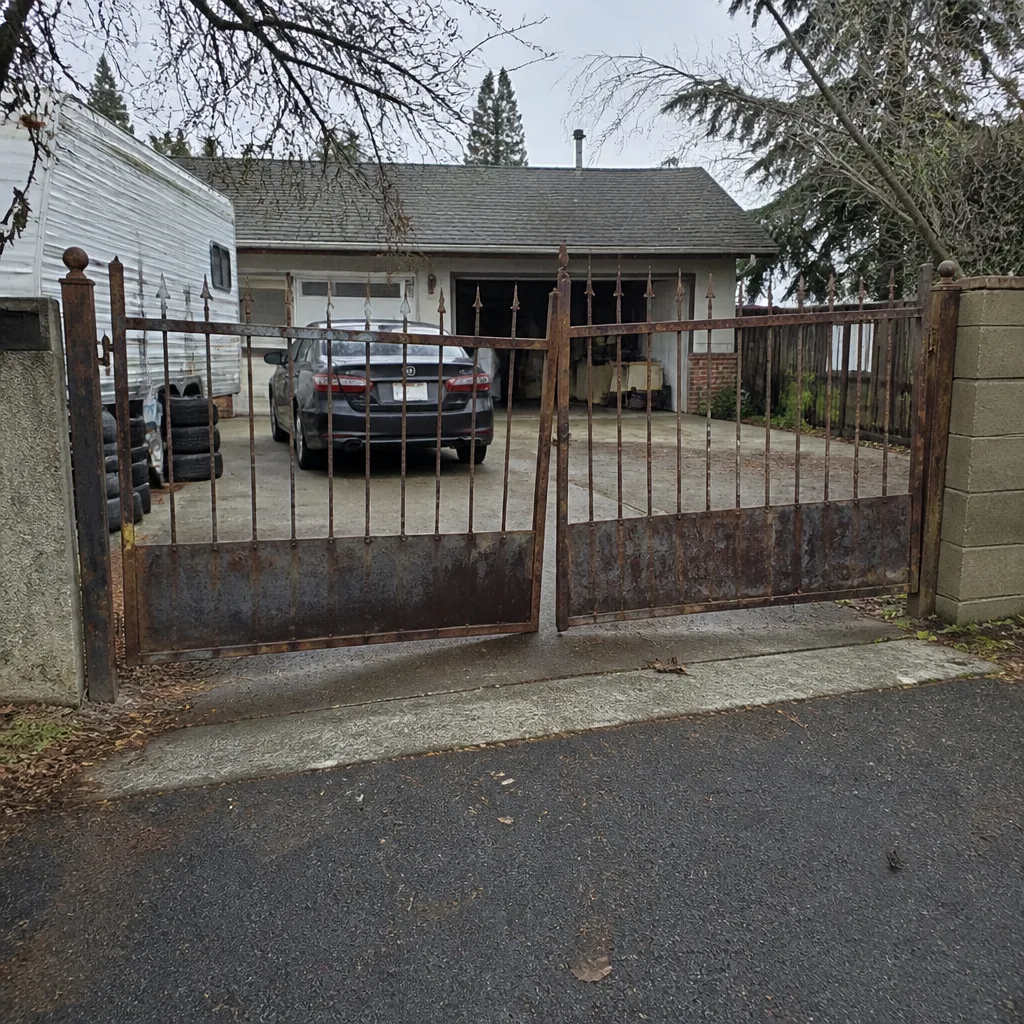
See the difference
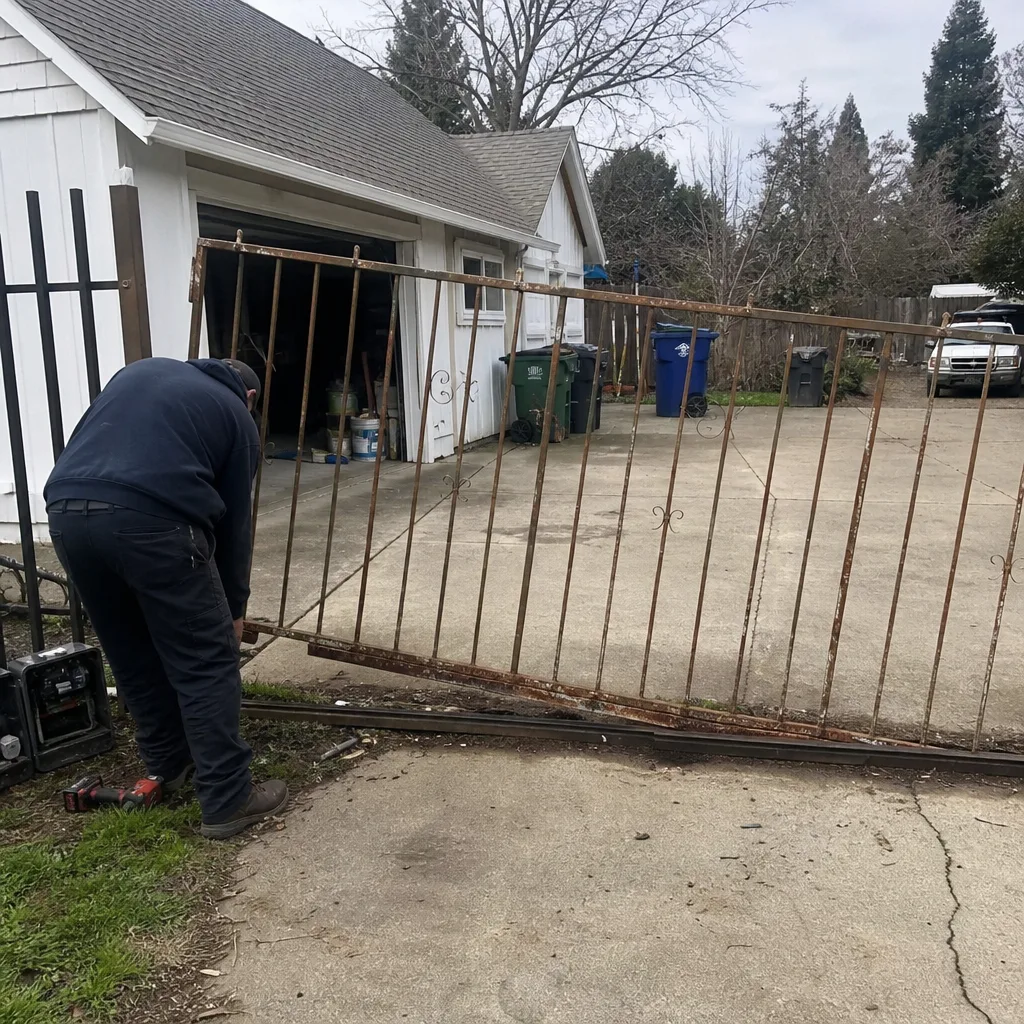 Before
 After
 Before
 After
 Before
 After
Common Mistakes to Avoid
- Never forcing a seized manual release. If the release won’t move, don’t reach for a longer tool. A bent release arm or a snapped cable turns a simple outage into a real repair.
- Pushing a gate against its operator when it’s stuck. Motors and gearboxes don’t appreciate being driven backward by hand. Release the gate first, then move it.
- Repeatedly cycling a gate that keeps faulting. Every fault cycle is wear on the gearbox and the control board. One reset is fine. Five is a diagnosis waiting to be made.
- Assuming a dead gate means the operator is finished. Dead batteries, tripped breakers, and misaligned sensors cause most “dead” gates. Diagnosis first, then decisions.
- Skipping the manual release test because the gate works fine. The one time you need the release is the one time you didn’t test it. Test it in spring and fall.
- Ignoring the model and serial plate. A technician who knows the exact operator can bring the right parts. A technician guessing at the brand shows up with the wrong ones.
- Trying to fix a control board yourself. The board handles line voltage and operator logic together. That’s a trained professional’s job, not a homeowner’s project.
When to Call a Professional
Call a professional when the manual release won’t move, when the control board is involved, when the safety edge or photo-eye fails and won’t recover after cleaning, and whenever a gate has trapped a vehicle and the release didn’t free it. Those are the situations where poking around risks injury or a larger repair. Gates and their operators carry high forces, and a heavy panel that closes unexpectedly can crush a hand or a foot. Don’t stand in the gate’s path while diagnosing it, and don’t reach into the operator housing while the power is on.
Gate Repair Chico offers free estimates in Chico. Call (866) 369-2364. We answer 24/7, with fast dispatch from 7am to 7pm, Sunday through Friday.
Frequently Asked Questions
The most common cause is a battery backup that didn’t carry the operator, followed by surge damage to the control board. If the gate worked briefly after the outage and then died, the battery is the likely culprit. If it has power but does nothing at all, suspect surge damage. Call (866) 369-2364 for an exact diagnosis, estimates are free.
Every automated gate operator has a manual release, and you disengage the drive with a key, lever, or pin before pushing the gate by hand. On LiftMaster and Viking operators it’s a keyed or lever release on the housing; on Ghost Controls it’s a release pin inside the housing cover. If you don’t know yours, call (866) 369-2364 and we’ll walk you through the release for your operator.
Release the drive and close the gate by hand, then chain or block it in the closed position if there’s no keeper. That restores your perimeter before the repair. Then check whether a photo-eye is blocked or misaligned, since a sensor fault is the most common reason a gate parks open. Call (866) 369-2364 if it holds open after that.
Yes. A gate that closes on a vehicle can scratch, dent, or break glass if the driver keeps pushing, and the gate itself can bend at the hinge or come off the track. The safe sequence is to stop, release the gate by hand, and cut power if the release won’t work. Call (866) 369-2364 if the gate won’t release, and don’t try to climb past it.
If the gate is trapping a vehicle or a person, or if the property is left open and unsecured, yes, call (866) 369-2364. We answer 24/7, and a call outside dispatch hours is booked into the next opening, Sunday through Friday, 7am to 7pm. If the gate is closed and parked with no one trapped, it can wait for a scheduled visit.
We work on nine named gate brands: LiftMaster, FAAC, BFT, Linear, Viking, Ghost Controls, DoorKing, Elite, and Mighty Mule. That covers residential driveways through light-commercial sliding and swing systems. When you call, tell us the model on the operator’s serial plate, and we’ll confirm the diagnosis path and parts. Call (866) 369-2364, estimates are free.
The Bottom Line
A gate emergency is only a crisis when you don’t know the moves. Learn the manual release for your operator, keep a release key and a chain and padlock within reach, and know how to tell a dead battery from a surge from a reset. Those three things cover the vehicle trap, the failed-open gate, and the dead gate after an outage. If you’re in Chico and your gate has faulted, call for a diagnosis instead of cycling it again. The team at Gate Repair Chico works on gates only, and we’ll tell you what failed before anything gets replaced.
Call (866) 369-2364 for a free estimate. We answer 24/7, with fast dispatch from 7am to 7pm, Sunday through Friday. The price is quoted and agreed before any work starts, so you’ll know the number before the repair begins, and our technicians have up to 9 years of experience.
Written by the team at Gate Repair Chico.